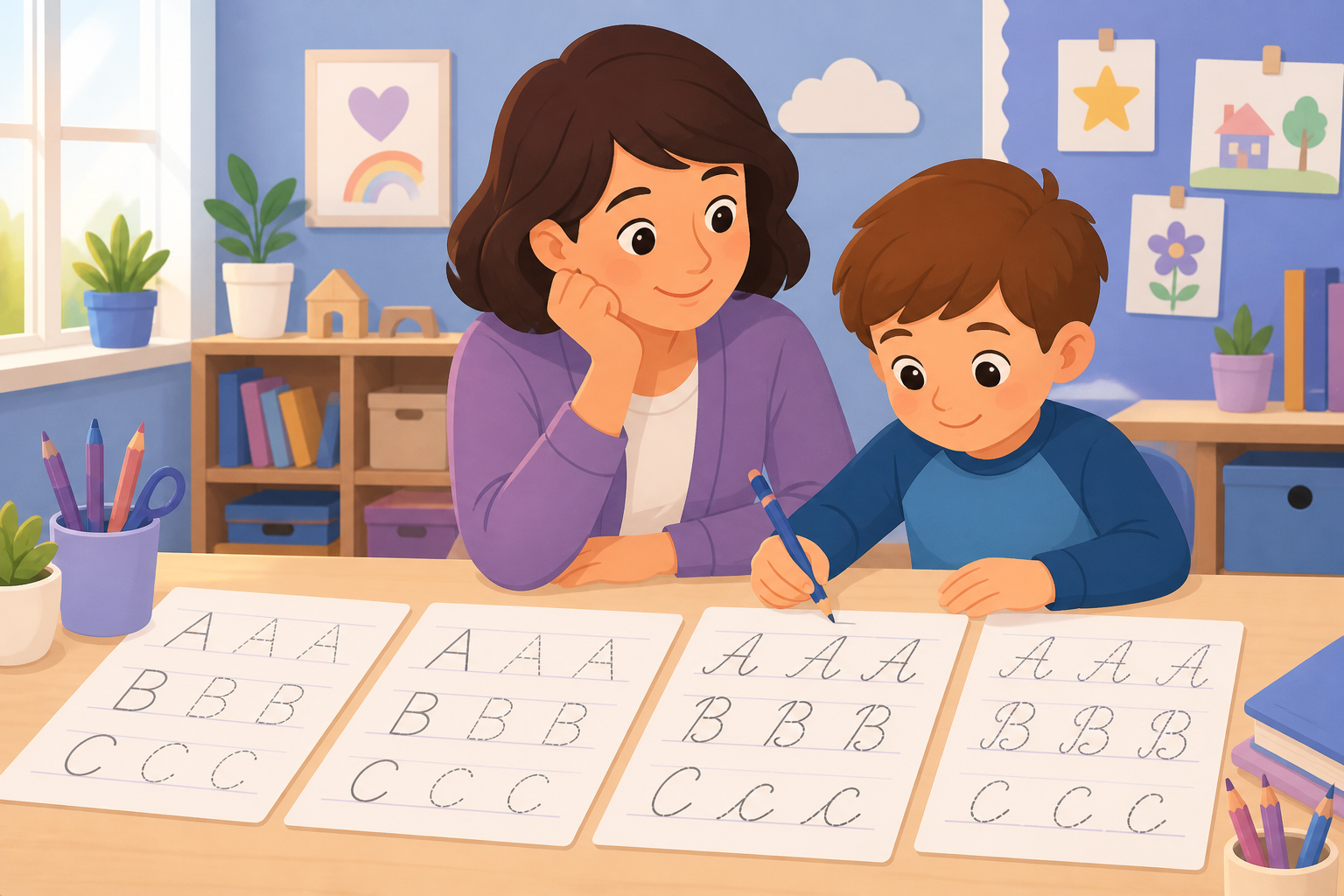
The font on a tracing worksheet shapes how a child forms every letter. Pick the wrong style and you fight your school's handwriting program. Pick the right one and tracing builds muscle memory that transfers to independent writing. The best handwriting fonts for tracing worksheets are clear, age-appropriate, and match what your student will use on tests and homework.
This guide covers the top font styles for tracing sheets, how to choose by age, and how to make custom pages without formatting fonts by hand. You will also find links to free tracing tools and ready-made worksheets you can print today.
Why Does Font Choice Matter for Tracing Worksheets?
Font choice matters because tracing worksheets teach letter formation through repetition. When the model letter matches what a child sees in textbooks and on classroom charts, each traced stroke reinforces the correct habit. Reading Rockets notes that explicit handwriting instruction supports spelling and written expression in early elementary grades.
A font that is too fancy, too small, or a different style from school forces children to relearn shapes later. Consistency between home practice and classroom instruction saves time and reduces frustration for parents, teachers, and students.
What Are the Best Handwriting Fonts for Tracing?
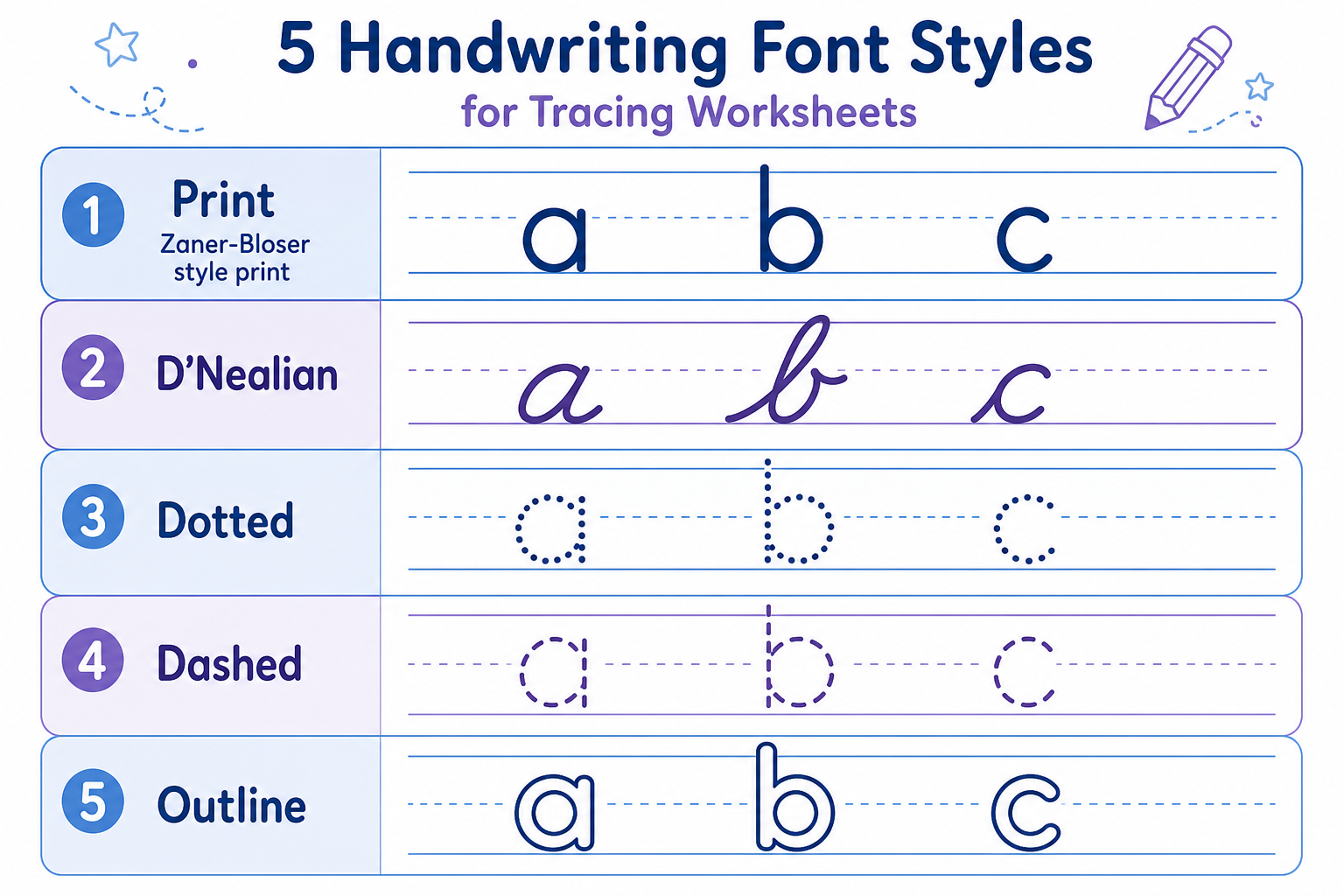
The best handwriting fonts for tracing worksheets fall into a few proven categories. The table below lists the most common styles, who they serve best, and practical tips for each.
Zaner-Bloser Style Print
Best for: Preschool – Grade 2
Vertical letters with simple strokes. Matches what many U.S. elementary schools teach for manuscript handwriting.
Tip: Look for dotted or dashed versions so kids trace inside the letter shape.
D'Nealian Style
Best for: Kindergarten – Grade 2
Slight slant and fewer strokes than print, designed as a bridge to cursive. Common in schools that teach cursive early.
Tip: Only use if your child's school teaches D'Nealian. Mixing styles confuses beginners.
Patrick Hand
Best for: Preschool – Grade 1
A free, rounded manuscript font that reads clearly at large sizes. Used in many online tracing generators for its friendly letter shapes.
Tip: Works well for name tracing and short words. Pair with large letter size for new writers.
DN Manuscript / School Fonts
Best for: K – Grade 2
Commercial school-style fonts that mirror textbook handwriting programs. Good when you want a traditional classroom look.
Tip: Check licensing before printing for a whole class or selling materials.
Trace / Dotted Outline Fonts
Best for: Preschool – Grade 1
Letters built from dots or dashes so children follow the stroke path. The standard format for tracing worksheets.
Tip: Ensure dots are spaced evenly. Crowded dots make tracing harder, not easier.
Cursive Trace Fonts
Best for: Grade 2+
Connected letter forms for students who have finished print instruction and are learning cursive.
Tip: Wait until print is solid. Rushing cursive tracing slows overall handwriting progress.
Skip the font hunt — generate tracing sheets instantly
Our tracing generator uses a clear handwriting-style font with dotted outlines. Type any name, word, or number and print in seconds.
Open Tracing Worksheet GeneratorHow Do You Pick a Tracing Font by Age?
Match font style and letter size to developmental stage. Preschoolers need big, simple letters with lots of space between lines. Older students need smaller text that looks closer to what they will write on lined notebook paper.
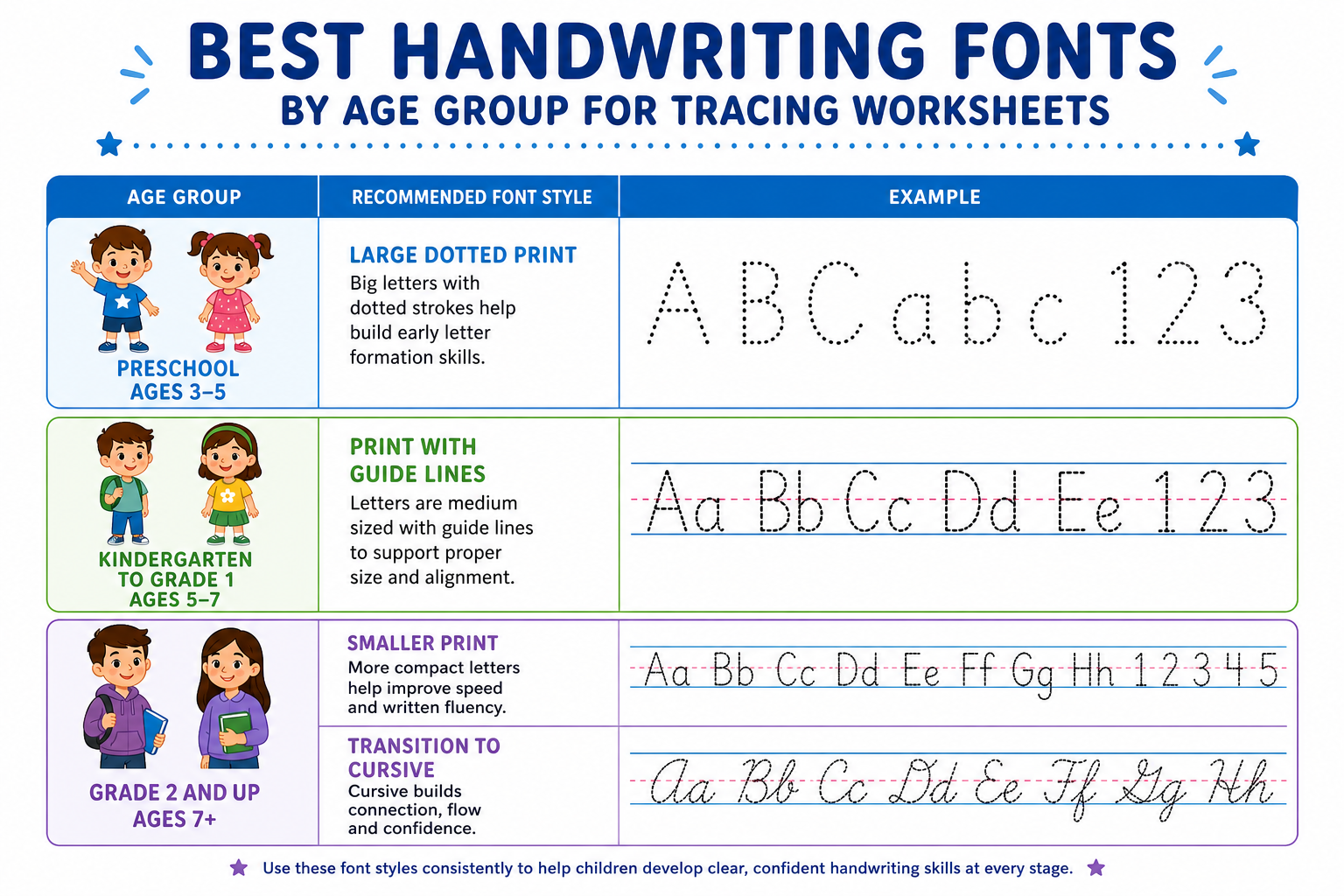
| Age / Grade | Recommended font | Letter size | Worksheets to try |
|---|---|---|---|
| Ages 3–5 | Large dotted print | 1–1.5 in. tall | Name tracing, letter tracing |
| K – Grade 1 | School print (Zaner-Bloser or D'Nealian) | 3/4–1 in. tall | Custom name sheets |
| Grade 2+ | Smaller print; cursive when taught | 1/2–3/4 in. tall | Number tracing |
Should You Use Print or Cursive Tracing Fonts?
Use print tracing fonts until your child writes manuscript letters confidently from memory. Most U.S. schools introduce cursive in second or third grade, though timing varies by district. The National Association for the Education of Young Children emphasizes that early writing develops through meaningful practice with proper letter models, not rushed advancement to connected script.
If your school teaches D'Nealian, use slanted print tracing fonts from the start so the transition to cursive feels natural. If your school uses vertical Zaner-Bloser print, stay with that family through first grade. Never mix styles on the same practice week.
How Do You Create Custom Tracing Worksheets?
You can build tracing worksheets three ways: download pre-made pages, format fonts in a word processor, or use an online generator. Generators are fastest because they handle font size, row spacing, and dotted outlines automatically.
- Choose your text: A first name for preschoolers, sight words for kindergarteners, or numbers for math readiness.
- Pick letter size: Large for ages 3–5, medium for K–1, small for grade 2 and up.
- Print multiple copies: Daily short practice beats one long session. Laminate a copy for dry-erase reuse.
- Add blank lines: Leave space below traced rows for free writing once tracing feels easy.
Pair handwriting practice with other early literacy work. Our homeschool worksheets guide shows how to fit tracing into a weekly routine alongside math and reading.
What Mistakes Should You Avoid?
Avoid decorative script fonts that look pretty but do not match any school handwriting program. Avoid letters that are too small for beginners. Avoid switching between print and cursive on the same sheet before your child is ready.
Also skip fonts with unclear stroke direction. Good tracing fonts show where to start each letter. If you cannot tell the starting point at a glance, choose a different font or use a generator that formats strokes correctly.
Conclusion
The best handwriting fonts for tracing worksheets are the ones that match your child's age, school program, and current skill level. Start with large dotted print, keep styles consistent, and move to smaller text and cursive only when instruction supports it.
Open the tracing generator, type your child's name, and print one sheet tonight. Five minutes of tracing tomorrow morning is enough to build a habit that pays off all year.
Create tracing worksheets with the right font in seconds
Names, letters, numbers, and custom words. Free, print-ready, no signup.
Frequently Asked Questions
The best tracing font matches what your child will write in school. For preschool and kindergarten, use a clear manuscript print with dotted or dashed strokes, such as Zaner-Bloser style or a rounded print like Patrick Hand. For first and second grade, stick with the same style your district teaches so letter formation stays consistent.