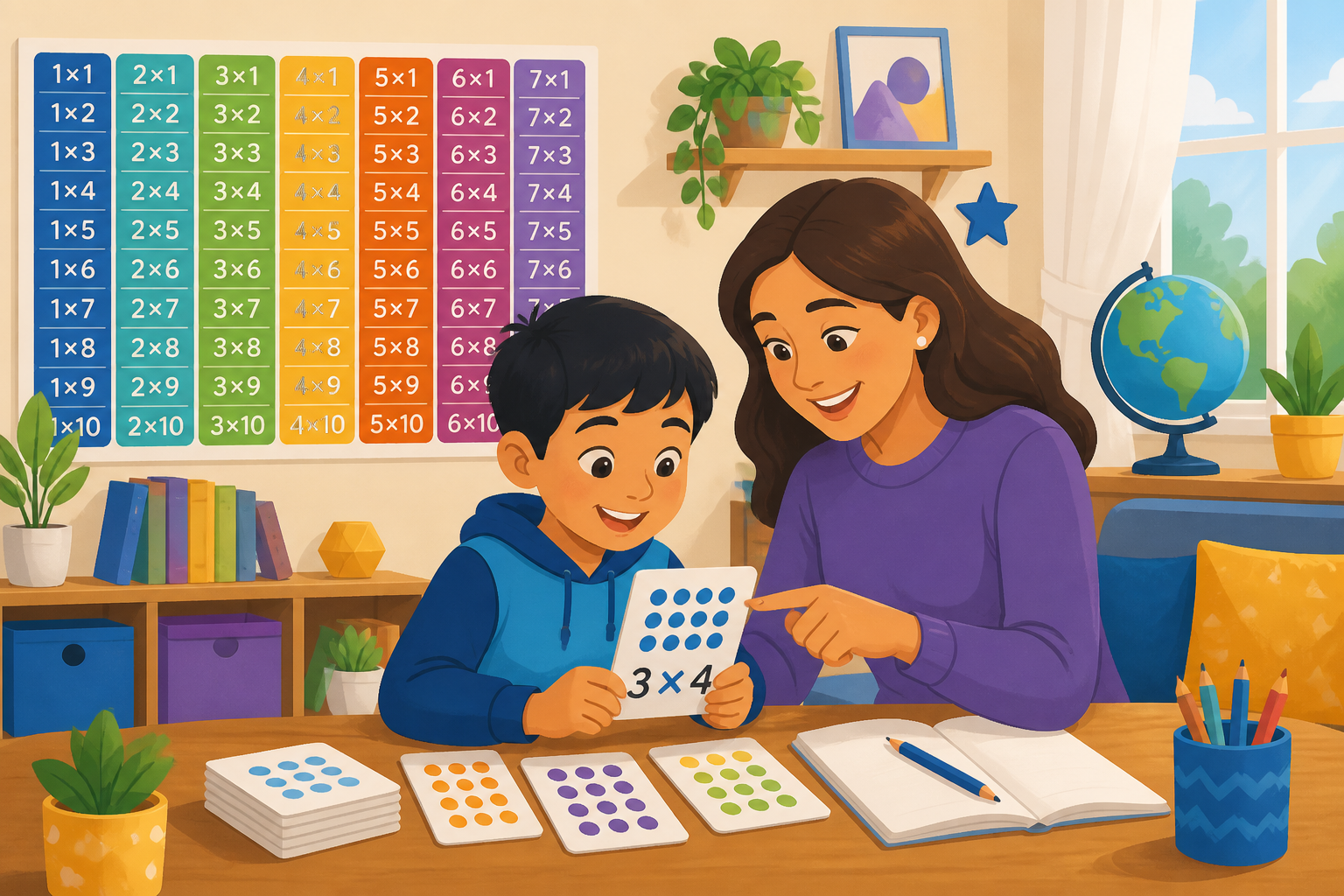
Parents often wonder when kids should learn their times tables and whether their child is behind or ahead. Most students begin in second or third grade and work toward fluency with facts through 10 × 10 by the end of third grade. The timing matters less than the sequence: understand multiplication first, then practice facts consistently until recall is automatic.
This guide breaks down grade-level expectations, explains why understanding comes before memorizing, and gives you a simple four-step plan with free tools. Whether you are a parent supporting homework or a teacher setting classroom goals, you will know what to expect and how to help.
When Should Kids Start Learning Times Tables?
Kids should start learning times tables when they understand equal groups and can skip count, usually in second grade. Formal fact fluency work intensifies in third grade, when most curricula expect students to know products through 10 × 10. The Common Core third grade standards require fluency with multiplication and division within 100.
Starting too early, before a child grasps what multiplication means, creates frustration. Starting too late without daily practice makes fourth grade math harder than it needs to be. The sweet spot is second grade foundations plus third grade fluency work.
What Should Kids Know by Grade?
Grade-level expectations give you a clear benchmark. Your school may move slightly faster or slower, but this sequence is typical across U.S. elementary programs.
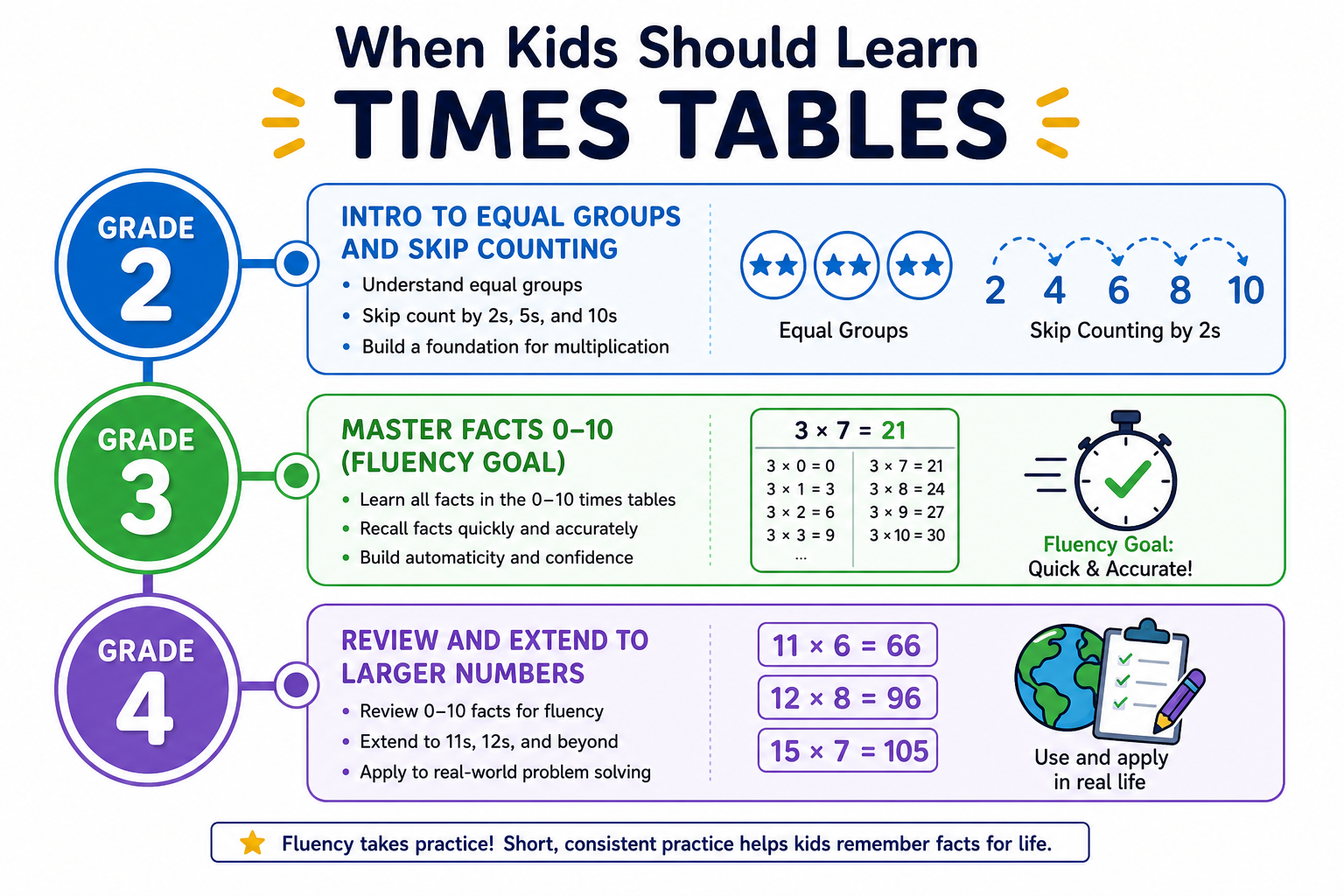
Grade 2
Focus: Equal groups, skip counting, foundations for multiplication
Examples: Count by 2s, 5s, and 10s; recognize arrays; solve simple equal-group problems
Grade 3
Focus: Times table facts through 10 × 10, fluency goal
Examples: Know 7 × 8, use facts to solve word problems, begin timed practice
Grade 4
Focus: Review, extend to multi-digit multiplication
Examples: Multiply two-digit numbers, use known facts to solve harder problems
Third grade is the main year for times tables. Our guide to teaching multiplication in 3rd grade walks through arrays, repeated addition, and fact fluency strategies teachers use in class. Pair that with third grade multiplication worksheets for home practice.
Should Kids Understand Multiplication Before Memorizing Times Tables?
Yes. Kids should understand multiplication as equal groups, arrays, and repeated addition before they memorize times tables. Memorization without meaning leads to guessing and anxiety when facts are forgotten under pressure.
The National Council of Teachers of Mathematics emphasizes building conceptual understanding alongside fact fluency. A child who knows that 6 × 7 means six groups of seven can rebuild a forgotten fact. A child who only memorized a rhyme cannot.
Spend time with visual models first. Then introduce flash cards and timed practice for facts your child already understands. If a fact is missed, go back to a drawing or array before drilling again.
What Is a Four-Step Plan to Learn Times Tables?
Use this four-step plan at home or in small groups. Work on one fact family at a time, such as the 4s, before moving to the next.
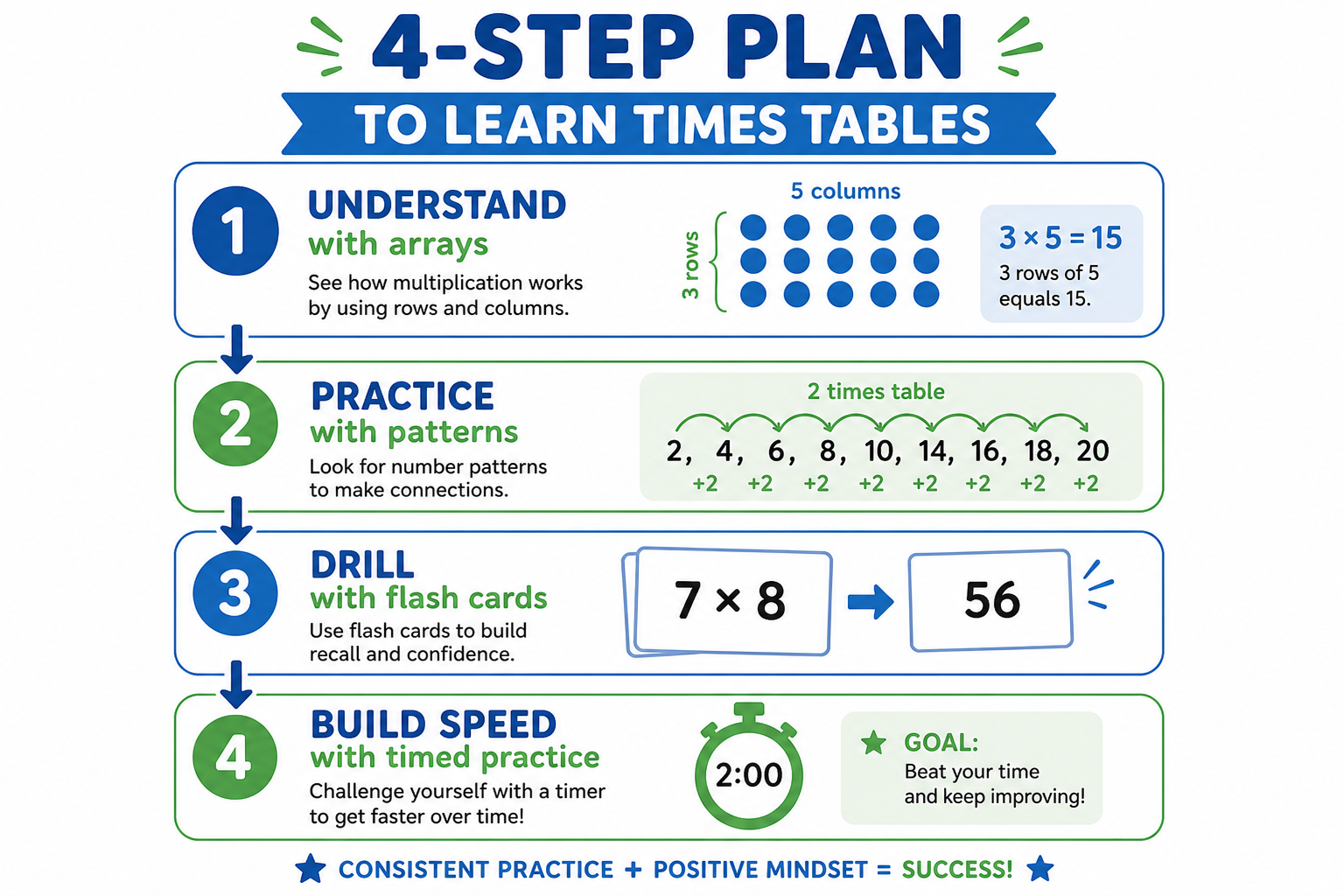
1. Understand with arrays and equal groups
Draw rows and columns to show 3 × 4 as three groups of four. Use objects like counters or snacks before moving to numbers on a page. Understanding prevents blind memorization.
2. Spot patterns in facts
The 2s are doubles. The 5s end in 0 or 5. The 10s add a zero. Patterns reduce the number of facts that feel random and give children strategies when memory fails.
3. Drill with flash cards and charts
Once a fact family makes sense, repeat it until recall is automatic. Use flash cards for one family at a time and keep a multiplication chart nearby for reference, not cheating.
4. Build speed with short timed practice
Short timed rounds of five to ten facts build fluency without pressure. Stop when focus drops. Speed comes after accuracy, not before.
Practice the facts your child is learning this week
Generate custom multiplication worksheets, print flash cards, or run a quick quiz.
How Do You Know Your Child Is Ready for Times Tables?
Your child is ready to start times table work when they can skip count by 2s, 5s, and 10s, solve simple equal-group problems with objects, and recognize that multiplication is faster repeated addition. These signs show the conceptual foundation is in place.
- They can draw an array: Given 3 × 4, they sketch three rows of four without help.
- They explain in words: They can say what a multiplication sentence means, not just recite an answer.
- They stay engaged for 10 minutes: Short practice sessions do not end in shutdown or tears every time.
- They know addition facts: Solid addition within 20 makes learning multiplication facts much smoother.
Keep a printable multiplication chart on the fridge or desk for reference during practice. Charts support learning; they are not a crutch when used while facts are still being mastered. Test readiness with a short round on the quiz generator once a week to track progress.
What If Your Child Is Behind on Times Tables?
If your child is behind, go back one step rather than pushing harder. Revisit arrays and equal groups for facts they miss. Practice one family at a time instead of the full table. Ten minutes daily beats an hour of frustrated cramming on Sunday.
Talk to the teacher if your child is in fourth grade and still guessing on basic facts. Extra support at school plus targeted home practice usually closes the gap within a few months when the approach is consistent and positive.
Conclusion
Kids should learn their times tables starting in second grade, with fluency through 10 × 10 expected by the end of third grade. Build understanding first, use patterns and tools for practice, and keep sessions short and consistent. Every child learns at a different pace, but the sequence stays the same.
Pick one fact family to focus on this week, print a chart and a short worksheet, and practice for ten minutes a day. Small daily wins add up to full fluency faster than you expect.
Start times table practice today
Free multiplication worksheets, flash cards, and quizzes. No signup required.
Multiplication Worksheets Grade 3Frequently Asked Questions
Most children begin learning times tables in second or third grade, with fluency expected by the end of third grade. Second graders explore equal groups and skip counting. Third graders focus on facts through 10 × 10. Some students need extra practice into fourth grade, which is normal.