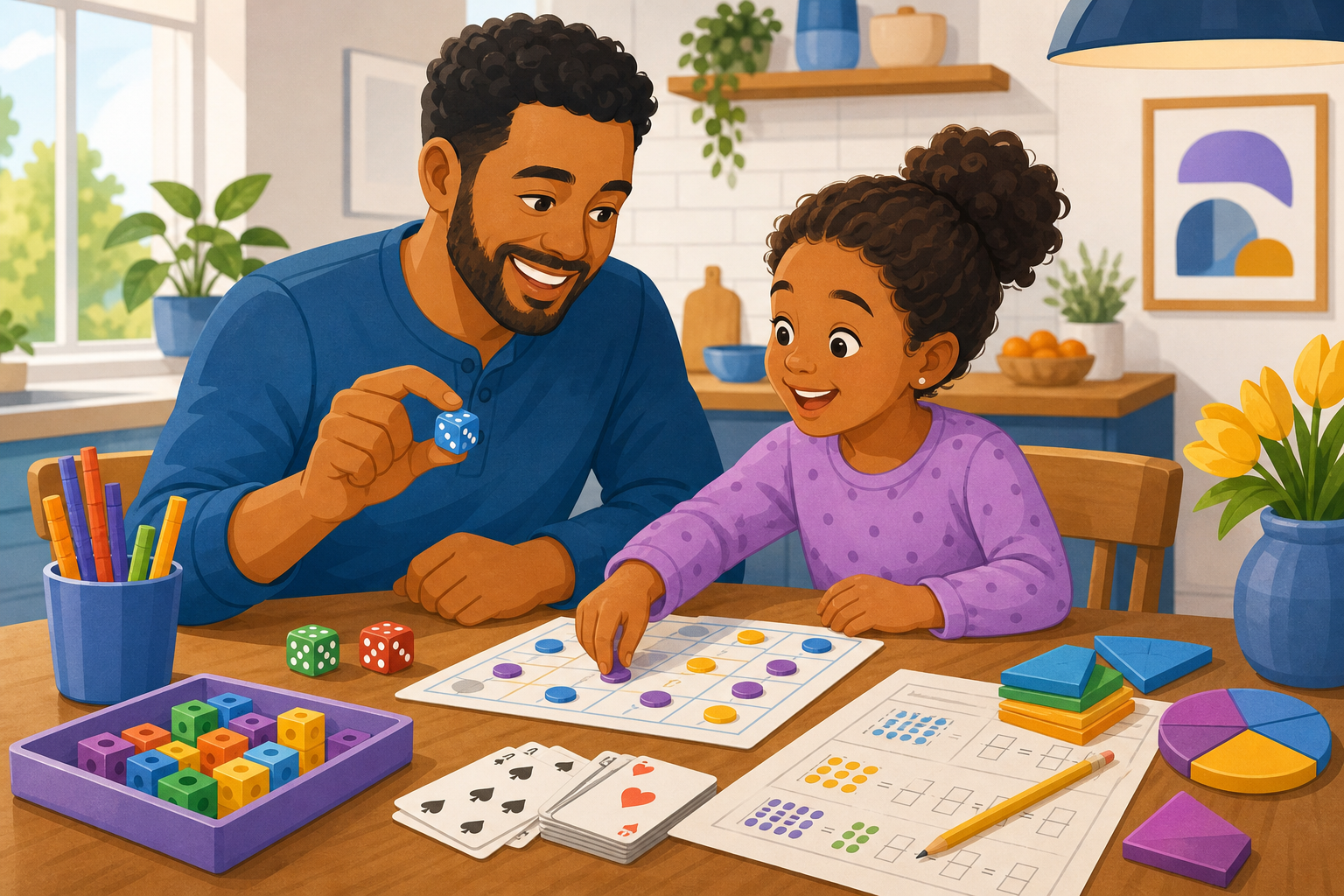
Math practice at home does not have to end in sighs and stalled pencils. When practice feels like a game, a challenge, or part of everyday life, kids engage longer and remember more. The best ways to make math practice fun at home combine short focused sessions, real-world connections, and a mix of worksheets and play.
This guide shares five practical strategies parents and teachers can use tonight, plus grade-level ideas and a simple routine that pairs printable practice with games. You do not need expensive kits or hours of prep.
Why Does Fun Math Practice Matter at Home?
Fun math practice matters because attitude shapes effort. Children who dread worksheets avoid them or rush through without thinking. Children who associate math with games and small successes are more willing to try hard problems at school. Research on math engagement consistently shows that motivation and self-confidence predict long-term achievement as much as raw ability.
Home practice also fills gaps homework does not cover. A ten-minute game on Tuesday and a short worksheet on Thursday can build fluency faster than cramming Sunday night. The U.S. Department of Education recommends consistent, positive study routines at home rather than marathon sessions that burn kids out.
What Are 5 Ways to Make Math Practice Fun?
These five strategies work across grades when you adjust the skill level. Pick one to try this week before stacking all five into a single evening.
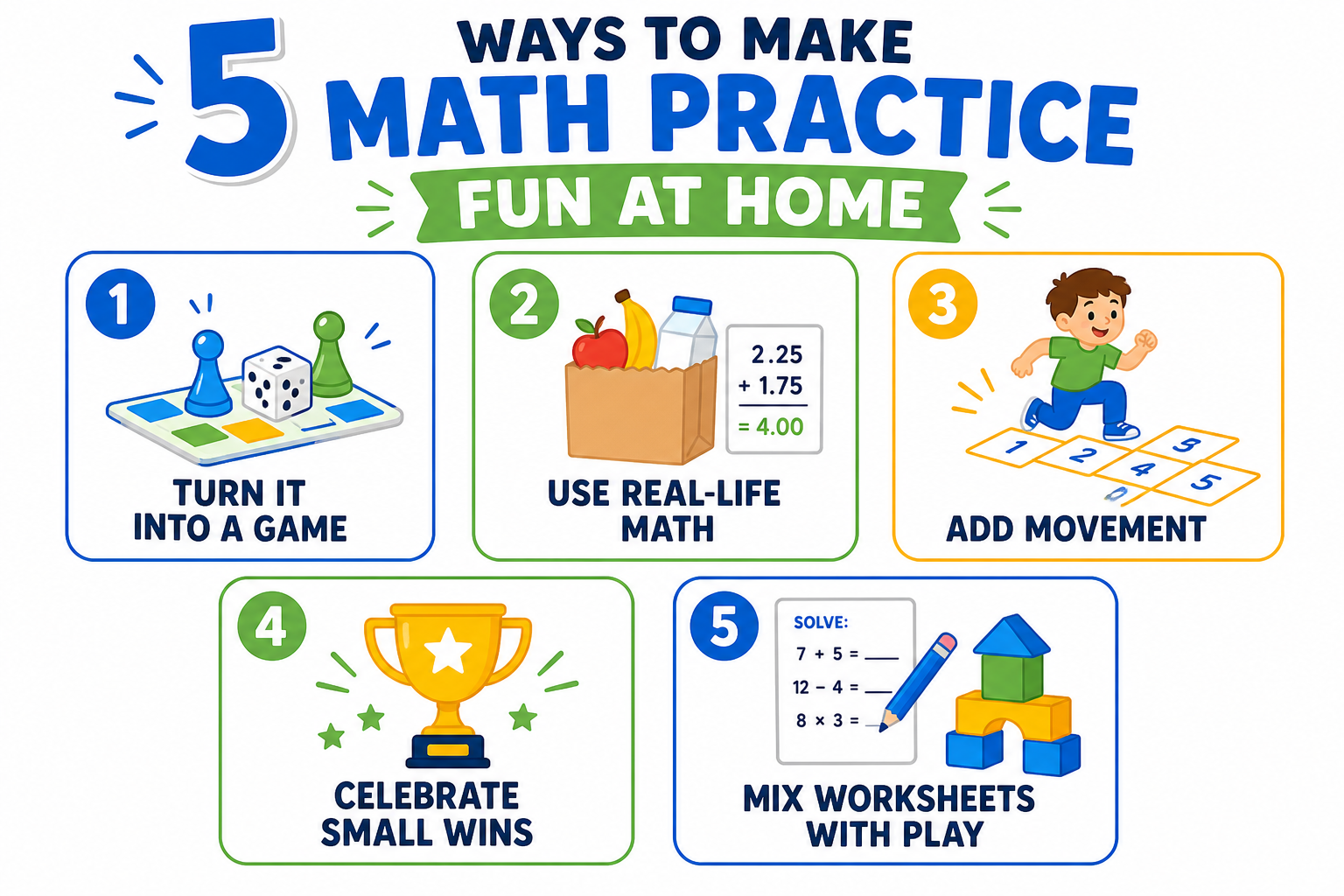
1. Turn practice into a game
Add a timer, points, or a friendly challenge. Race to solve five problems in two minutes, play multiplication bingo, or roll dice to create addition problems. Competition with themselves beats pressure to be perfect.
Try tonight: After homework, play one round of Dice War using sums or products.
2. Use real-life math
Cooking, grocery shopping, and measuring for crafts put math in context. Doubling a recipe teaches fractions. Comparing prices teaches decimals. Kids engage when math solves a real problem they care about.
Try tonight: Ask your child to measure two cups of flour or find the cheaper cereal per ounce.
3. Add movement
Physical activity breaks up sitting and resets focus. Jump on a number line drawn with chalk, do jumping jacks for each correct answer, or place fact cards around the room for a scavenger hunt.
Try tonight: Write answers on sticky notes and have your child run to tag the right one.
4. Celebrate small wins
Sticker charts, high-fives, and specific praise build motivation. Celebrate finishing a page, improving speed, or explaining a strategy. Avoid only praising perfect scores, which can increase anxiety.
Try tonight: Say "You explained that clearly" instead of only "You got them all right."
5. Mix worksheets with play
A short worksheet followed by a game creates a balanced routine. The worksheet builds skill; the game builds positive feelings about math. Alternate which comes first so practice does not always feel like a gate before fun.
Try tonight: Five minutes of addition practice, then ten minutes of a card game.
Need a quick worksheet to pair with tonight's game?
Generate a short custom page on any topic. Free, print-ready in seconds.
Math Worksheet GeneratorWhat Fun Practice Ideas Work by Grade?
Match the activity to what your child is learning now. Fun practice that is too easy bores them. Practice that is too hard shuts them down. Use the grade bands below as a starting point.
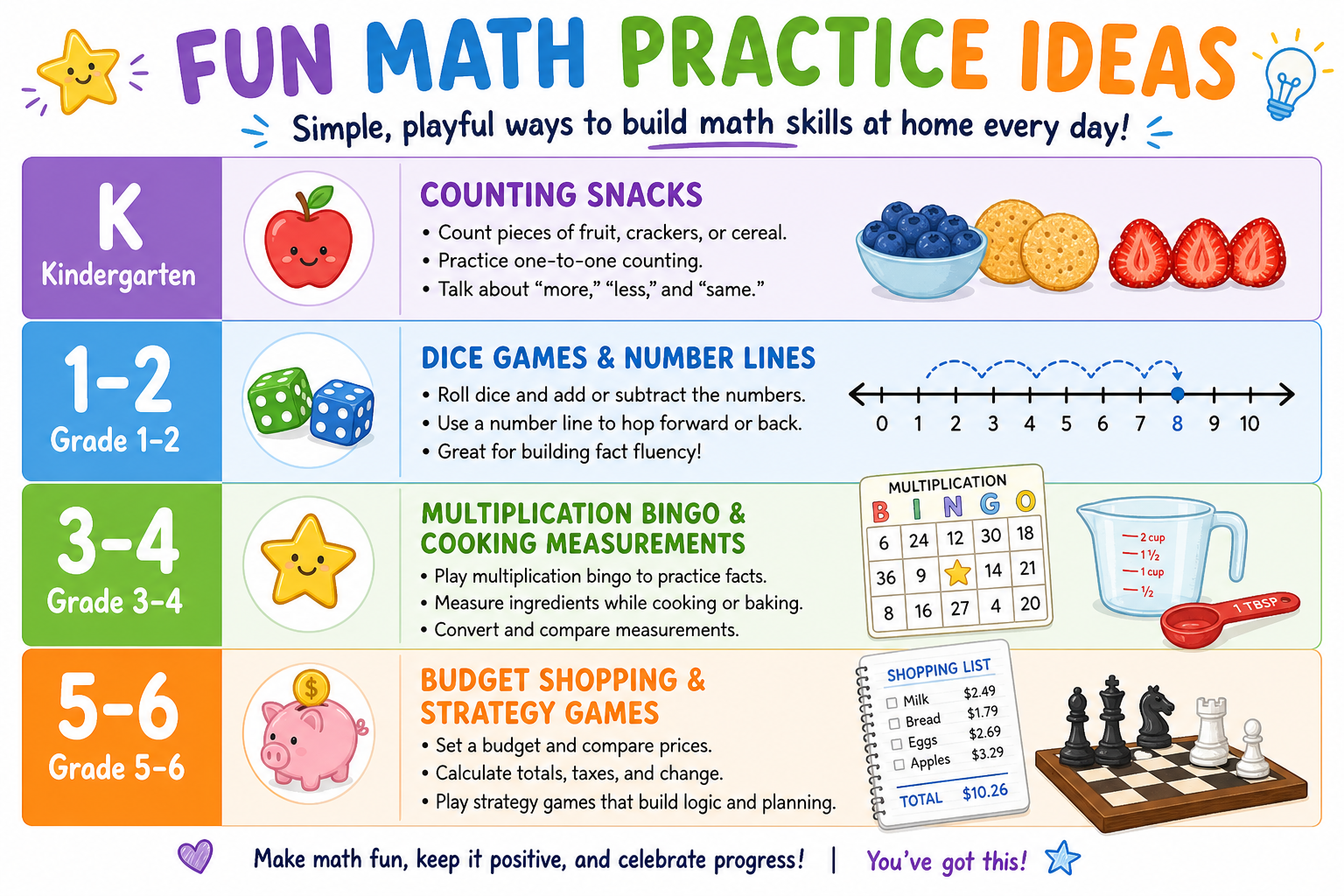
| Grade | Fun practice ideas | Worksheets |
|---|---|---|
| K – 1 | Count snacks, number line jumps, shape hunts | Kindergarten math |
| 2 – 3 | Dice War, multiplication bingo, cooking measurements | 2nd grade, 3rd grade |
| 4 – 6 | Budget shopping, strategy card games, fraction pizza | 4th grade, 5th grade |
For a full list of game ideas with setup instructions, see our 10 fun math games for kids post. For multiplication fluency, pair games with printable flash cards or a quick round on the quiz generator.
How Do You Combine Worksheets and Games?
A simple home routine keeps practice consistent without nightly battles. Try this 20-minute flow three or four times per week:
- Warm up (2 minutes): One quick mental math question or a dice roll to set a playful tone.
- Focused practice (8 minutes): One short worksheet or five problems from a custom generator on today's skill.
- Game or real-life math (10 minutes): A card game, cooking task, or movement activity tied to the same skill.
If homework already ate up your evening, skip the worksheet and do the game only. Fun practice still counts. When homework itself is the struggle, read our math homework help guide for coaching tips that keep practice positive.
What Mistakes Should Parents Avoid?
Avoid turning every practice session into a test. Avoid practice that runs past your child's focus window. Avoid only using worksheets with no variety, and avoid only using games with no structured skill building. Balance matters.
Also resist comparing siblings or classmates. Fun practice works when the child feels successful at their own level. Generate easier pages if needed, then increase difficulty as confidence grows.
Conclusion
Making math practice fun at home is about short sessions, variety, and connection to real life. Gamify practice, move around, celebrate effort, and pair worksheets with play. Pick one strategy from this list tonight and build from there.
Print one worksheet, set a ten-minute timer, and end with a quick game. That small routine repeated through the week builds skills and a better attitude toward math.
Start tonight's fun math routine
Custom worksheets and quizzes in seconds. Free, no signup required.
Frequently Asked Questions
Turn practice into short games, connect math to real life like cooking or shopping, add movement, celebrate small wins, and mix worksheets with playful activities. Keep sessions to 10 to 15 minutes and let your child pick the activity some days so practice feels like a choice, not a chore.