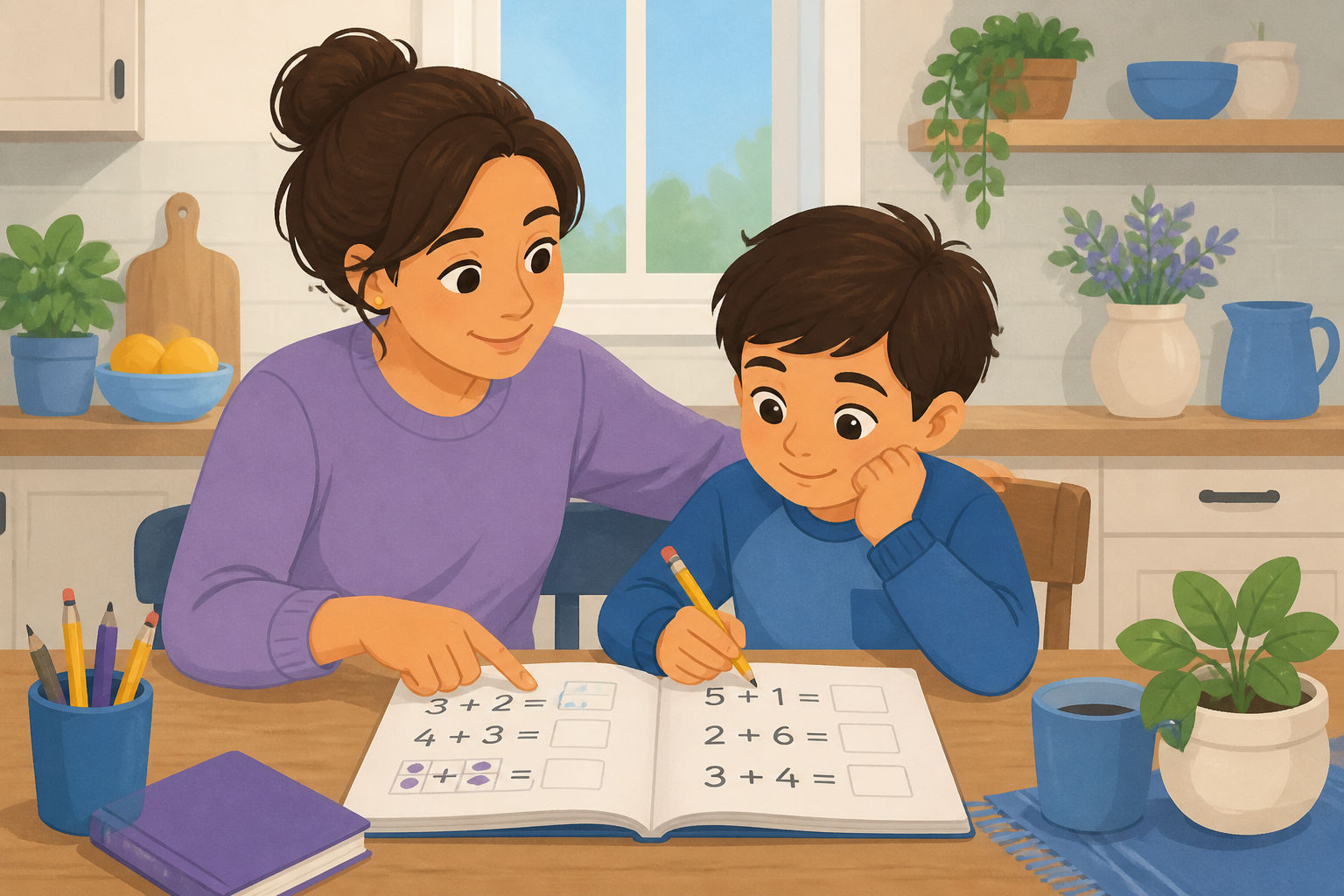
Math homework can turn a calm evening into a power struggle fast. You want your child to succeed, but finishing every problem yourself teaches them to wait for rescue instead of thinking. The goal is to help your child with math homework in a way that builds confidence, keeps your relationship positive, and still gets the assignment done.
This guide gives you a simple five-step method, grade-level tips, and a clear list of what to avoid. You will learn how to coach without taking over, when to step back, and which free tools add practice without adding stress.
Why Do Parents Struggle with Math Homework Help?
Parents struggle because math instruction has changed since many of us were in school. Your child may use number bonds, tape diagrams, or partial products instead of the shortcuts you remember. When methods clash, both of you get frustrated. The National Council of Teachers of Mathematics recommends focusing on reasoning and communication rather than speed or memorized tricks that do not match classroom instruction.
Time pressure makes it worse. After a long day, a worksheet full of word problems feels overwhelming. A short, consistent routine beats a marathon session that ends in tears.
What Is the Five-Step Method for Math Homework Help?
The five-step method keeps you in the coach role. You guide thinking without writing answers. Use the same sequence every night so your child knows what to expect.
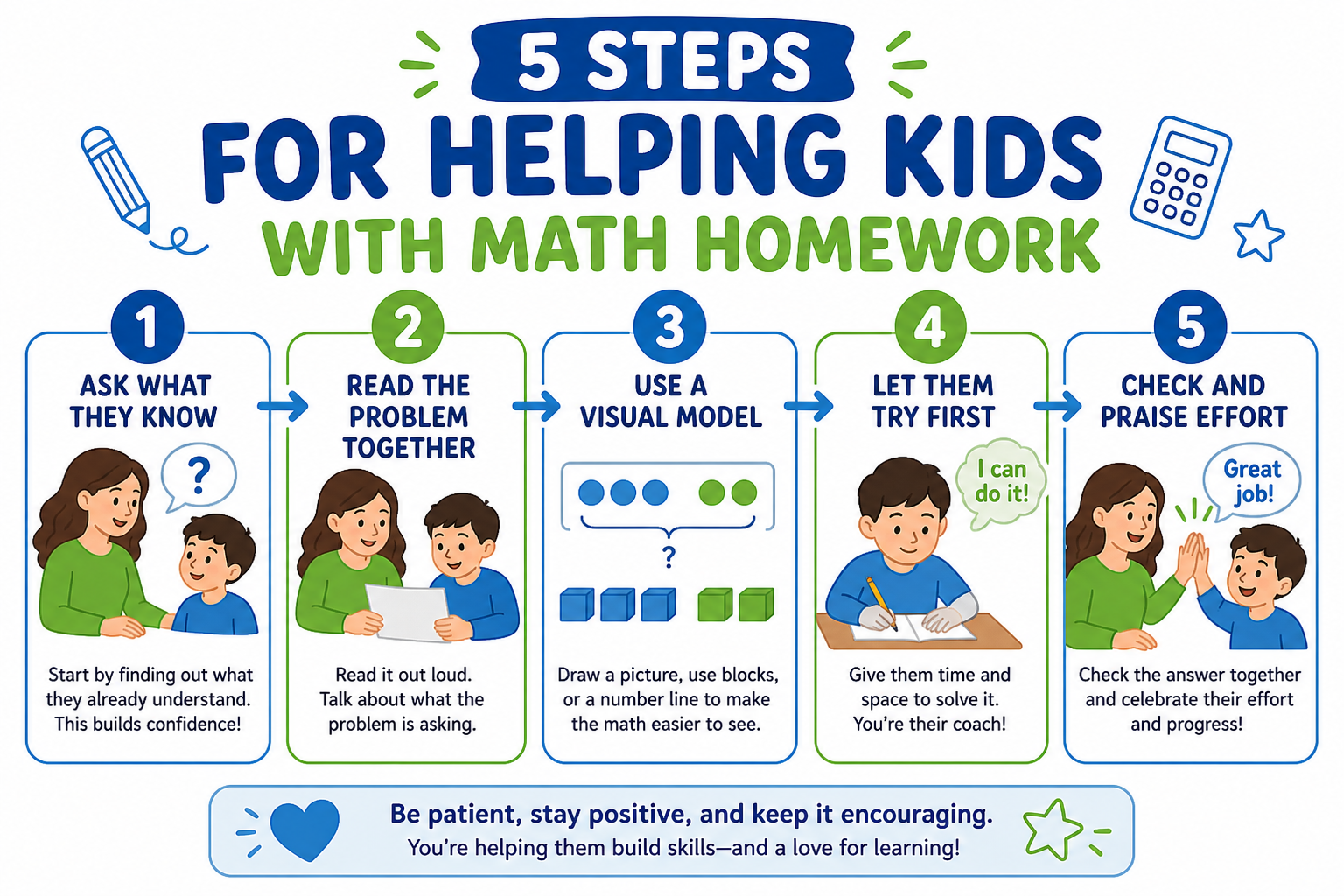
1. Ask what they already know
Before you explain anything, ask your child to tell you what the problem is asking and what they remember from class. This reveals whether they need help reading the question, recalling a formula, or applying a strategy.
2. Read the problem together
Read each sentence aloud. Underline key numbers and the question being asked. Many homework meltdowns come from misreading one word, not from missing math skills.
3. Use a visual or model
Draw a picture, use counters, or sketch a number line. Visual models turn abstract problems into something your child can manipulate. This is especially helpful for word problems and fractions.
4. Let them try before you hint
Give your child time to attempt the next step. If they are stuck, offer a small hint or a question: "What operation fits here?" Resist the urge to write the answer while they watch.
5. Check work and praise effort
When they finish, review together. Ask how they know the answer is reasonable. Praise persistence, not just correct answers. Confidence grows when kids see that struggle is normal.
Need extra practice on tonight's skill?
Generate a short custom worksheet that matches what your child is learning. Free and print-ready in seconds.
Math Worksheet GeneratorHow Should You Help by Grade Level?
The right kind of help changes as math gets more abstract. Younger children need concrete objects and pictures. Older students need help breaking multi-step problems into smaller pieces.
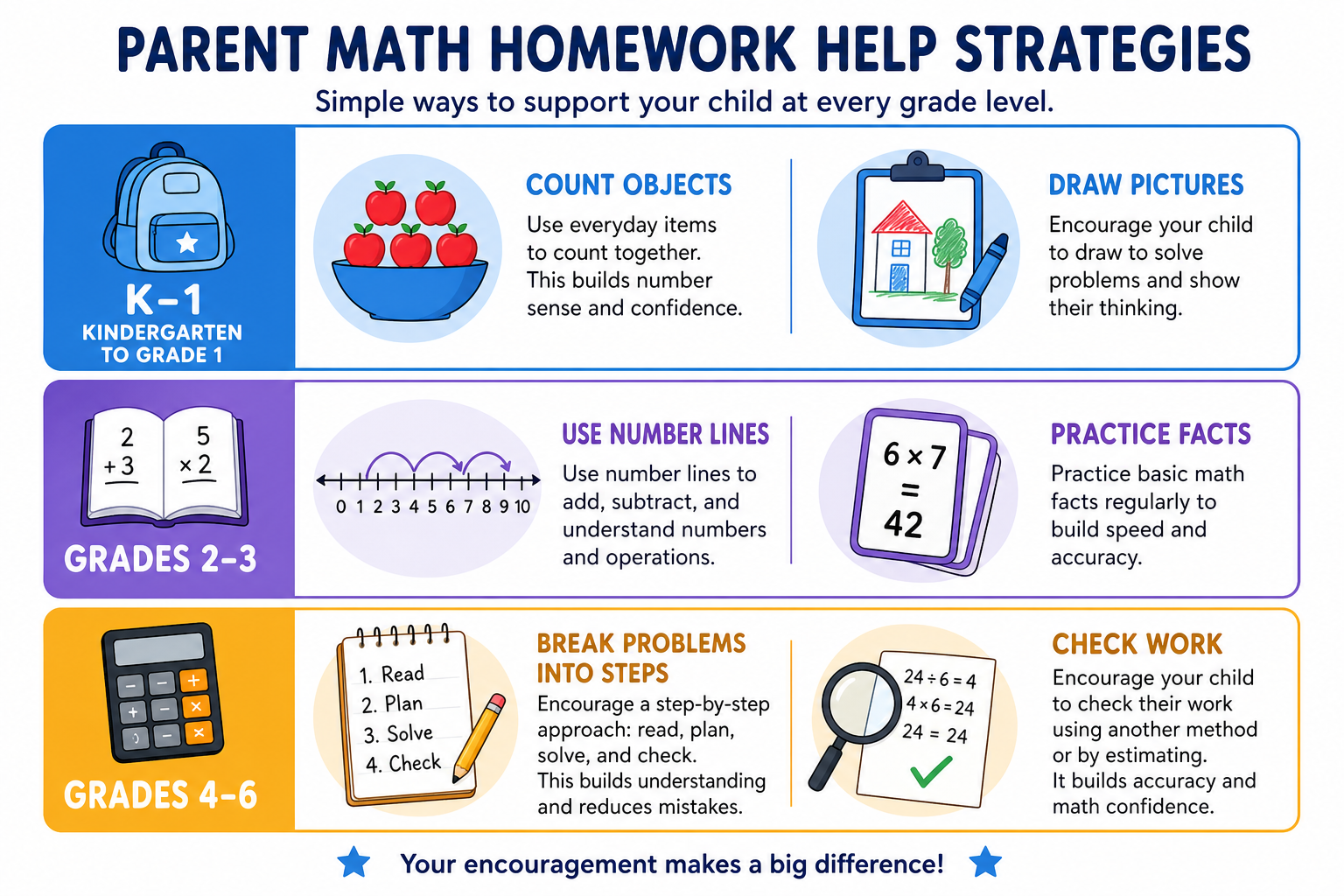
| Grade | Best support strategies | Practice resources |
|---|---|---|
| K – 1 | Count real objects, draw pictures, read problems aloud | Kindergarten math |
| 2 – 3 | Number lines, fact fluency, draw arrays for multiplication | 2nd grade math, 3rd grade math |
| 4 – 6 | Label steps, estimate answers, check reasonableness | 4th grade math, 5th grade math |
For multiplication homework in third grade, review classroom strategies before drilling facts. Our multiplication teaching guide explains arrays and repeated addition so you can use the same language as the teacher. For regrouping struggles, print a few extra pages from addition with regrouping worksheets after homework is done, not instead of it.
What Should Parents Avoid During Math Homework?
Certain habits feel helpful in the moment but hurt long-term learning. Avoid these common traps:
- Doing the work for them: If you write the steps while they watch, they learn to wait for you. Let wrong attempts happen. Mistakes are data.
- Saying "I was never good at math": That message sticks. Replace it with "This is hard, and we can figure it out together."
- Teaching a shortcut that conflicts with school: Ask which method the teacher expects before introducing your own.
- Homework marathons: Set a timer. Stop when focus is gone and write a note to the teacher if needed.
- Turning every night into a test: Homework is practice, not a performance. Save quizzes for when your child asks to check readiness.
When practice feels boring, swap in a short math game after the worksheet is done. Games build fluency without the pressure of graded homework.
When Should You Contact the Teacher?
Contact the teacher when homework consistently takes far longer than the school recommends, when your child cannot explain any part of the assignment, or when tears and avoidance happen every night. These are signs the work may be too hard, too much, or taught with a method your child has not yet learned.
The U.S. Department of Education advises parents to stay in communication with teachers about homework load and to focus on creating a consistent study space at home. A quick email beats weeks of frustration.
Conclusion
You can help your child with math homework without doing it for them. Ask questions, use visuals, let them struggle productively, and keep sessions short. Match your support to their grade, use free practice tools when extra drill helps, and reach out to the teacher when homework stops being productive.
Pick one step from the five-step method to try tonight. Small changes in how you respond add up to a child who tackles math with more confidence over time.
Reinforce tonight's lesson with targeted practice
Custom math worksheets and quick quizzes. Free, no signup required.
Frequently Asked Questions
Ask your child to explain the problem first, then guide with questions instead of answers. Use visuals like drawings or objects, let them attempt each step, and praise effort when they get stuck. Your job is to coach the thinking process, not to finish the worksheet.