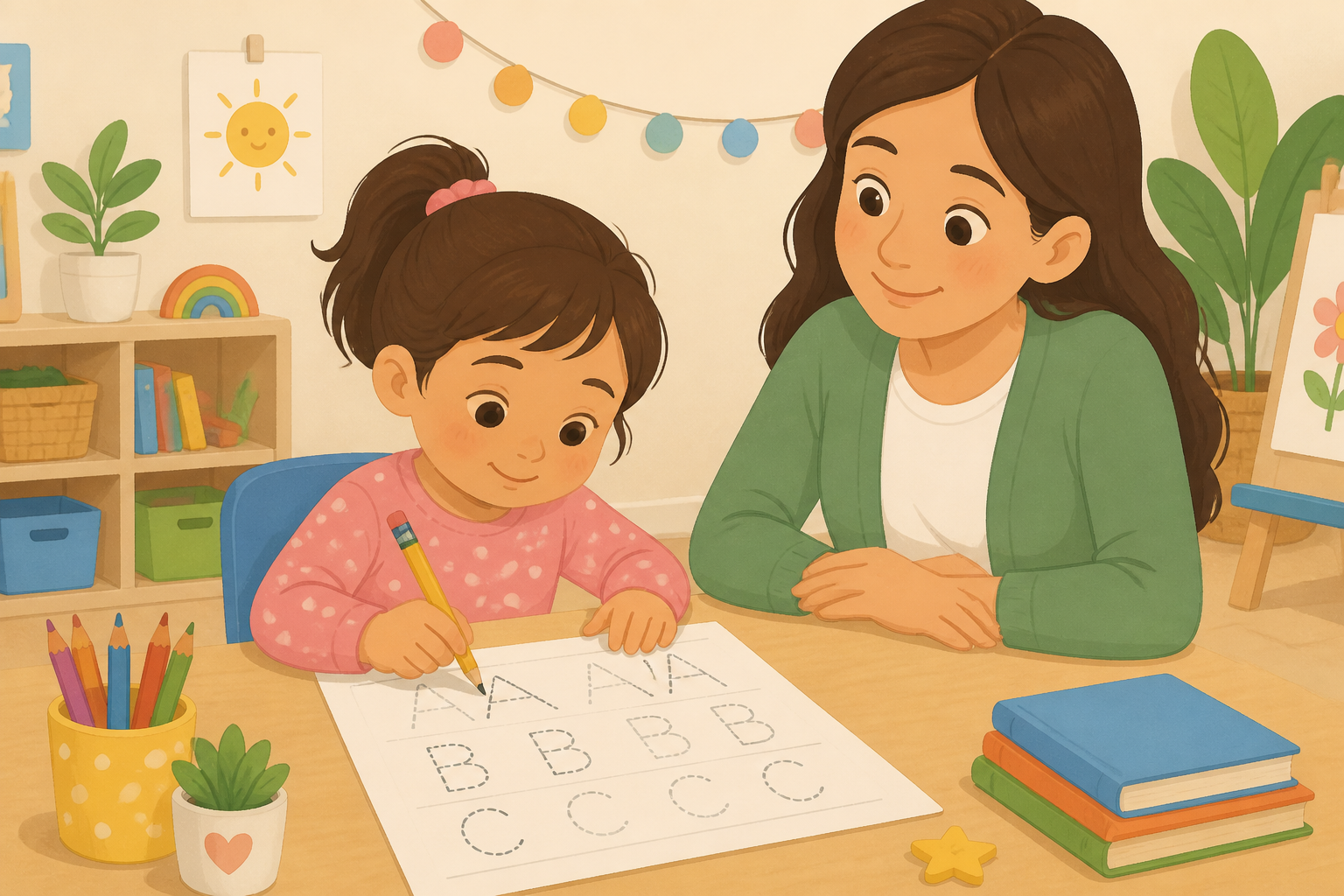
Fine motor skills are the hidden foundation behind early writing. A child who struggles to hold a pencil or trace a line will struggle with letters, names, and sentences too. Understanding why these small hand movements matter helps parents and teachers support writers before frustration sets in.
Writing is not only about knowing letter shapes. It requires grip strength, finger coordination, and stamina. This guide explains what fine motor skills involve, which activities build them, and how tracing worksheets fit into a balanced early writing program at home or in preschool and kindergarten classrooms.
Why Do Fine Motor Skills Matter for Early Writing?
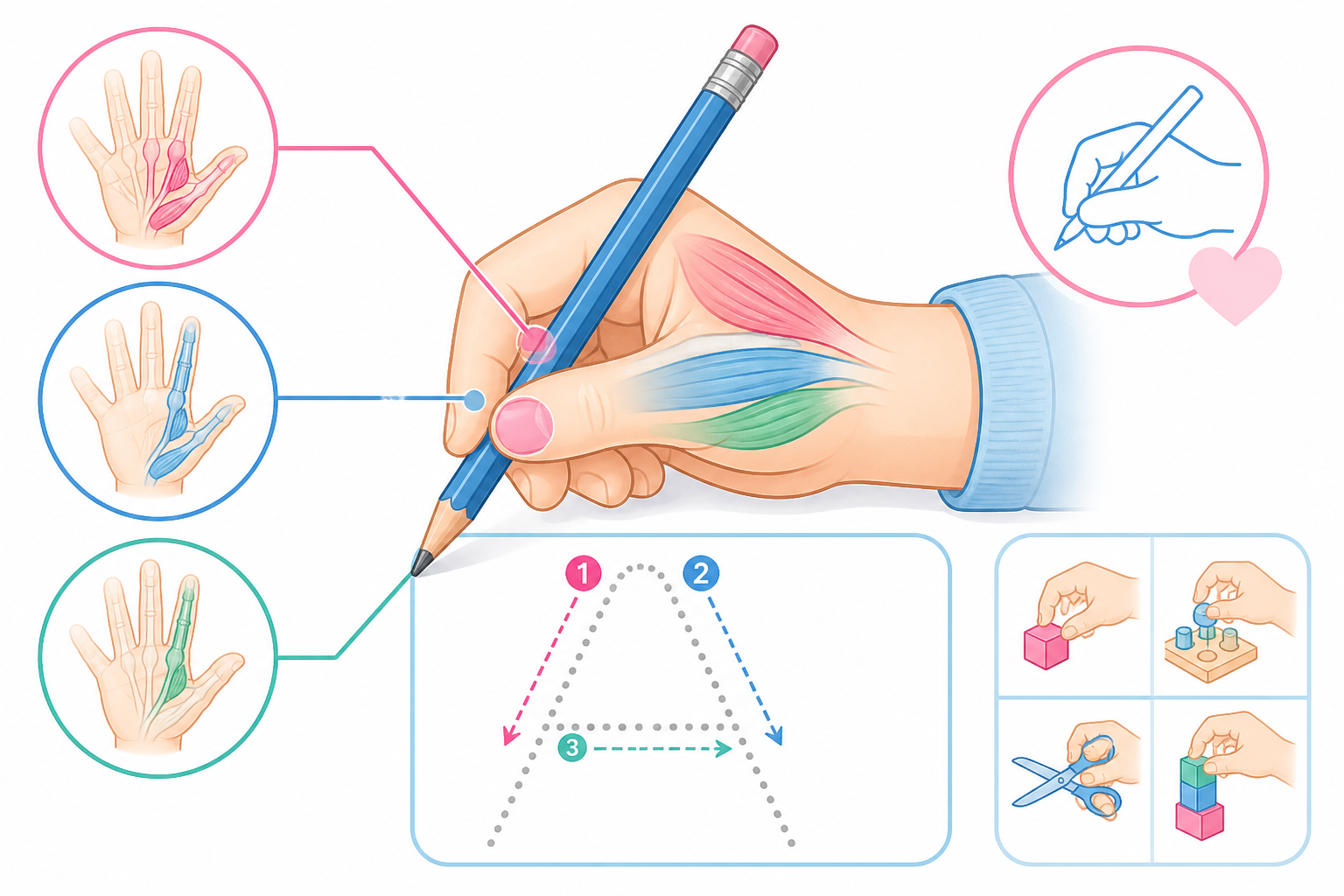
Fine motor skills matter for early writing because every letter requires controlled finger and wrist movements. Weak fine motor control leads to poor grip, messy letter formation, and quick fatigue. Children may know their letters but still avoid writing because the physical task feels too hard.
Reading Rockets emphasizes that handwriting instruction works best when children have the motor readiness to form letters consistently. Literacy and motor development run on parallel tracks in the early years. Neglecting one slows the other.
Teachers often see the link in reverse: students with strong fine motor skills complete writing assignments faster and with less resistance. Investing ten minutes a day in motor activities saves hours of remediation later in elementary school.
What Fine Motor Skills Should Each Age Have for Writing?
Fine motor expectations grow from scribbling to independent sentences. Use these milestones as a guide, not a strict deadline. Every child develops on a slightly different timeline.
Ages 3–4
Typical skills: Crayon grip, scribbling, tracing lines and curves
Writing connection: Builds the foundation for letter paths and left-to-right movement
Ages 4–5
Typical skills: Tracing letters, copying name, drawing simple shapes
Writing connection: Connects motor control to letter recognition and spelling
Ages 5–6
Typical skills: Forming letters independently, spacing, writing on lines
Writing connection: Kindergarten writing readiness and early sentence work
Ages 6–7
Typical skills: Faster letter formation, smaller size, consistent grip
Writing connection: Supports first grade journals, lists, and longer assignments
Preschool and kindergarten teachers can support these stages with letter tracing worksheets and number tracing pages matched to each child's current level.
What Activities Build Fine Motor Skills for Writing?
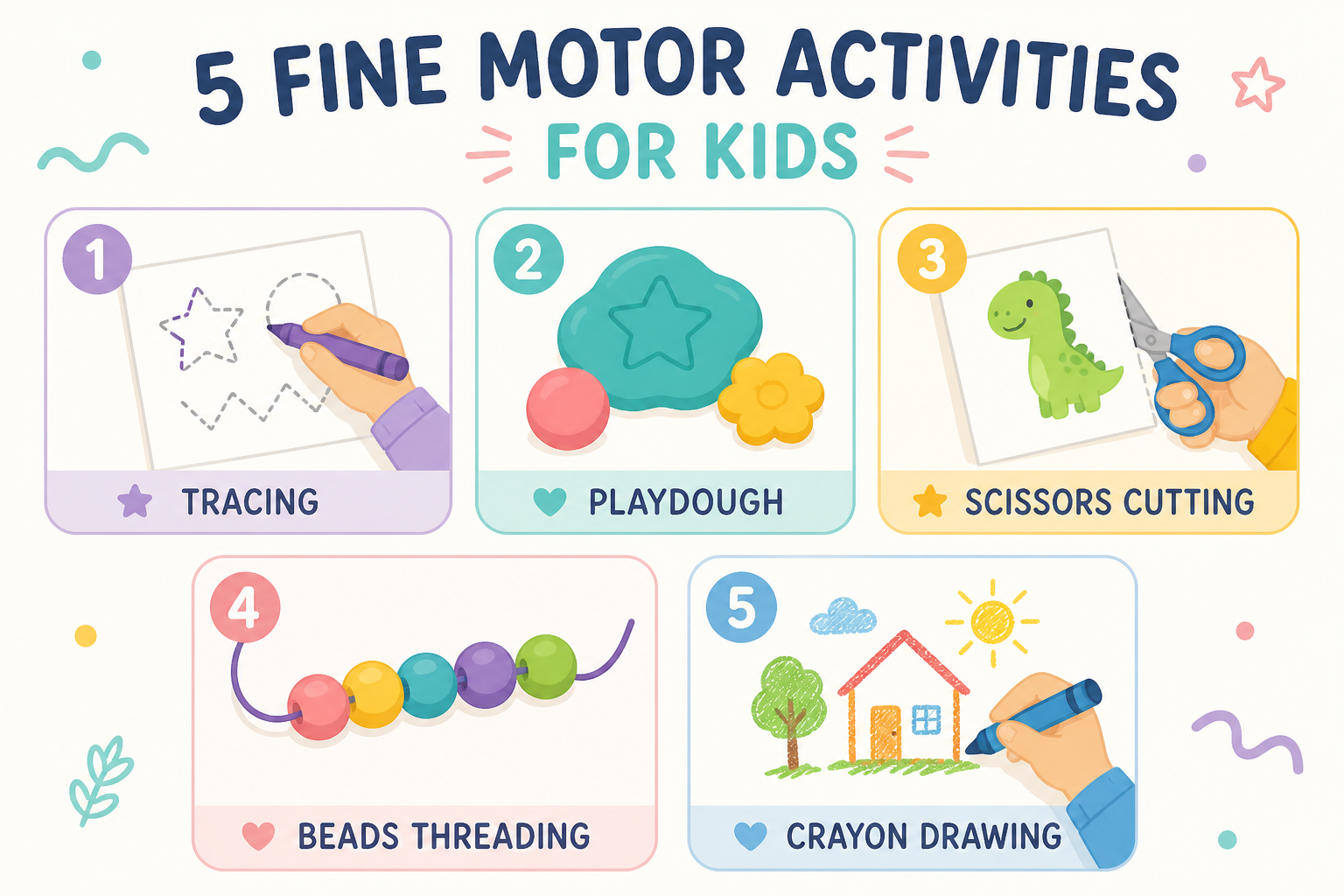
The best fine motor programs mix structured practice with playful hand work. Rotate activities across the week so children stay engaged and use different muscle groups.
| Activity | Benefit | Suggested time |
|---|---|---|
| Tracing worksheets | Guides pencil path; builds letter muscle memory | 5–10 min daily |
| Playdough and clay | Strengthens fingers and grip | 10 min, 3x per week |
| Cutting and pasting | Coordinates both hands; builds control | One craft per week |
| Beads, tweezers, or tongs | Pinch strength for pencil grip | 5 min as a warm-up |
| Free drawing and coloring | Motivation and creativity; low-pressure practice | Open-ended |
Occupational therapists often recommend short, frequent practice over long sessions. A five-minute tracing warm-up before a craft project gives children success before harder tasks. Keep materials accessible so practice feels routine, not like a punishment.
Create custom tracing sheets in seconds
Names, letters, and numbers with age-appropriate dotted fonts.
How Do Tracing Worksheets Help Fine Motor Development?
Tracing worksheets help fine motor development by giving children a clear path to follow with their pencil. Dotted or dashed letter outlines reduce guesswork and build consistent stroke patterns. Over time, muscle memory takes over and students write letters independently.
Start with pre-writing lines: straight, curved, zigzag, and circle paths. Move to single letters, then the child's name. Our guide to handwriting fonts for tracing worksheets explains which font styles fit preschool versus kindergarten writers.
- Use custom name tracing worksheets for high-motivation practice
- Print one page per day rather than a thick packet that overwhelms young writers
- Pair tracing with verbal cues: "Start at the top, pull down" for letter formation
- Celebrate effort and improvement, not perfect penmanship on day one
What Tips Work at Home and in the Classroom?
Fine motor support looks similar at home and at school: short sessions, the right tools, and patience. Teachers can build a five-minute motor warm-up into morning work. Parents can add tracing after snack or before bedtime stories.
- Right-sized tools: Short pencils and crayons fit small hands better than adult-sized supplies.
- Proper seating: Feet flat, paper tilted, non-writing hand holding the paper steady.
- Variety: Alternate tracing with playdough so fingers do not tire from one task type.
- Model grip gently: Show once, then let the child try. Avoid gripping their hand through every stroke.
- Connect to morning routines: See our morning work routine guide for fitting tracing into the start of the school day.
Homeschool families can weave tracing into weekly homeschool worksheet plans alongside math and reading practice.
When Should You Seek Extra Support for Fine Motor Skills?
Seek extra support if your child shows persistent frustration with writing, avoids all fine motor tasks for several months, or falls far behind classroom peers despite daily practice. Start with the teacher and pediatrician. They may suggest occupational therapy evaluation or classroom accommodations.
Most children improve with consistent tracing, play-based motor activities, and patient encouragement. Early intervention helps when a true delay is present, but many struggling writers simply need more structured practice and better tools, not labels.
Key Takeaways
- Fine motor skills are the physical foundation for legible early writing.
- Develop skills through tracing, playdough, cutting, and short daily practice.
- Match activities to age: lines and curves before full sentences.
- Tracing worksheets build muscle memory when used in brief, regular sessions.
- Combine motor play with structured tracing for confident young writers.
Conclusion
The importance of fine motor skills in early writing cannot be overstated. Children who build hand strength and pencil control early write with more confidence and less fatigue. Tracing worksheets, hands-on play, and patient daily practice create the conditions for success long before formal essays or long assignments appear.
Print one tracing page tonight, set a five-minute timer, and praise the effort. Small motor wins today become fluent writers tomorrow.
Start fine motor practice with free tracing sheets
Custom names, letters, and numbers. Print in seconds.
Free Tracing Worksheet GeneratorRelated Articles
- Best Handwriting Fonts for Tracing Worksheets — pick the right font by age
- Morning Work Routine with Worksheets — fit tracing into the school day
- Free Printable Worksheets for Homeschool — weekly planning for home learners
Frequently Asked Questions
Fine motor skills control the small hand and finger movements needed to hold a pencil, form letters, and write on a line. Without them, children fatigue quickly, grip pencils incorrectly, and avoid writing tasks. Strong fine motor skills support legible handwriting, faster writing fluency, and confidence in classroom work.