
A morning work routine with worksheets gives students a calm, predictable start and gives you time to take attendance, check in with families, or handle quick admin tasks. The best routines are short, review-based, and easy to prep once a week. This guide shows you how to build one for a classroom or homeschool that actually runs smoothly.
Morning work is not busy work. Done well, it reinforces skills students already know, builds independence, and sets a focused tone for the day. Whether you teach kindergarten or sixth grade, you can use the same framework with different worksheet types and time limits.
Why Does Morning Work With Worksheets Work?
Morning work with worksheets works because it is structured, repeatable, and independent. Students know what to do when they arrive, which cuts down on off-task behavior during the first chaotic minutes of the day. Teachers gain a predictable window for housekeeping without losing instructional time later.
Worksheets fit this slot well because they are quiet, portable, and easy to differentiate. You can hand one student a challenge page and another a review sheet without rewriting the whole routine. The U.S. Department of Education emphasizes consistent classroom routines as part of effective learning environments, and morning work is one of the simplest routines to maintain.
Homeschool families benefit too. A short worksheet after breakfast signals that learning time has started. Pair morning work with ideas from our free printable worksheets for homeschool guide to build a full weekly plan.
How Do You Structure a Morning Work Routine?
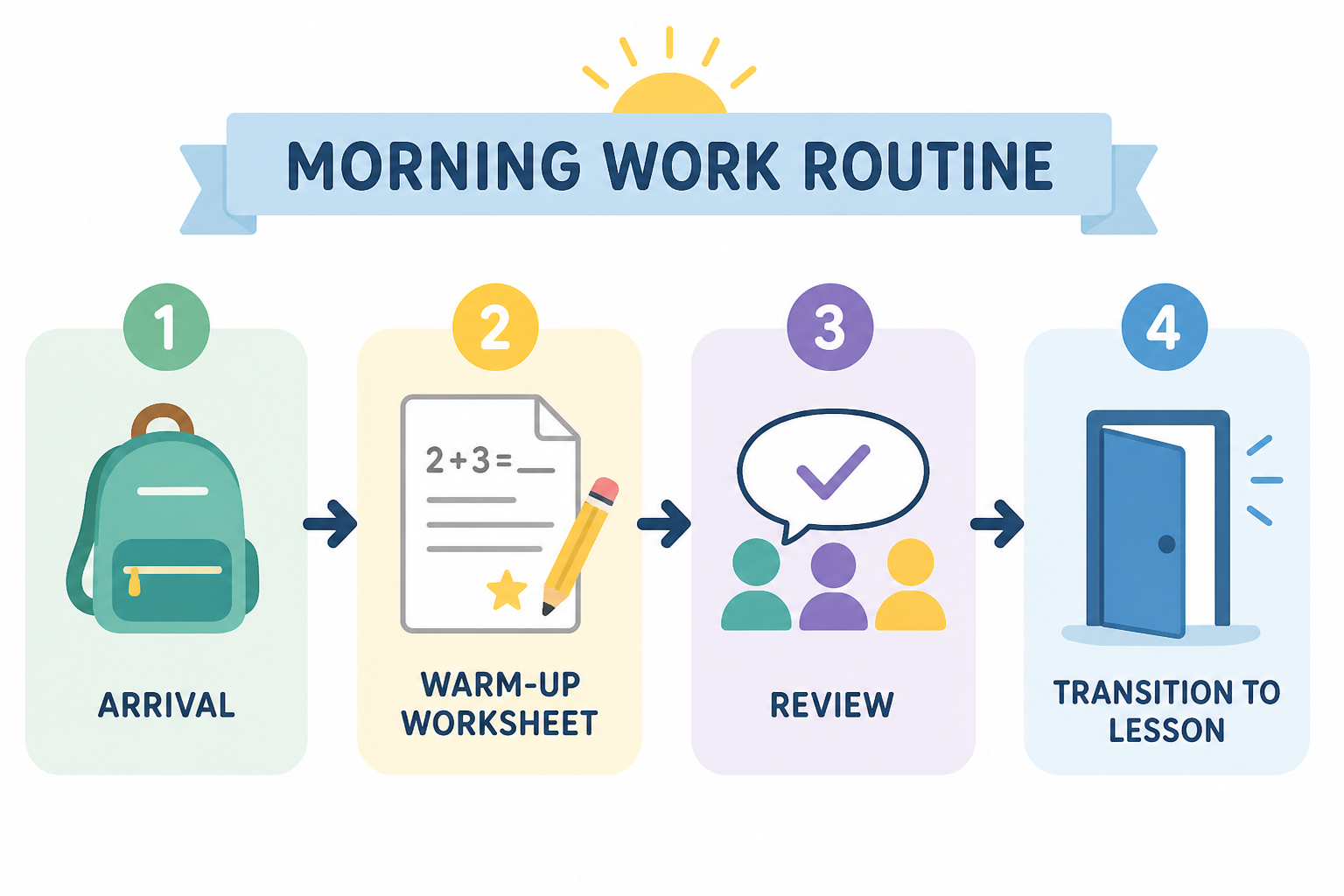
Structure morning work in four steps: signal, independent practice, time limit, and transition. Post the steps on the wall for the first two weeks until the habit sticks. Students should be able to run the routine with minimal reminders by the end of the month.
1. Set a clear start signal
Use the same bell, song, or phrase every day. Students learn that the signal means unpack, grab morning work, and begin quietly. Consistency reduces questions and chatter.
2. Keep tasks independent
Morning work should not need a mini-lesson. Review skills from last week or last unit. If many students are stuck, the worksheet was too hard or too new.
3. Use a predictable time limit
Post the number of minutes on the board. When time ends, students leave unfinished work in a designated spot or take it home based on your classroom policy.
4. Transition with a closing routine
Collect papers, switch to the next subject, or move to carpet time with the same cue every day. The transition matters as much as the worksheet itself.
Start the year with easier pages than you think you need. Success builds the routine faster than challenge pages that create a line at your desk. Once independence is solid, increase difficulty gradually.
What Morning Work Fits Each Grade Level?
Match morning work to developmental level and attention span. Younger students need shorter tasks with visuals. Older students can handle mixed review and longer written responses in the same time block.
Grades K–1
Focus: Tracing, number sense, short phonics
Examples: Letter tracing, counting to 20, simple addition pictures, name writing
Grades 2–3
Focus: Math facts, place value, short writing
Examples: Two-digit addition, spelling patterns, journal sentence starters
Grades 4–6
Focus: Mixed review, problem solving, grammar
Examples: Multiplication facts, fraction review, paragraph editing, word problems
For kindergarten, try kindergarten math worksheets and letter tracing worksheets. Second and third graders can rotate 2nd grade math worksheets with grade 3 multiplication pages as the year progresses.
Build a week of morning work in one sitting
Print ready-made pages or generate a custom set for your grade.
How Do You Prep a Week of Morning Work?
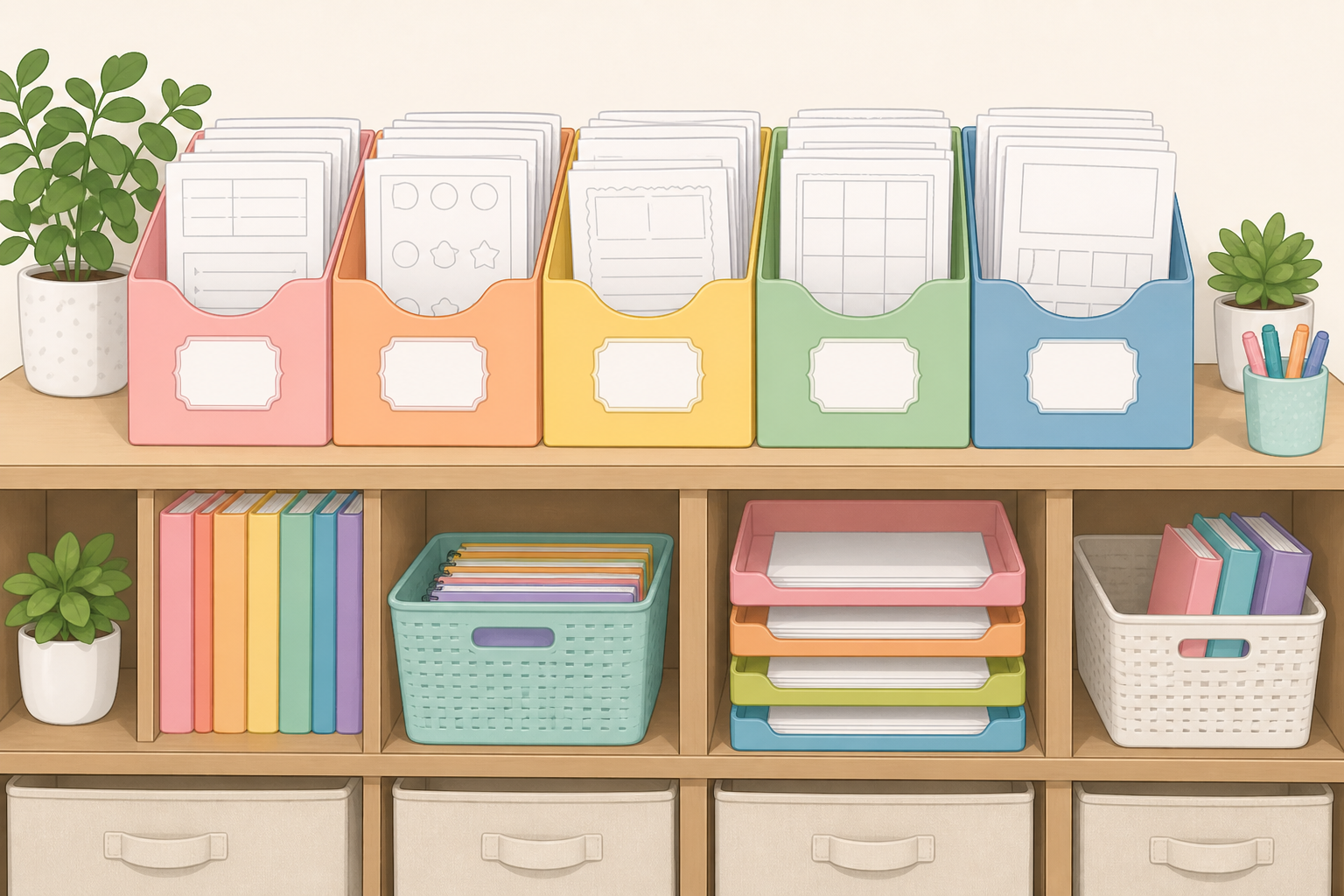
Prep a full week on Friday afternoon or Sunday evening so mornings stay calm. Label five folders or bins Monday through Friday and slide one worksheet set into each. Students grab today's folder without asking which page to use.
- Monday: Math facts or number sense review
- Tuesday: Phonics, spelling, or tracing for younger grades
- Wednesday: Word problems or short writing prompt
- Thursday: Skill your class missed on the last test or check-in
- Friday: Mixed review or a slightly longer challenge page
The National Council of Teachers of Mathematics supports spaced practice over cramming. Rotating skills across the week fits that approach better than repeating the same worksheet type every day.
What Mistakes Should Teachers Avoid With Morning Work?
The most common morning work mistakes are using new material, running too long, and grading every page. Morning work should warm up the brain, not become your heaviest grading pile.
- Introducing new skills: Save instruction for your main math or literacy block.
- No time limit: Without a clear end, morning work eats into core lessons.
- Only one subject all week: Rotate formats to keep engagement up.
- Grading everything: Spot-check or self-check with answer keys when possible.
- Skipping routines after breaks: Restart the same way after holidays so students do not relearn expectations.
If worksheets feel stale, swap in a game day on Friday using ideas from our fun math games for kids list or try ways to make math practice fun for quick classroom variations.
What Free Worksheet Resources Help Morning Work?
You do not need a paid subscription to run a strong morning work program. Free grade-level pages plus custom generators cover most classrooms and homeschool setups.
- Math worksheet generator for daily fact practice
- Tracing worksheet generator for K-1 handwriting warm-ups
- Kindergarten math worksheets and grade-level landing pages through sixth grade
- Quiz generator for a quick Friday check-in
Key Takeaways
- Morning work should be short, independent, and review-based.
- Use the same start signal and transition cue every day.
- Prep Monday-through-Friday folders once per week to save time.
- Match worksheet difficulty to grade level and prior instruction.
- Free generators and printables make the routine sustainable all year.
Conclusion
Learning how to create a morning work routine with worksheets is about consistency more than complexity. Pick a time limit, choose review skills, prep a week at a time, and train students on the procedure until it runs itself. Your mornings get calmer and your students start the day with a win.
Print five pages for next week, label your folders, and teach the routine explicitly on Monday. By Friday, you will wonder how you ever started the day without it.
Print morning work for next week
Free math and tracing worksheets plus custom generators.
Create Free WorksheetsRelated Articles
- Free Printable Worksheets for Homeschool — weekly planning for home learning
- A Parent's Guide to 2nd Grade Math — sample skills for morning work pages
- 10 Fun Math Games for Kids — Friday variety when worksheets need a break
Frequently Asked Questions
Morning work is a short, independent practice routine students complete when they arrive or right after opening activities. Worksheets are one common format because they are easy to prep, review, and store. A typical session lasts 10 to 20 minutes and reviews skills already taught rather than introducing brand-new concepts.