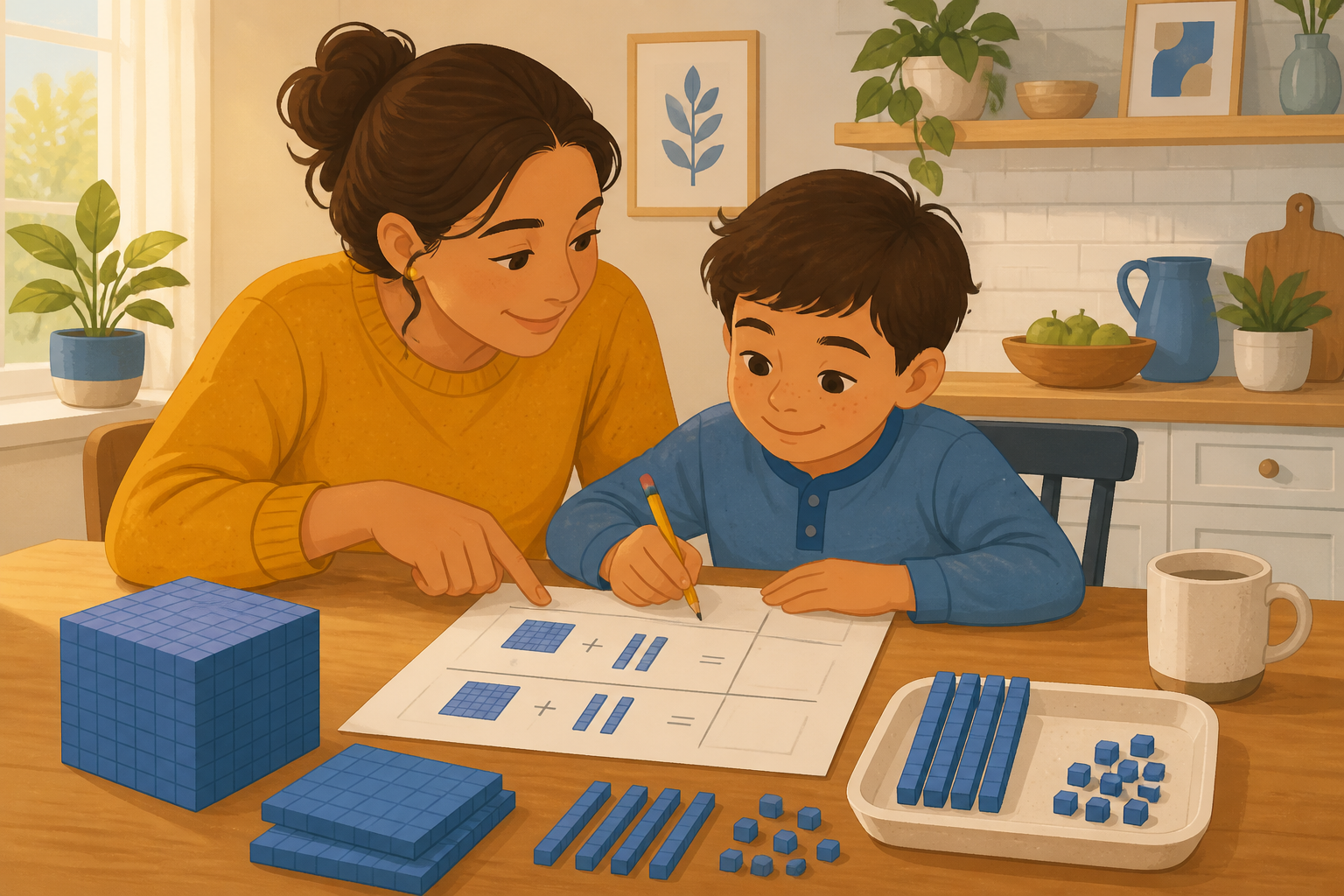
Second grade math shifts from counting small numbers to working with hundreds, regrouping, and early multiplication ideas. If you are wondering what your child should know and how to help without redoing their homework, this parent guide breaks down the major skills, a simple weekly practice plan, and free worksheets you can use tonight.
You do not need to be a math expert to support a second grader. You need to know what the year covers, which skills build on each other, and how to keep practice short and positive. This article maps the full year so you can spot gaps early and celebrate progress along the way.
What Do Second Graders Learn in Math?
Second graders learn place value to hundreds, two-digit addition and subtraction with regrouping, fact fluency within 20, and early multiplication through equal groups and skip counting. The Common Core second grade math standards also include telling time, measuring length, and solving word problems with unknowns in all positions.
The year is less about brand-new ideas and more about stretching number sense to bigger values. Children who solidified first grade facts move faster through regrouping. Children still counting on fingers for every fact need extra support before two-digit work feels manageable.
Our Common Core math standards by grade guide explains how second grade fits into the K-6 sequence. Pair it with free 2nd grade math worksheets for practice that matches classroom goals.
What Are the Key 2nd Grade Math Skills?
Think of second grade math in five units. Most curricula weave them together, but this breakdown helps you see what your child is working on at any point in the year.
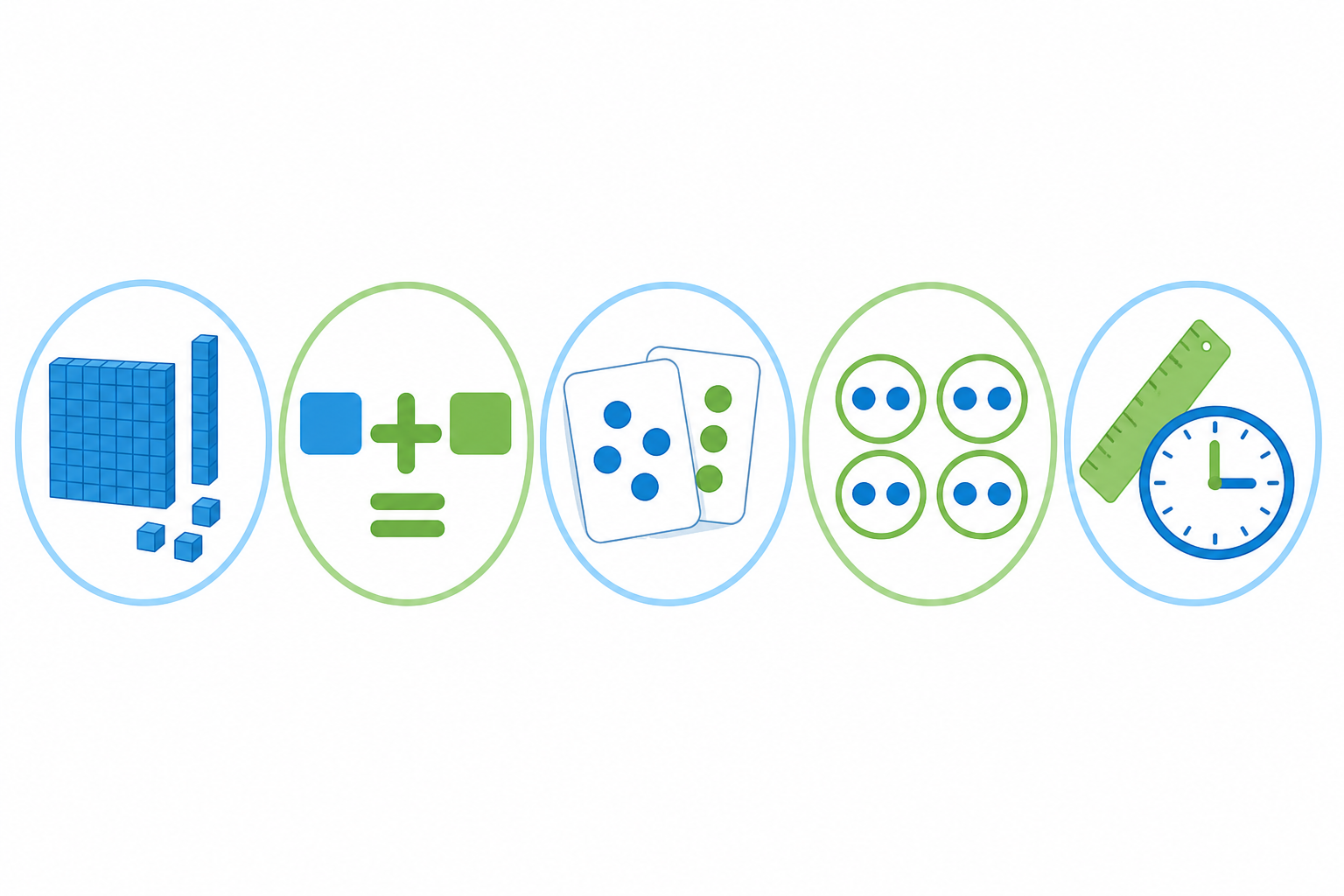
Place value
Skills: Ones, tens, hundreds; expanded form; comparing three-digit numbers
At home: Use base-ten blocks, bundled straws, or drawn hundreds charts to show 247 as 2 hundreds, 4 tens, 7 ones.
Addition & subtraction within 100
Skills: Two-digit problems with and without regrouping; word problems
At home: Line up digits by place value on paper. Say tens and ones aloud when regrouping so the steps stay clear.
Fact fluency within 20
Skills: Quick recall of addition and subtraction facts; mental strategies
At home: Drill five facts at a time with flash cards or a short worksheet. Celebrate accuracy before speed.
Foundations for multiplication
Skills: Equal groups, arrays, skip counting; repeated addition
At home: Group snacks or toys into equal sets. Connect skip counting to the times tables work coming in third grade.
Measurement & time
Skills: Inches and centimeters; telling time to five minutes; money
At home: Measure objects around the house. Set a timer for practice sessions and read clocks together at meals.
Place value is the backbone of the year. If your child cannot explain why 53 is five tens and three ones, two-digit addition with regrouping will feel like magic tricks. Use our place value worksheets or a printable place value chart before pushing ahead on harder addition pages.
How Can Parents Help With 2nd Grade Math at Home?
Parents help second graders most by coaching thinking, not supplying answers. Ask questions like "How did you know to regroup?" or "What does the tens digit mean here?" Short, calm sessions build confidence better than long corrections at the kitchen table.
The National Council of Teachers of Mathematics recommends linking math to daily life and keeping attitudes positive. Children who hear "I was never good at math" often give up faster than children who hear "Let us figure this out together."
- Model the process: Talk through one problem aloud before your child works independently.
- Use objects first: Blocks, coins, or drawn tens and ones beat jumping straight to symbols when a concept is new.
- Match school methods: Ask the teacher which strategy they teach for regrouping so home practice does not conflict with class.
- Stop while it still works: End on a success, not a meltdown. Tomorrow counts more than tonight.
For homework nights that feel tense, read our guide to helping with math homework for a five-step coaching method that keeps you in the supporter role.
Print practice for the skill your child is learning this week
Free 2nd grade worksheets for place value, regrouping, and facts.
What Does a Weekly Home Practice Plan Look Like?
A simple weekly plan keeps second grade math practice predictable without overwhelming the family schedule. Aim for four short sessions plus one playful review. Skip a day when everyone is tired; pick up the next day without doubling the workload.
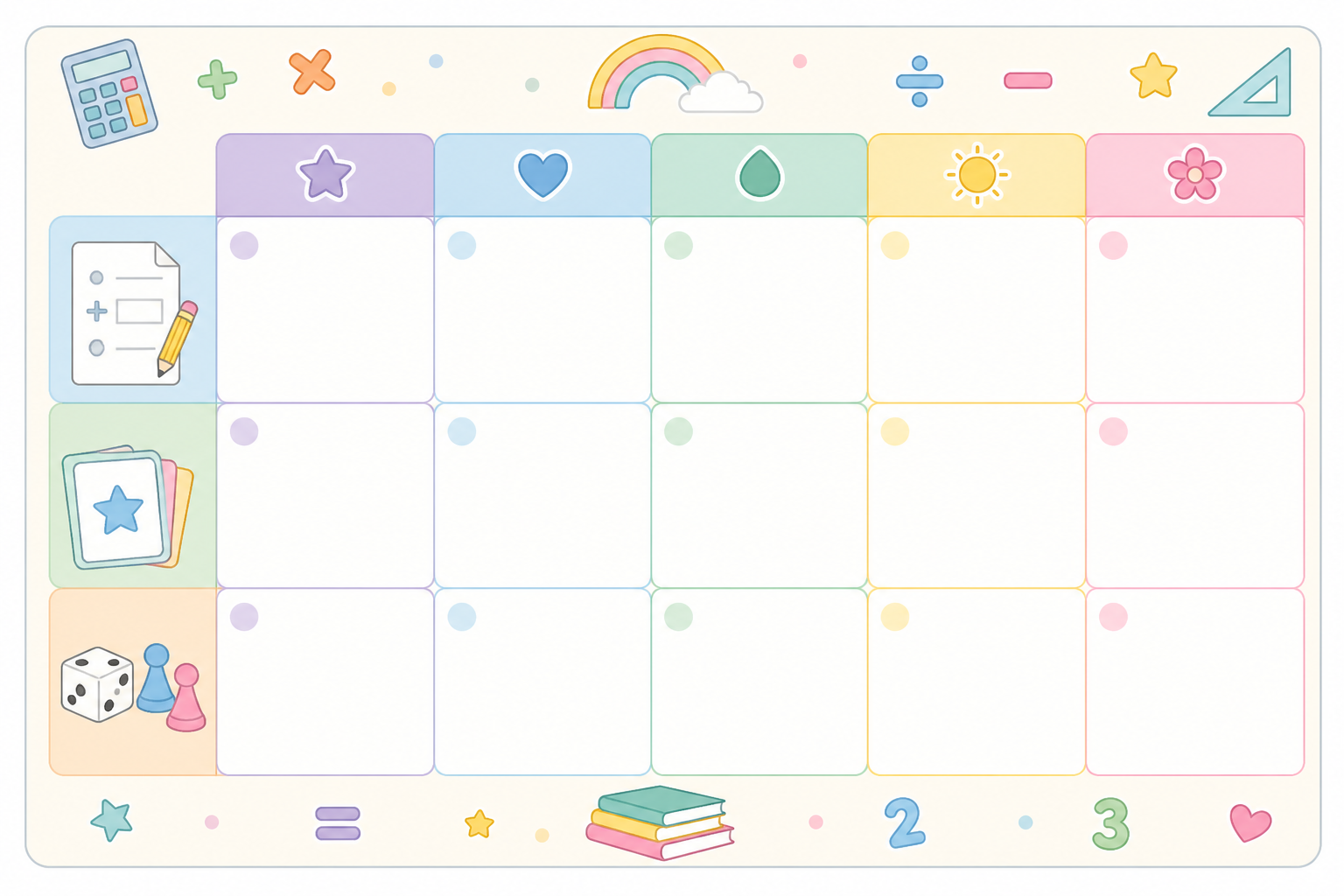
| Day | Focus | Time |
|---|---|---|
| Monday | Place value warm-up + one worksheet | 10 min |
| Tuesday | Addition or subtraction facts (flash cards or oral drill) | 10 min |
| Wednesday | Two-digit addition or subtraction with regrouping | 12 min |
| Thursday | Real-life math: time, money, or measuring | 10 min |
| Friday | Game night: dice, cards, or a math board game | 15 min |
Friday game night can be as simple as rolling two dice and adding the numbers, or playing a card game that compares values. Our list of fun math games for kids and ways to make math practice fun at home pair well with this routine.
What Do 2nd Graders Struggle With Most?
The hardest second grade math topics are usually two-digit addition and subtraction with regrouping, telling time to five minutes, and word problems with missing numbers. Each struggle has a fix that starts one step back, not with more of the same hard worksheet.
- Regrouping confusion: Return to place value models. Use addition with regrouping worksheets only after tens and ones are clear.
- Slow fact recall: Drill five facts per day instead of the full table. Accuracy first, then speed.
- Word problem panic: Draw the story before writing numbers. Ask what the problem is asking before choosing an operation.
- Time and money: Practice on real clocks and coins weekly, not only on worksheet pages.
Second grade is also when many children start building toward times tables. Our guide to when kids learn times tables explains what comes next in third grade so you can preview skip counting without rushing memorization.
What Free Resources Help 2nd Grade Math?
You do not need a paid workbook to support second grade math. Mix printable worksheets, a custom generator, and short quizzes to match whatever unit the teacher is covering.
- 2nd grade math worksheets for mixed review and skill practice
- Addition with regrouping worksheets when carrying is the focus
- Subtraction with regrouping worksheets for borrowing practice
- Math worksheet generator for custom problem sets
- Quiz generator for a quick Friday check-in
Key Takeaways
- Second grade math centers on place value, regrouping, and fact fluency within 20.
- Hands-on models and short daily practice beat long, stressful homework sessions.
- When a skill is hard, step back to the foundation skill instead of pushing forward.
- Free worksheets and generators let you target exactly what your child needs each week.
- Keep attitudes positive; your child is watching how you talk about math.
Conclusion
A parent's guide to 2nd grade math comes down to knowing the year's big skills, practicing in small doses, and using free tools that match the classroom. You do not need to teach every lesson. You need to reinforce place value, support regrouping with clear models, and celebrate steady progress.
Pick one skill to focus on this week, print a short worksheet, and try ten minutes a day. Consistency matters more than perfection, and most second graders respond quickly when practice feels manageable and positive.
Start 2nd grade math practice today
Free printable worksheets and a custom generator. No signup required.
Free 2nd Grade Math WorksheetsRelated Articles
- How to Help Your Child with Math Homework — coach without doing the work for them
- Understanding Common Core Math Standards by Grade — see how second grade fits K-6
- When Should Kids Learn Their Times Tables? — what comes after second grade foundations
Frequently Asked Questions
Second graders should add and subtract within 100, understand place value to hundreds, skip count by 2s, 5s, and 10s, and begin foundations for multiplication through equal groups. They should also tell time to five minutes, work with money, and measure length in standard units. Fluency with addition and subtraction facts within 20 is a key goal.