To teach number tracing, start with counting and numeral recognition, then use multisensory practice in sand or playdough before paper. Teach one digit at a time with top-down stroke order and a short formation chant. Use worksheets with start dots and arrows. Keep sessions to three to five minutes and group numbers by formation pattern, not counting order.
Number tracing connects early math and early writing. Children who rush to worksheets before they know what a numeral means often trace without purpose. Reversed 3s and backward 5s are common when stroke order is skipped. This guide covers readiness, formation patterns, a five-step approach, which numbers to teach first, common mistakes, and free printable resources.
When Are Children Ready for Number Tracing?
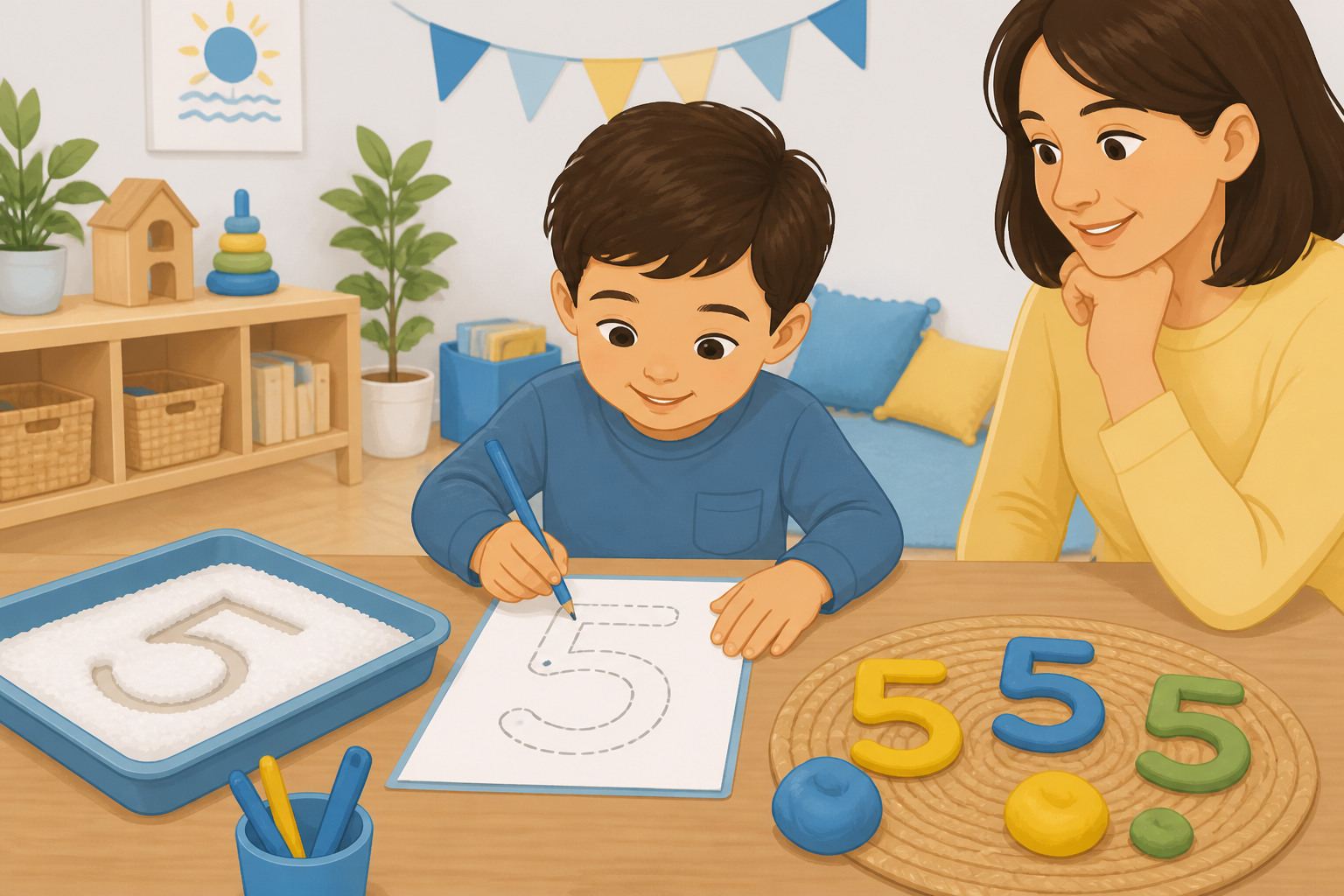
Most children are ready between ages 3 and 5. They should count objects to 10, recognize written numerals, and hold a crayon with a pinch grip. Pre-writing lines and shapes should come before digits.
Our building number sense in kindergarten guide covers counting and recognition that come first. The Common Core kindergarten counting standards expect numeral writing as part of counting to 20 by year's end.
Why Does Stroke Order Matter for Numbers?
Most numerals start at the top and move down. Consistent stroke order prevents reversals and builds speed later. Pair each digit with a short chant children say while tracing.
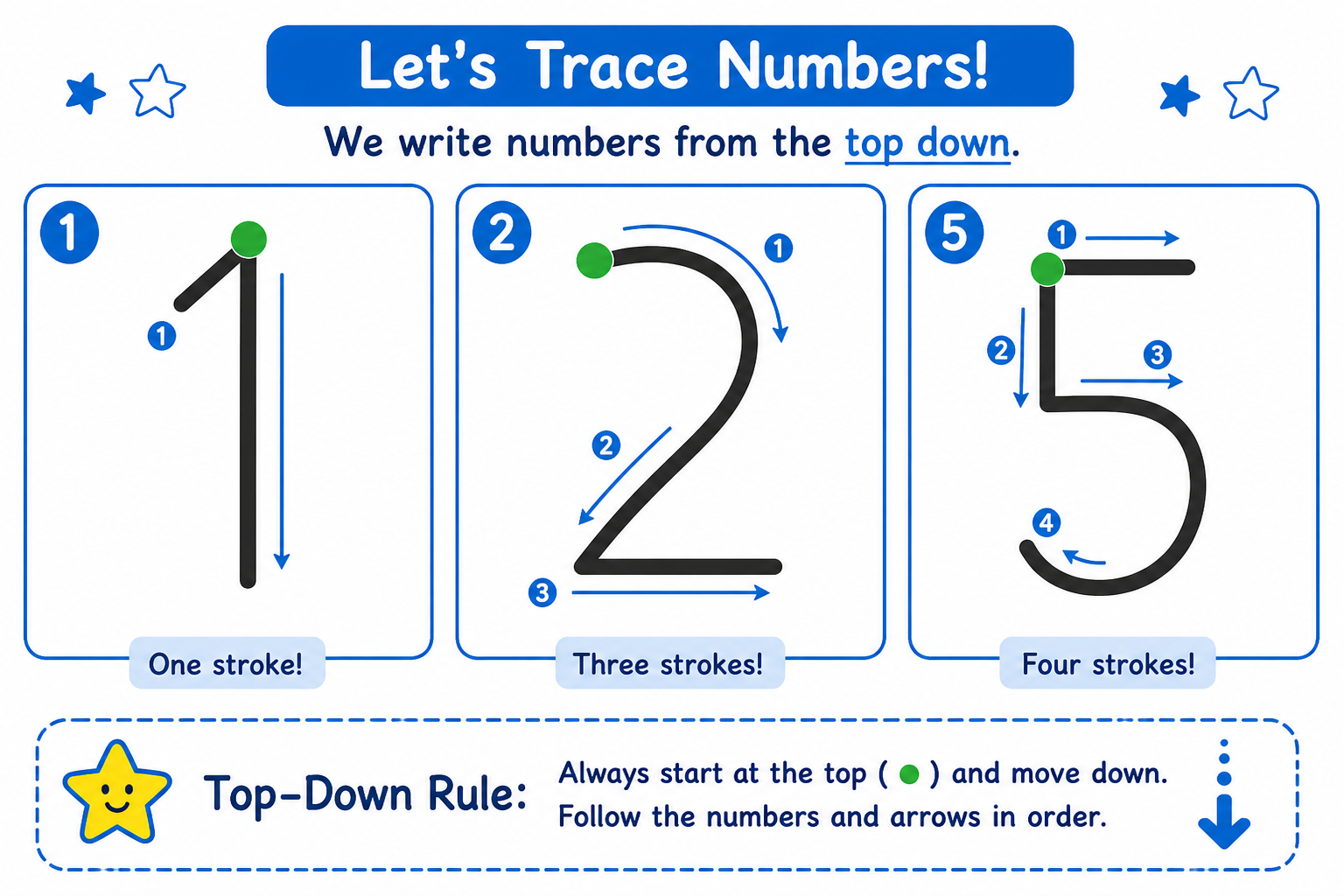
- 1: Straight line down from the top
- 2: Curve from the top, then horizontal line across the bottom
- 3: "Around the tree, around the tree" (two curves)
- 5: "Little line, belly, hat" (short line, curve, top stroke)
- 7: Horizontal line left, then diagonal down to the left
What Five-Step Approach Works?
Move from large sensory practice to small pencil work. Each step needs a few sessions before the next one sticks.
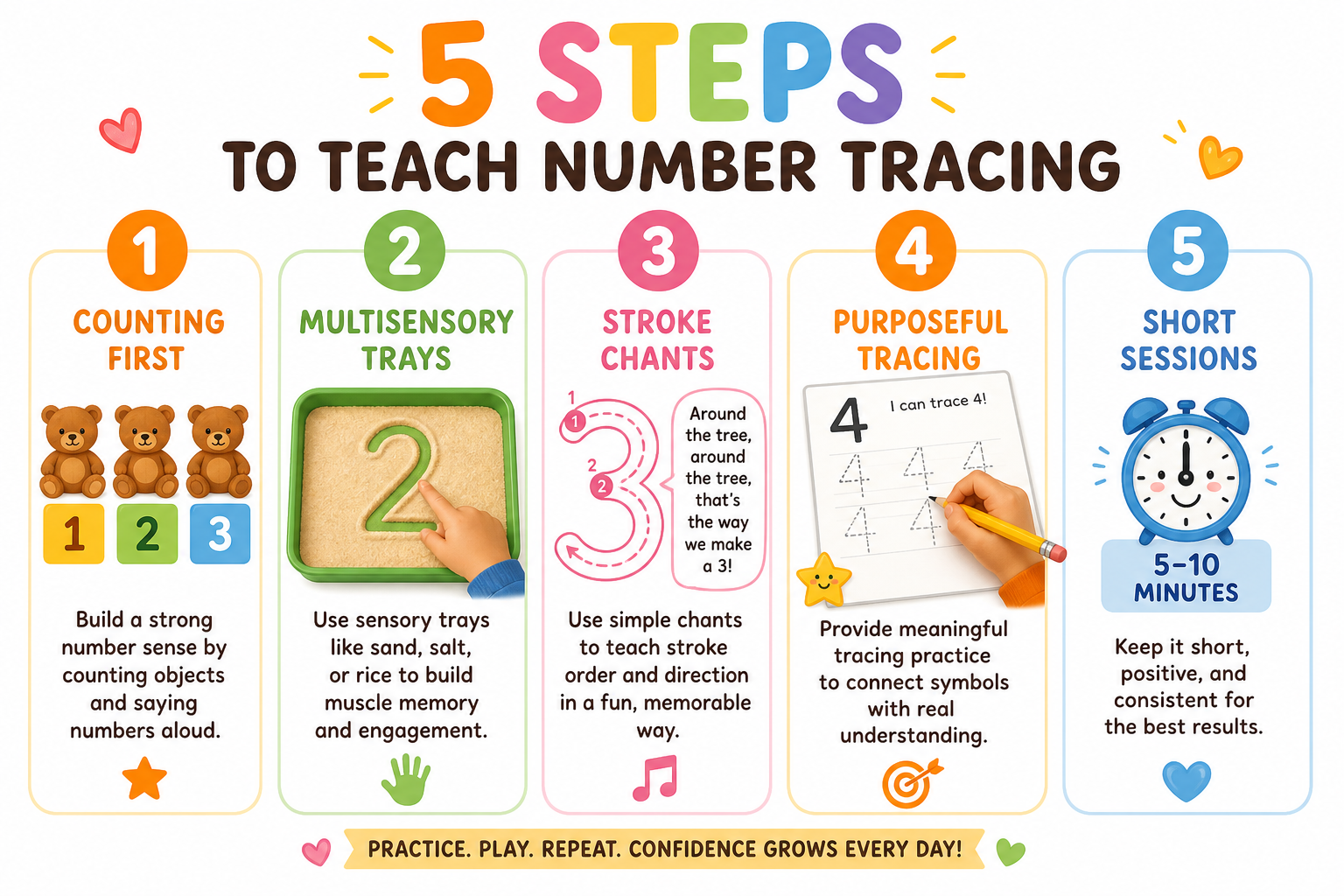
Children should count objects to 10 and match quantities to written digits before tracing. Recognition comes before formation.
Trace large numbers in sand, salt, or shaving cream with a finger. Say the number name and chant the stroke path aloud.
Write giant numbers in the air with the whole arm before the pencil. Large movements build the motor plan for small writing.
Use worksheets with start dots and arrows. Child follows the path while saying the formation chant, not just scribbling over dots.
After guided tracing, leave blank space for one or two independent tries. Circle the best example and stop before fatigue.
Print free number tracing worksheets
Numbers 0–10 with stroke guides—or create custom tracing pages.
Trace Numbers WorksheetsWhich Numbers Should You Teach First?
Group by formation pattern, not 0-through-9 order. Simple strokes build confidence before tricky reversals.
| Group | Numbers | Notes |
|---|---|---|
| Simple strokes | 1, 2 | Straight and curved basics |
| Circle-based | 0, 3, 6, 8 | Start at top, curve around |
| Mixed strokes | 4, 7 | Angles and straight lines |
| Tricky reversals | 5, 9 | Need extra chant practice |
Pair with teaching letter tracing using the same multisensory sequence. Letters and numbers share fine motor foundations.
What Mistakes Should Parents Watch For?
- Tracing from bottom to top instead of top-down
- Doing all digits 0–9 in one session before any are solid
- Passive tracing without saying the number or formation chant
- Skipping sand and playdough and jumping straight to worksheets
- Correcting every reversal instead of using a repeatable routine
- Sessions longer than five minutes that cause grip fatigue
For a backward 3, use the air-finger-marker-pencil routine from our fine motor skills guide. One clean routine beats ten corrections.
How Do Worksheets Support Practice?
Worksheets follow sensory practice. After tracing in sand, assign one page for that digit. Use trace numbers worksheets with arrows and start dots, or pair with kindergarten math worksheets for counting and numeral practice together.
Laminate pages for dry-erase reuse. Connect counting activities from building number sense in kindergarten so tracing always ties to quantity.
Key Takeaways
- Count and recognize numerals before asking children to write them.
- Use sand, playdough, and air-writing before pencil worksheets.
- Teach top-down stroke order with a formation chant for each digit.
- Group numbers by shape pattern; save 5, 7, and 9 for extra practice.
- Keep sessions to three to five minutes, one or two digits per day.
Conclusion
Teaching number tracing works when children know what the digit means before they write it. Build the motor plan with sensory trays and air-writing, then trace with purpose on paper. Short sessions and formation chants turn practice into habit. A child who writes five numerals well is ahead of one who rushed through all ten.
Free number tracing worksheets
Printable 0–10 pages with stroke guides for preschool and kindergarten.
Trace Numbers WorksheetsRelated Articles
- How to Teach Letter Tracing to Preschoolers — same multisensory sequence for letters
- Building Number Sense in Kindergarten — counting before writing numerals
- The Importance of Fine Motor Skills in Early Writing — hand strength before tracing
Frequently Asked Questions
Most children start number tracing between ages 3 and 5 after they can count to 10 and hold a crayon. Begin with counting and recognizing numerals before asking children to write them. If grip is still a full fist, return to fine motor play and pre-writing lines for a few weeks.