To teach letter tracing to preschoolers, build fine motor strength before worksheets, introduce one letter at a time with correct stroke order, and keep sessions short. Start with straight-line uppercase letters like L and T. Use multisensory practice in sand, playdough, and chalk before paper. Say the letter sound while tracing to connect handwriting with reading.
Letter tracing is one of the first writing skills parents and teachers tackle, but rushing to worksheets often creates frustration and bad habits. Children who cannot hold a pencil comfortably will not form letters well no matter how many pages they trace. This guide covers readiness signs, stroke order, a five-step approach, which letters to teach first, common mistakes, and free printable resources.
When Are Children Ready for Letter Tracing?
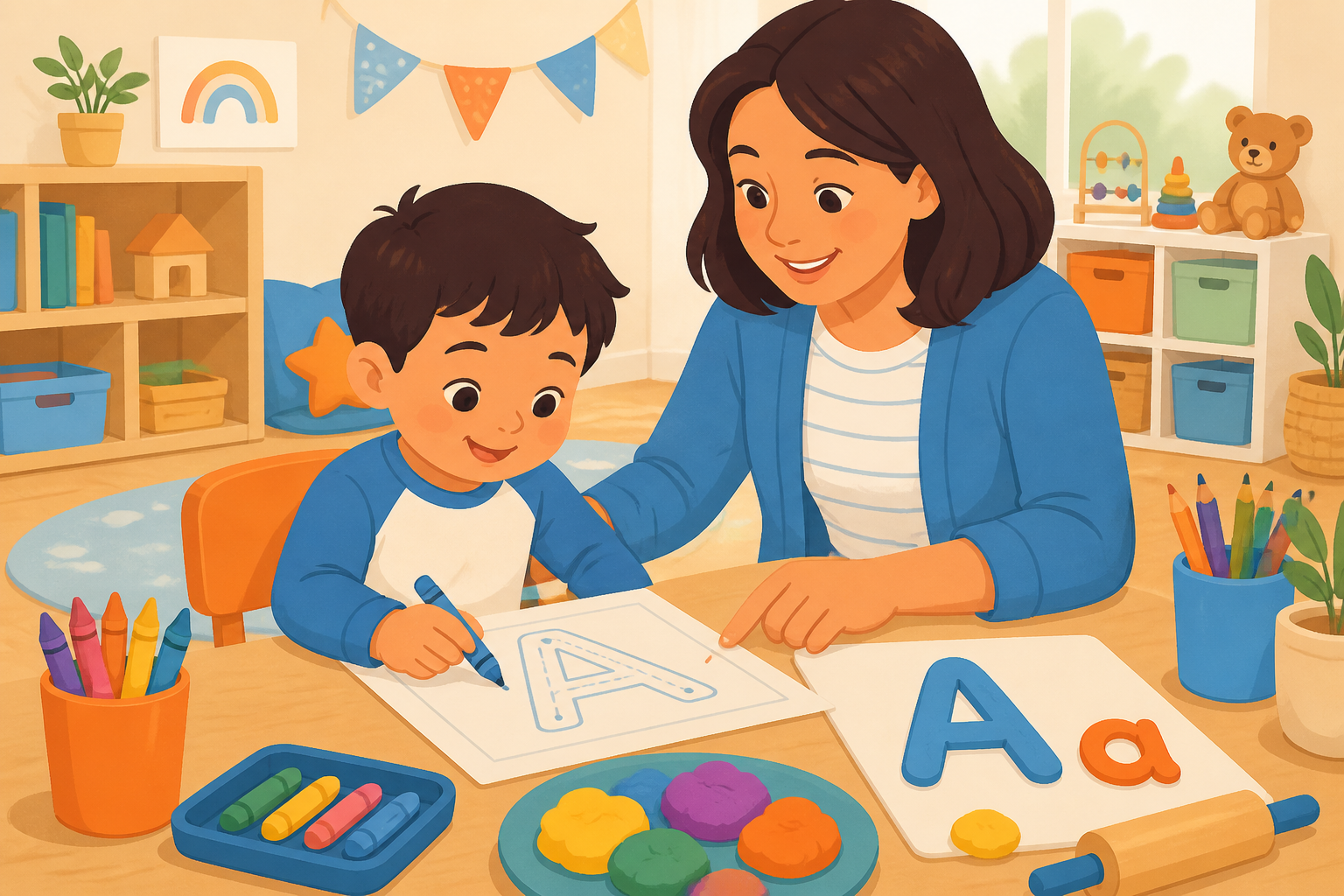
Most children are ready between ages 3 and 5. Signs of readiness include holding a crayon with a pinch grip, copying vertical and horizontal lines, and showing interest in letters. If a child still uses a full-fist grip, spend more time on fine motor activities first.
Our fine motor skills in early writing guide covers the hand-strength activities that come before letter tracing. The National Association for the Education of Young Children notes that writing develops through stages from scribbling to letter formation.
Why Does Stroke Order Matter?
Every letter has a correct starting point and stroke sequence. Top to bottom, left to right, straight lines before curves. Children who invent their own paths form letters inconsistently and struggle to write faster later.
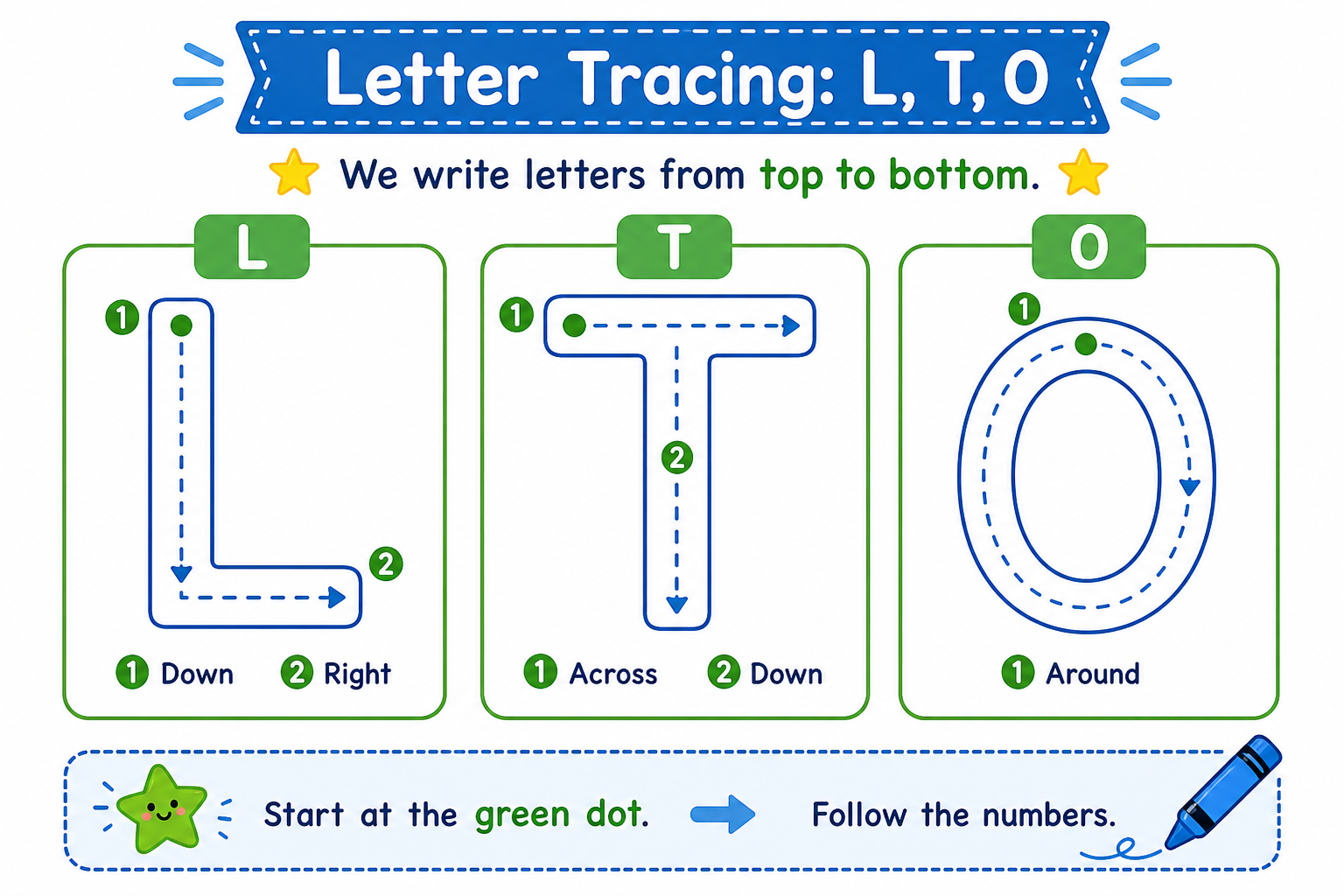
- L: Vertical line down, then horizontal line across the bottom
- T: Horizontal line across the top, then vertical line down
- O: Start at the top, curve counterclockwise to close
- General rule: Top to bottom, left to right, curves after straights
What Five-Step Approach Works?
Spread these steps across weeks, not days. Preschoolers need repetition in different materials before pencil work feels natural.
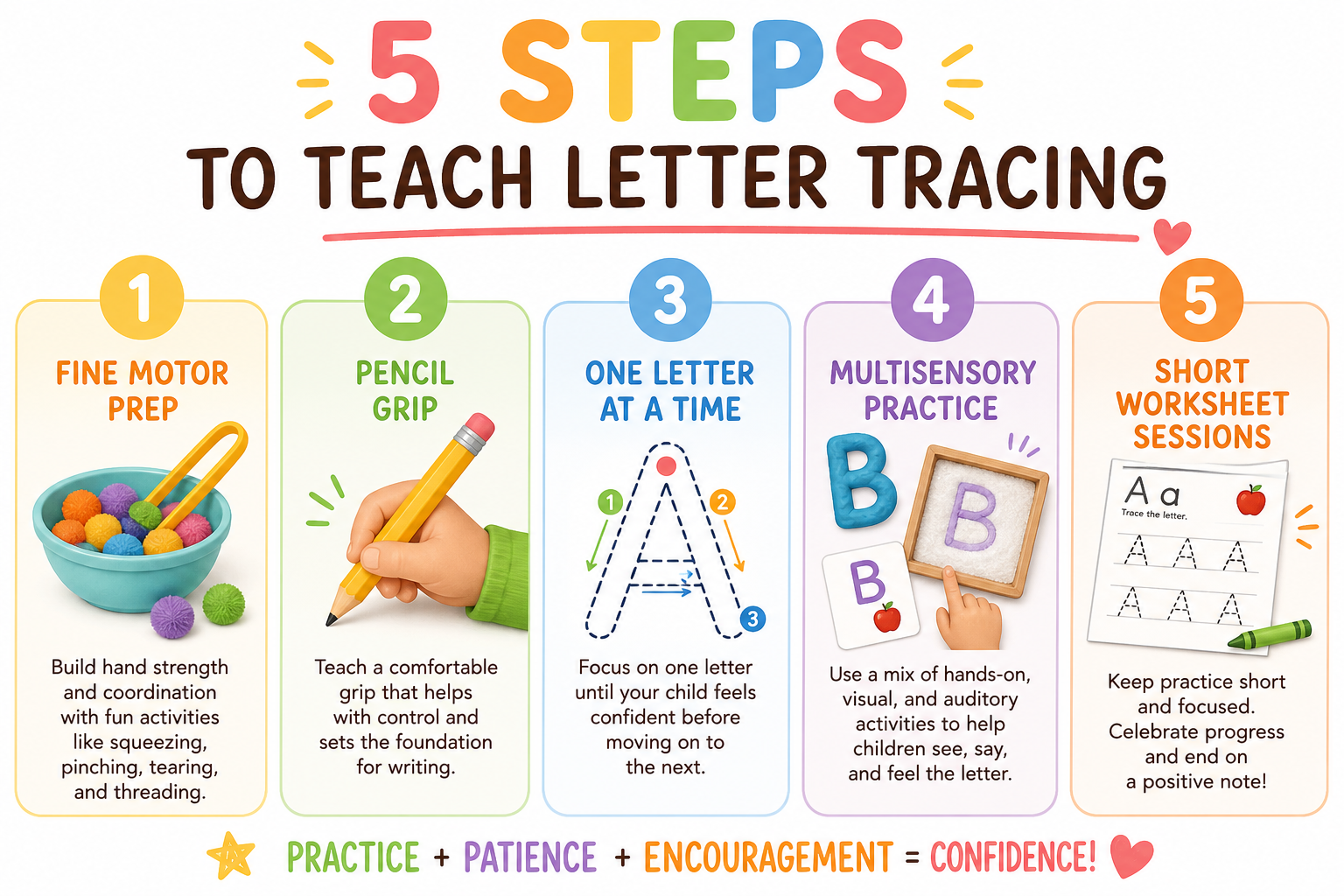
Use playdough, bead threading, scissors, and tweezers before worksheets. Strong hands make pencil control easier.
Trace vertical, horizontal, and diagonal lines plus circles. These strokes appear in every letter.
Use short crayons or broken crayon pieces to encourage a tripod grip. A modified grip is fine at this age.
Demonstrate stroke order slowly. Child traces with finger first, then pencil. Say the letter sound while tracing.
Trace in sand, shaving cream, or chalk before paper. Same letter, different materials, builds muscle memory.
Print free letter tracing worksheets
A–Z uppercase and lowercase pages with stroke guides—or create custom sheets.
Letter Tracing WorksheetsWhich Letters Should You Teach First?
Start with the simplest strokes and save complex letters for last. Many teachers begin with the first letter of the child's name for motivation.
| Group | Letters |
|---|---|
| Straight lines first | L, T, I, F, E, H |
| Simple curves | O, C, U |
| Diagonal strokes | V, W, X, K, Y |
| More complex | A, M, N, Z |
| Save for last | B, D, G, J, P, Q, R, S |
Connect to name writing activities for preschoolers once the child knows several letters. A child's own name is the best motivation for practice.
What Mistakes Should Parents Watch For?
- Handing out a full A-to-Z packet before fine motor skills are ready
- Skipping stroke order and letting children invent their own paths
- Sessions that run too long and cause grip fatigue
- Correcting every imperfection instead of praising effort
- Starting with lowercase or complex letters like B and R
- Tracing without saying the letter sound (missing the reading connection)
Reversals (writing B backward or confusing b and d) are normal through age 7. Correct stroke order reduces reversals over time. Do not drill endlessly on one error. Return to multisensory practice and try again tomorrow.
How Do Worksheets Support Practice?
Worksheets follow hands-on learning. After a child traces a letter in sand or playdough, assign one worksheet page for that letter. Use letter tracing worksheets with directional arrows, or create custom pages from the tracing worksheet generator.
Laminate pages for dry-erase reuse. Pair with name tracing worksheets and ideas from our writing centers with tracing sheets guide.
Key Takeaways
- Build fine motor strength before letter tracing worksheets.
- Teach one letter at a time with correct stroke order.
- Use multisensory practice: sand, playdough, chalk, then paper.
- Start with straight-line uppercase letters.
- Keep sessions to five to ten minutes and say the sound while tracing.
Conclusion
Teaching letter tracing works when hands are ready and practice stays short. Build strength with play, teach stroke order with intention, and connect tracing to letter sounds. A child who masters five letters thoroughly is better prepared than one who rushed through the whole alphabet.
Free letter tracing worksheets
Printable A–Z pages with stroke guides—or create custom tracing sheets.
Letter Tracing WorksheetsRelated Articles
- The Importance of Fine Motor Skills in Early Writing — hand strength before tracing
- Name Writing Activities for Preschoolers — apply tracing to their own name
- The Best Handwriting Fonts for Tracing Worksheets — choose the right font for practice pages
Frequently Asked Questions
Most children are ready for letter tracing between ages 3 and 5 after they can hold a crayon and draw basic lines. Start with pre-writing lines and shapes before letters. If a child resists or grips too tightly, return to playdough, finger tracing, and fine motor play for a few weeks.