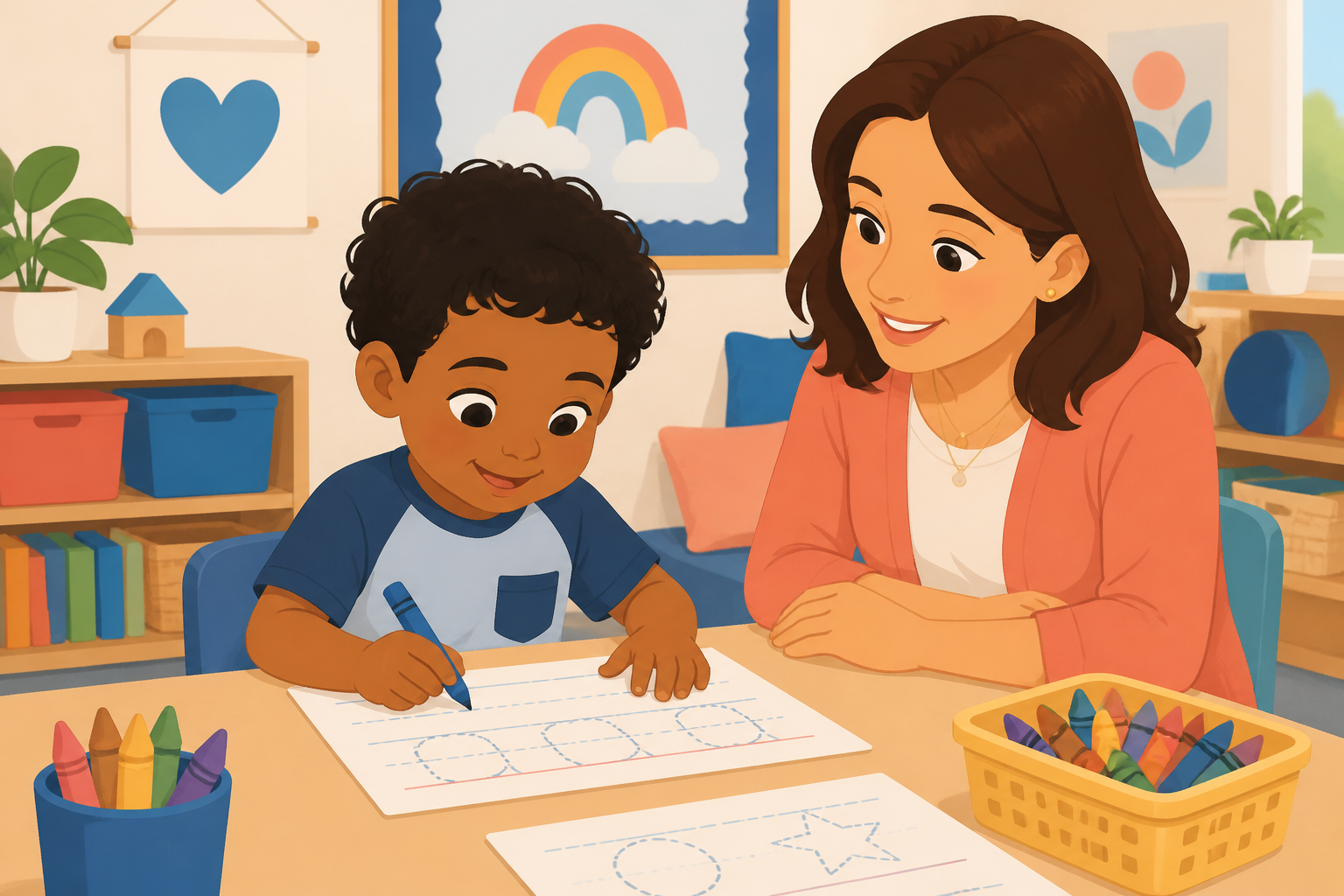
Name writing activities for preschoolers turn a personal, meaningful word into handwriting practice children actually care about. When a four-year-old traces the letters in "Emma" or builds their name with magnetic tiles, they connect letter shapes to identity—not just another worksheet. This guide lists eight engaging activities, a five-step progression from recognition to independent writing, and free tools to print custom tracing sheets at home.
Learning to write one's name is often a preschool milestone and a source of pride. It also builds letter recognition, left-to-right sequencing, and fine motor control that support kindergarten readiness. The key is short, playful sessions—not long copying drills that burn out young hands.
Why Does Name Writing Matter in Preschool?
A child's name is usually the first word they learn to read and write. It appears on their artwork, their cubby, and their snack cup. That personal connection makes name writing one of the highest-motivation literacy tasks in preschool.
Name writing also supports broader early learning goals. The CDC developmental milestones note that many children copy some letters and may write their name by age four or five. Preschool name work builds letter identification, phonemic awareness of initial sounds, and the fine motor paths used in all future handwriting.
Teachers use name writing for practical classroom management too. When children can sign their own work, labeling centers and portfolios takes less teacher time. Parents see visible progress—a name on a birthday card means more than a completed letter worksheet with no personal link.
What Are Eight Fun Name Writing Activities for Preschoolers?
Rotate through these activities across the week. Variety keeps preschoolers engaged while repeating the same letter sequence their name requires. You do not need every activity every day—pick two or three per short session.
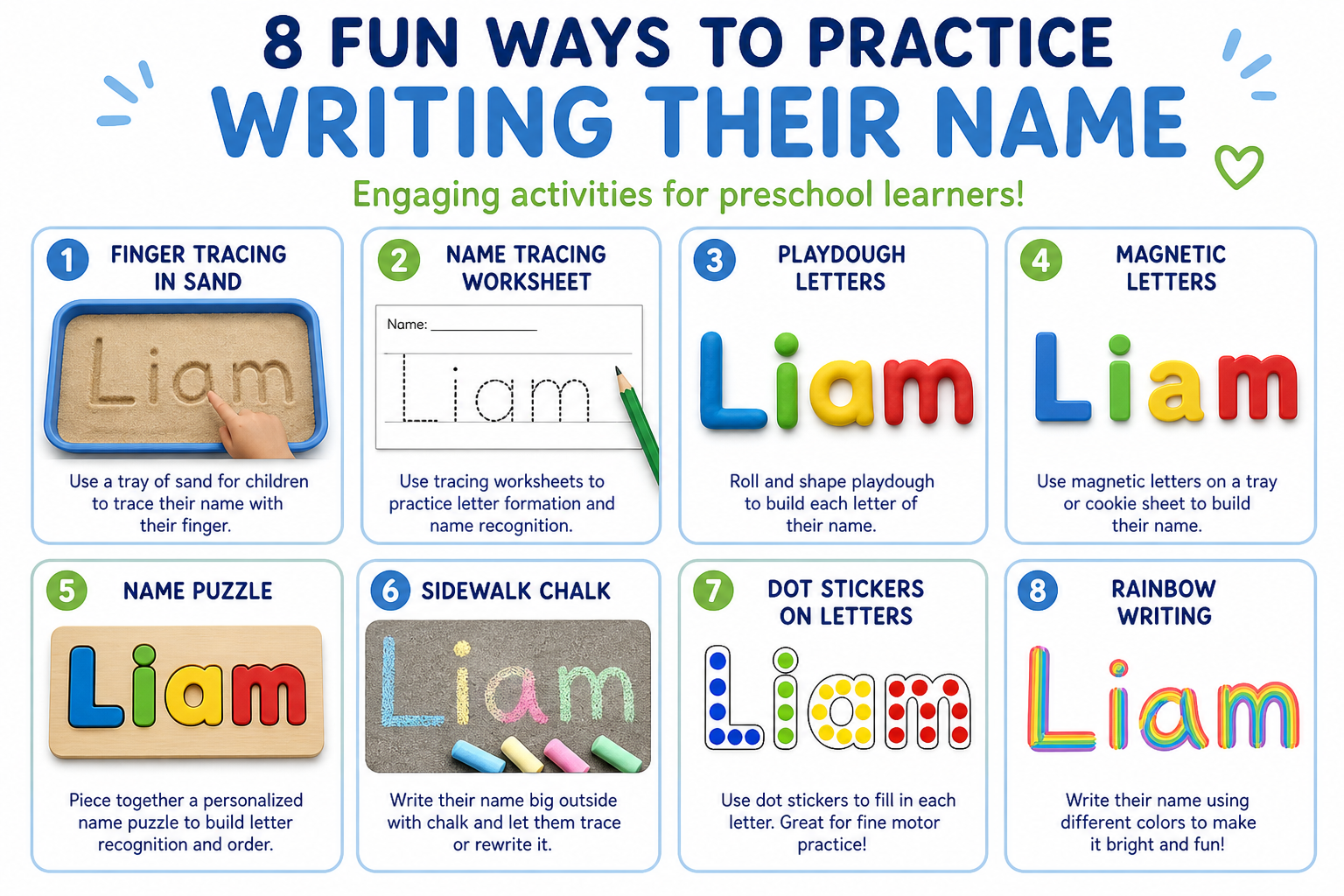
Finger tracing in sand or salt
Pour a thin layer of sand, salt, or rice in a tray. Write the child's name lightly, then let them trace with a finger. No pencil pressure required—pure motor and letter-shape practice.
Custom name tracing worksheets
Print dotted-line sheets with the child's exact name. Start with first name only, then add last name when ready. Tracing builds the path before independent writing.
Playdough letter rolls
Roll playdough snakes and shape each letter of the name. Say the letter name aloud. Strengthens fingers while connecting shape to sound.
Magnetic letters on a board
Spell the name with magnetic letters, mix them up, and have the child rebuild it left to right. Builds letter recognition and name sequence without writing fatigue.
Name puzzle
Write each letter of the name on a separate card. Child arranges cards in order. Photograph the finished name for a keepsake.
Sidewalk chalk names
Write the name large outdoors. Child traces with chalk or a wet paintbrush. Big movements build shoulder stability that supports small writing later.
Dot sticker paths
Draw large letters and have the child place stickers along each stroke in order. Teaches stroke direction and letter formation in a game-like format.
Rainbow writing
Child traces the name once, then traces again in a different color on top. Repeat with three or four colors. Same motion, extra practice, high engagement.
For paper-based practice, start with letter tracing worksheets for individual letters in the name, then move to full-name sheets once each letter is familiar. Our handwriting fonts guide helps you pick dotted styles that match your preschool or homeschool program.
What Is a Five-Step Progression to Teach Name Writing?
Follow this sequence with every new name or when a child struggles with one letter. Do not skip steps—even if a child seems ready for paper, weak recognition will show up later as reversed letters or missing parts.
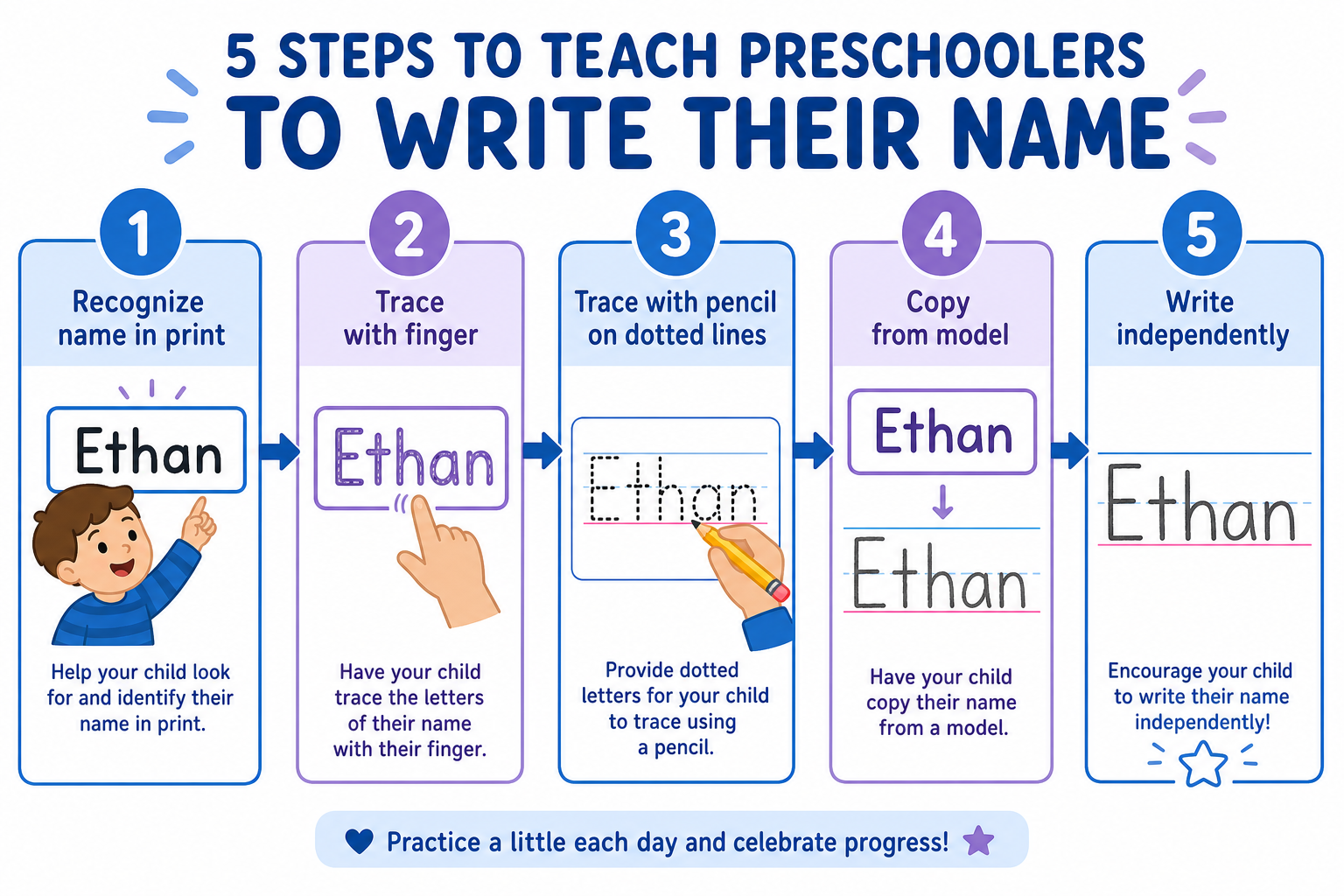
1. Recognize name in print
Point out the child's name on cubbies, artwork, and lunch bags. Ask them to find their name among others. Recognition comes before reproduction.
2. Trace with a finger
Use sand trays, textured cards, or a teacher-written model. Large arm and finger movements teach letter shape without pencil grip stress.
3. Trace with pencil on dotted lines
Move to paper with guided paths. Use a short pencil or crayon to encourage a tripod grip. One name per page is plenty at this stage.
4. Copy from a model
Place a name card beside blank paper. Child looks at the model and writes beside it. Fade the model gradually as letters become familiar.
5. Write independently
Ask for the name without a model. Expect uneven sizing and reversals at first. Celebrate effort and correct only one letter per session to avoid overwhelm.
Print a custom name tracing sheet in seconds
Type any name and get dotted-line practice pages—free, no account needed.
How Do Fine Motor Skills Connect to Name Writing?
Name writing demands a stable pencil grip, controlled pressure, and coordinated finger movement. Preschoolers still developing those skills may produce shaky lines or tire after a few letters. That is normal—not a sign to push harder on paper.
Build the motor foundation with playdough, cutting, and bead work before expecting polished name writing. Our fine motor skills and early writing guide lists age-by-age milestones and daily activities that support pencil control. Combine one motor warm-up with one name activity per session for best results.
The National Association for the Education of Young Children emphasizes play-based, developmentally appropriate literacy—not early pressure for perfect penmanship. Meet children where they are and celebrate each letter they form with confidence.
What Tips Work at Home and in the Classroom?
Whether you teach twelve preschoolers or work with one child at the kitchen table, small routine choices make name writing practice more effective and less stressful.
- Start with the first letter: Master "E" before expecting the full name. Add letters one at a time for long names.
- Use a name card: Laminate one correct model the child can reference. Same font and capitalization every time reduces confusion.
- Keep tools short: Broken crayons and golf pencils encourage a better tripod grip than full-size pencils.
- Display names everywhere: Cubby labels, job charts, and sign-in sheets turn recognition into a daily habit.
- Avoid erasing marathons: Correct one thing per session. Start fresh on a new line instead of rubbing out repeated mistakes.
- Match school style: If kindergarten uses D'Nealian or a specific case pattern, mirror it in home practice.
Morning routines that include a quick sign-in sheet fit naturally into a broader worksheet habit. See our morning work routine guide for preschool and kindergarten scheduling ideas.
What Free Name Tracing Resources Help After Hands-On Practice?
Paper practice reinforces the letter paths children learn through sensory activities. These free tools on WorksheetGenius support typical preschool name writing instruction.
- Create name tracing worksheets — type any name and print dotted-line pages
- Name tracing worksheets — ready-made pages and generator access
- Letter tracing worksheets — practice tricky letters before the full name
- Tracing worksheet generator — custom words, names, and numbers
Key Takeaways
- Name writing is high-motivation literacy practice because the word is personal.
- Use eight varied activities—sand, playdough, magnets, chalk, and tracing sheets.
- Follow five steps: recognize, finger trace, pencil trace, copy, write alone.
- Limit practice to five to ten minutes and pair with fine motor warm-ups.
- Print custom name tracing worksheets for consistent letter paths at home.
Conclusion
Name writing activities for preschoolers work best when they feel like play, not pressure. Rotate sensory and paper tasks, move through the five-step progression at your child's pace, and print tracing sheets that match exactly what they are learning. A preschooler who proudly signs their painting today is building the handwriting confidence they will need in kindergarten tomorrow.
Pick one activity from this list for tomorrow—sand tracing or a custom name sheet—and keep the session short. Consistent, cheerful practice beats long worksheets every time.
Create a free name tracing worksheet now
Type any name, choose a font, and print. No signup required.
Free Name Tracing GeneratorRelated Articles
- Fine Motor Skills in Early Writing — motor foundation for name writing
- Best Handwriting Fonts for Tracing — pick the right dotted style by age
- Free Printable Worksheets for Homeschool — plan tracing and literacy at home
Frequently Asked Questions
Many preschoolers ages 4 to 5 begin recognizing and tracing their name. Some children start copying a few letters at age 3. Writing the full name independently often develops in late preschool or early kindergarten. Focus on recognition and tracing first; legible independent writing follows when fine motor skills are ready.