To use a place value chart, teach students to write each digit in the column that matches its value: ones, tens, hundreds, and beyond. Build numbers with base-ten blocks in the matching columns before writing digits. Use the chart for daily warm-ups, comparison games, and regrouping practice. Pair the chart with worksheets once students can explain what each digit represents.
Place value is the foundation for addition with regrouping, subtraction, multiplication, and decimals. A chart turns an abstract idea into something students can see and touch. When used only as classroom wallpaper, it does little good. This guide covers how columns work, five classroom activities, regrouping connections, common mistakes, and free printable charts and worksheets.
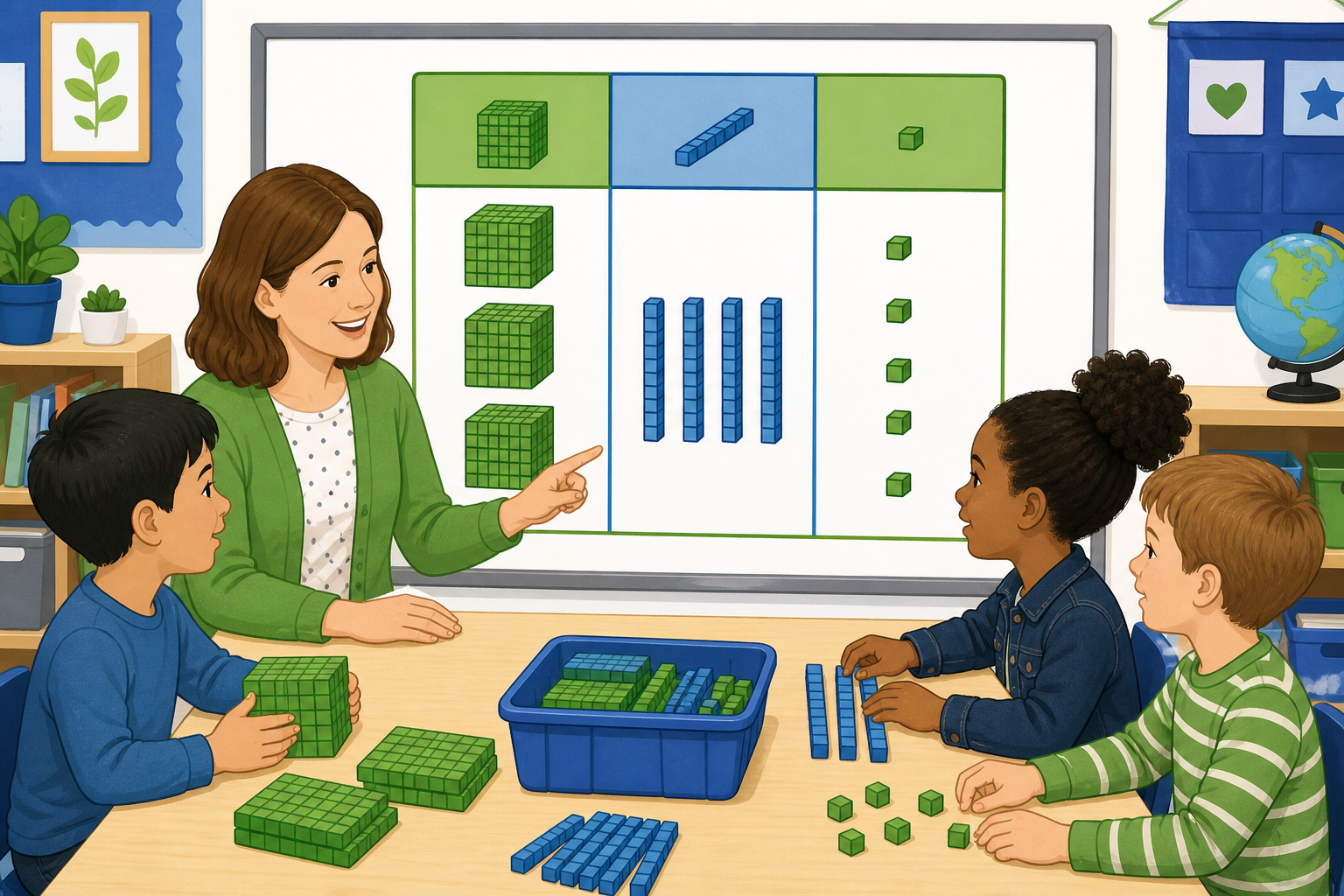
What Is a Place Value Chart?
A place value chart organizes digits into columns by their value. The ones column holds digits worth 1, the tens column holds digits worth 10, and the hundreds column holds digits worth 100. Each position to the left is ten times larger.
The Common Core second grade number standards expect students to understand that the three digits of a three-digit number represent hundreds, tens, and ones. Our teaching place value with base-ten blocks guide covers the manipulative foundation that charts extend.
How Do the Columns Work?
In the number 345, the digit 3 is not just '3.' It is 3 hundreds, or 300. The chart makes that visible by placing each digit in its own column.
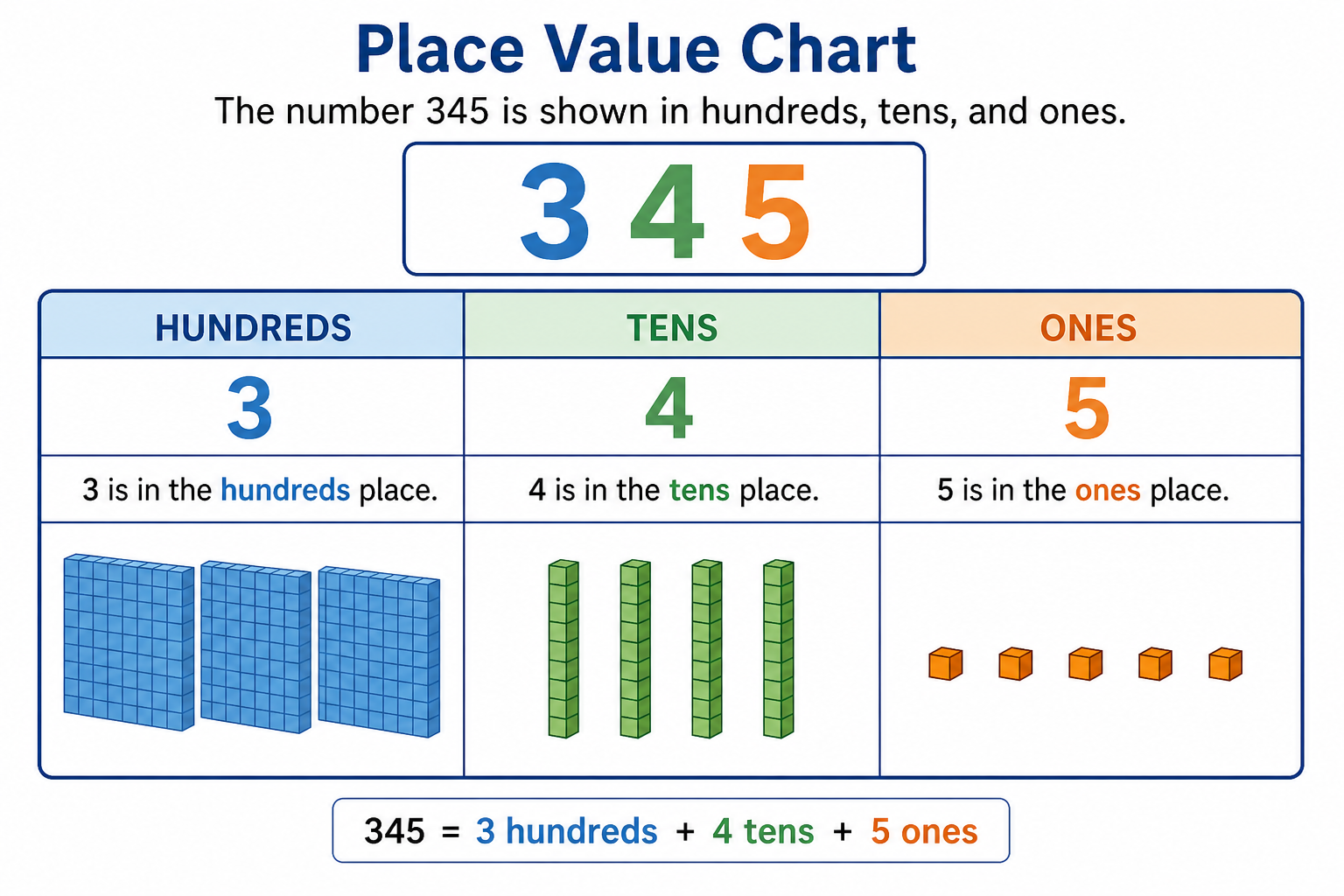
- Ones column: Digits 0–9 worth 1 each
- Tens column: Digits 0–9 worth 10 each
- Hundreds column: Digits 0–9 worth 100 each
- Expanded form: 345 = 300 + 40 + 5
What Five Activities Build Understanding?
Use the chart daily for five to ten minutes. Short, repeated practice beats a single long lesson.
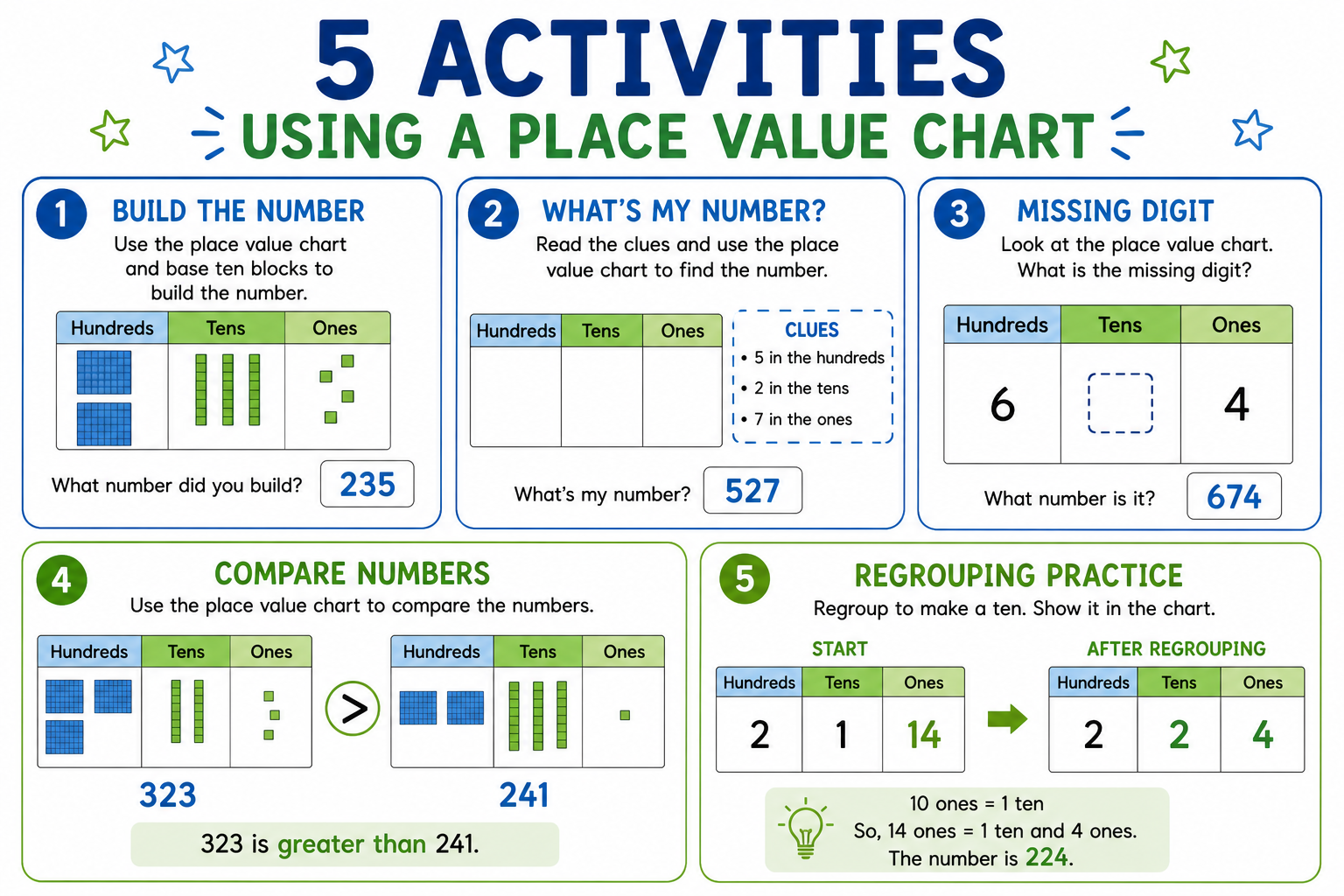
Say a number like 286. Students place base-ten blocks in each column or write digits in the chart. Read the number aloud together.
Give clues: 'I have 3 hundreds, 0 tens, and 5 ones.' Students build or write 305. Swap roles so students give clues.
Write 4_7 on the chart with a blank tens digit. Students figure out the missing digit when you say 'four hundred forty-seven.'
Build two numbers on separate charts. Compare hundreds first, then tens, then ones. Charts make comparison visual.
For 28 + 15, build both numbers on the chart. Combine ones (13), trade ten ones for one ten, then count tens. Connect to the written algorithm.
Print free place value charts
Hundreds, tens, and ones charts—laminate-friendly formats for classroom or home.
Place Value Chart PrintablesHow Do Charts Support Regrouping?
When students add 28 + 15 on a chart, they combine ones (8 + 5 = 13). Thirteen ones cannot stay in the ones column, so they trade ten ones for one ten rod and move it to the tens column. The chart shows why regrouping happens.
Connect chart regrouping to our guides on addition with regrouping and subtraction with regrouping. Students who understand trades on the chart learn the algorithm faster.
What Mistakes Should Teachers Watch For?
- Writing digits left to right without aligning to columns
- Using the chart only as wall decor without hands-on practice
- Skipping base-ten blocks and expecting the chart alone to teach place value
- Moving to thousands before hundreds is solid
- Not connecting chart work to regrouping in addition and subtraction
- Giving worksheets before students can build numbers on the chart confidently
How Do Worksheets Support Practice?
Charts teach. Worksheets practice. After students build numbers on the chart, assign pages from place value worksheets for expanded form, comparing numbers, and writing digits in columns. Generate custom problems from the math worksheet generator.
Pair with 2nd grade math worksheets for spiral review and our parent's guide to 2nd grade math for year-long pacing context.
Key Takeaways
- Each digit belongs in the column that matches its value.
- Build with base-ten blocks on the chart before writing digits.
- Use clue games, comparisons, and missing-digit challenges daily.
- Connect chart trades to addition and subtraction regrouping.
- Laminate charts for reuse; follow with structured worksheets.
Conclusion
A place value chart works when students build numbers on it, not just look at it. Blocks in columns, digits on paper, clue games for practice, and trades for regrouping. Place value stops being abstract and starts being something every child can explain.
Free place value charts and worksheets
Printable charts and practice pages for grades 1–4.
Place Value Chart PrintablesRelated Articles
- Teaching Place Value with Base-Ten Blocks — manipulative foundation for charts
- How to Teach Addition with Regrouping — chart trades support carrying
- A Parent's Guide to 2nd Grade Math — where place value fits the year
Frequently Asked Questions
A place value chart is a table with columns for ones, tens, hundreds, and higher places. Each digit in a number goes in the column that matches its value. In 345, the 3 is in the hundreds column (300), the 4 in tens (40), and the 5 in ones (5). Charts make abstract place value visible.