To use multiplication flash cards effectively, practice one times table at a time in five- to ten-minute daily sessions. Students say the full equation aloud before flipping, sort cards into known, almost, and stuck piles, and attempt every answer from memory first. Flash cards build recall after students already understand multiplication as equal groups.
Flash cards are one of the oldest math tools in the classroom, and they still work when used correctly. The problem is not the cards themselves. It is dumping the whole deck on a child who has not yet learned what multiplication means. This guide covers when to start, the three-pile sort method, five classroom activities, common mistakes, and free printable flash cards.
What Are Multiplication Flash Cards?
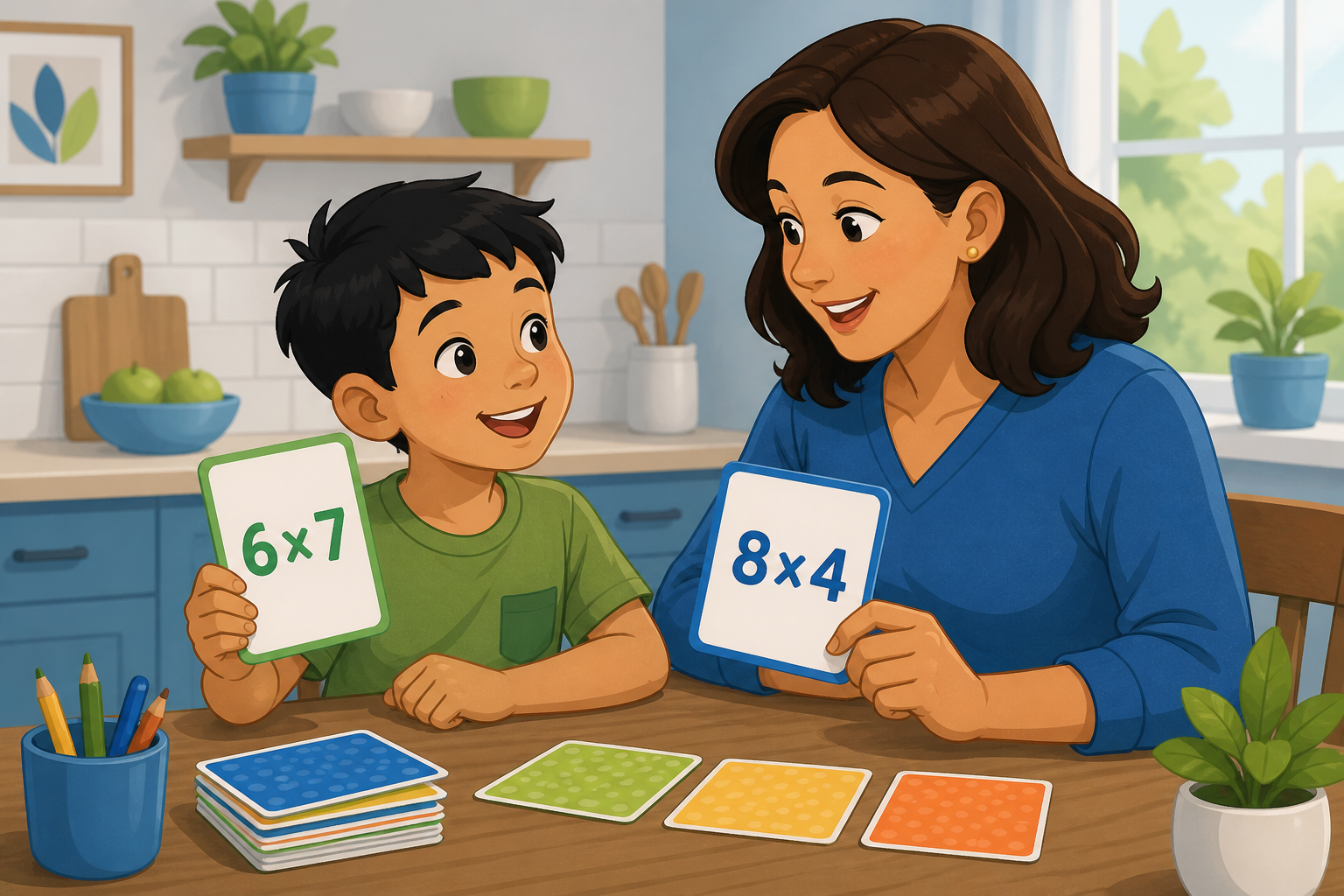
Each card shows a multiplication fact on the front and the product on the back. Students read the equation, pause to recall the answer, then flip to check. The pause is the key step. That moment of active recall strengthens memory far more than passively reading a chart.
Printable cards work well for classroom stations, homework packets, and homeschool routines. Digital decks are fine for travel, but physical cards let students sort, shuffle, and stack in ways screens cannot match.
When Should Students Start Using Them?
Start flash cards after students can explain multiplication as equal groups, arrays, or repeated addition. The Common Core third grade operations standards expect fluency with facts through 10 x 10 by the end of grade 3. Flash cards support that goal once the concept is in place.
If your student is still in the concept-building stage, begin with hands-on activities from how to teach multiplication to 3rd graders before pulling out the card deck.
How Does the Three-Pile Sort Work?
As students work through cards, sort each one into three piles: known (instant recall), almost (hesitates but gets it right), and stuck (wrong or cannot answer). Focus tomorrow's session on the stuck pile. Touch the almost pile every day. Review known cards once a week to keep them fresh.
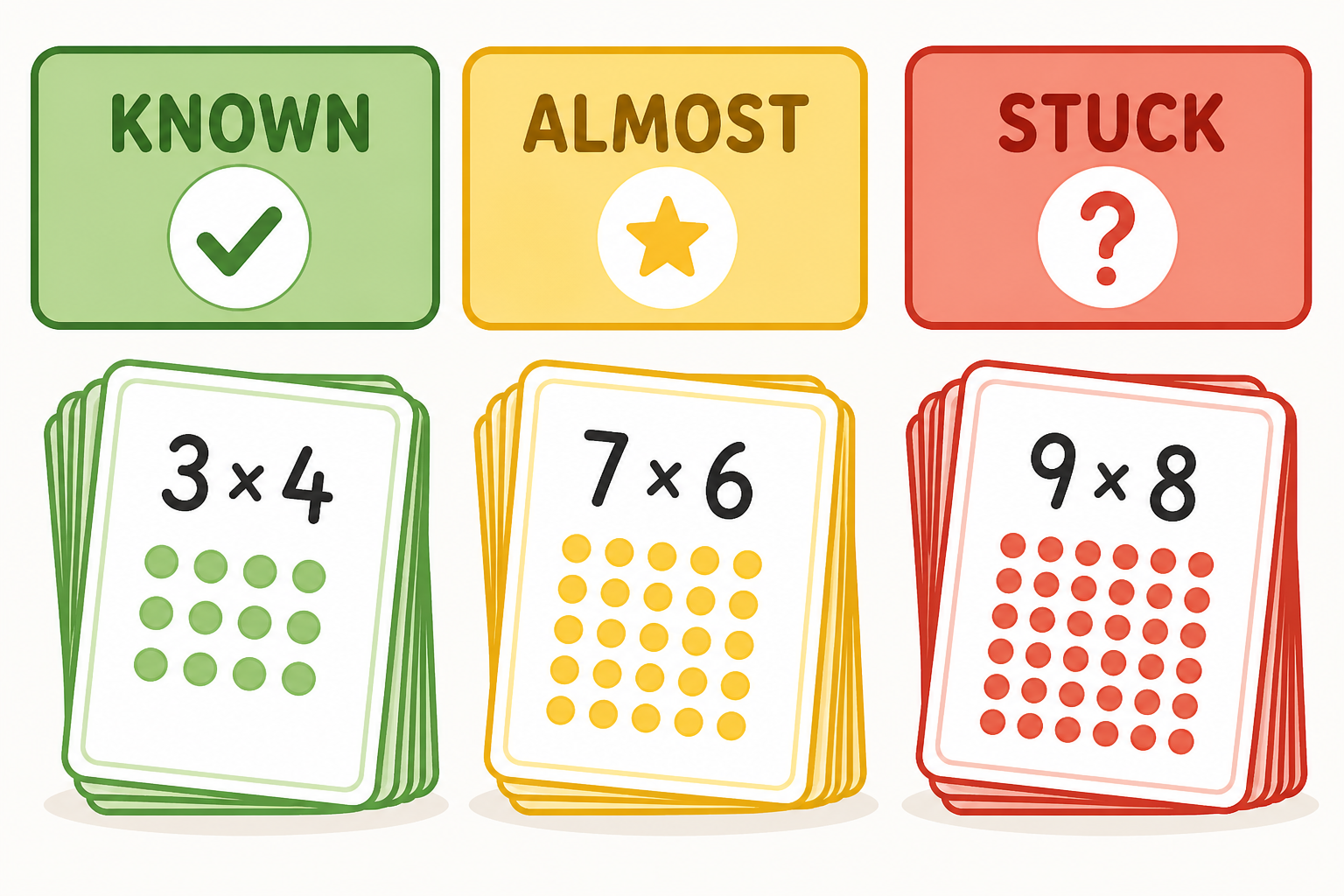
This method mirrors spaced repetition without any app. Hard facts get more reps. Easy facts fade into weekly review. Progress is visible when the stuck pile shrinks each week.
What Five Activities Build Fluency?
Rotate through these activities across the week. Variety keeps practice from feeling like a chore.
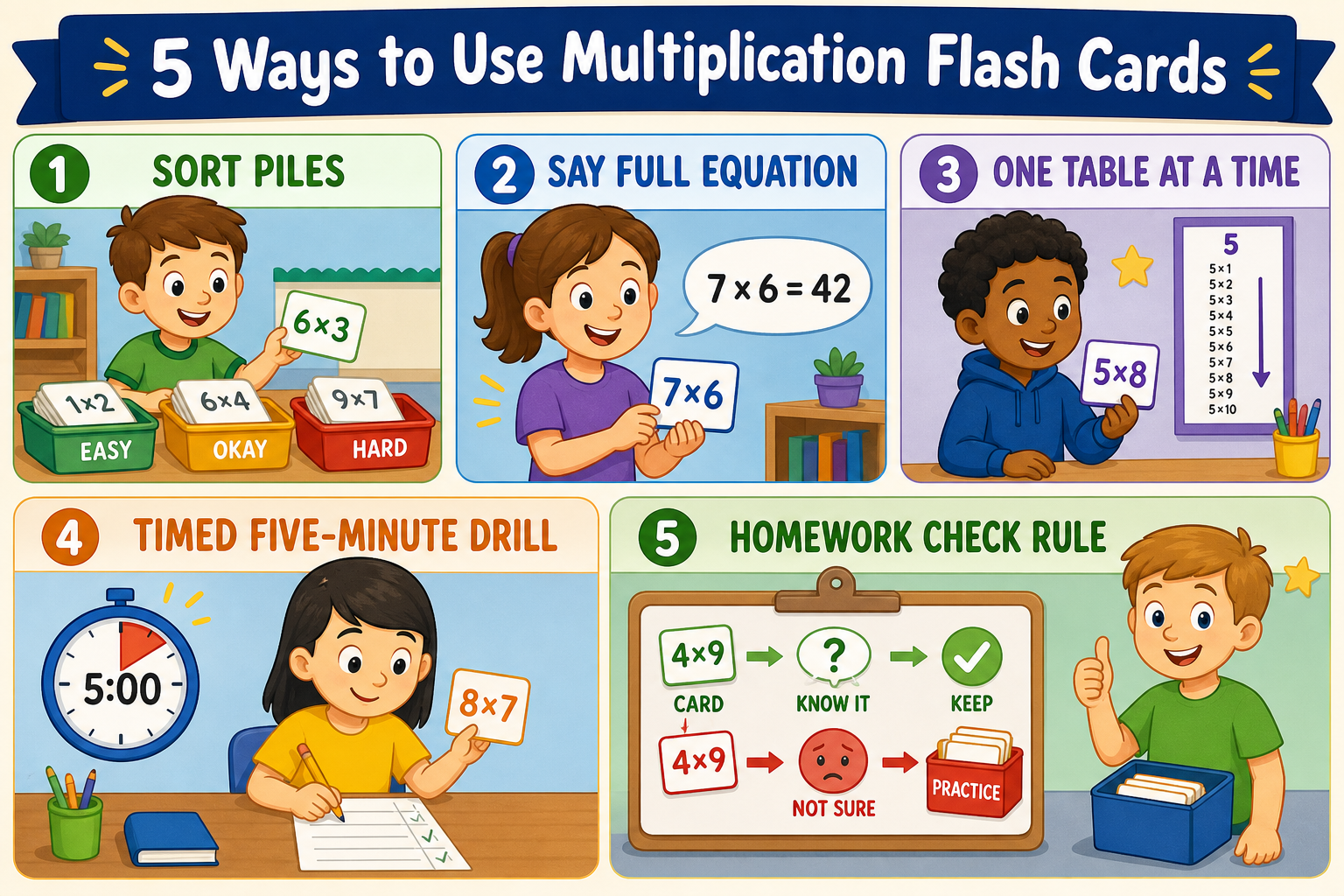
Pull out only the 6 times table cards. Practice until every card moves to the known pile. Add the next table only when the current set is solid.
Before flipping, students say 'six times seven equals forty-two,' not just 'forty-two.' Speaking the full fact builds stronger memory than silent answers.
Sort cards into known, almost, and stuck piles. Spend most time on stuck cards, touch almost cards each session, and review known cards weekly.
Set a five-minute timer. Go through as many cards as possible, sorting into piles as you go. Track how many move to known by the end of the week.
Students attempt every multiplication problem on homework first. Only after trying do they use flash cards to verify missed facts. No flipping before effort.
Print free multiplication flash cards
Customizable decks for facts 1–12. Print double-sided or with a separate answer key.
Multiplication Flash CardsWhat Mistakes Should Teachers Watch For?
- Starting flash cards before students understand what multiplication means
- Dumping the entire deck on a child at once instead of one table at a time
- Letting students peek at the answer before attempting recall
- Running sessions longer than ten minutes and causing burnout
- Skipping the full equation and accepting only the product number
- Never mixing mastered tables with new ones for cumulative review
Research on retrieval practice from Retrieval Practice shows that attempting an answer before seeing the solution builds stronger long-term memory. That is why the pause before flipping matters more than speed.
How Do Printables Support Practice?
Flash cards work best as part of a broader fluency routine. Pair daily card drills with 3rd grade multiplication worksheets and a posted printable multiplication chart for self-checking during seat work.
Build a classroom challenge using ideas from creating a math facts challenge once students can sort most cards into the known pile. Generate custom practice from the math worksheet generator to target the facts still in the stuck pile.
Key Takeaways
- Start flash cards after students understand multiplication conceptually.
- Practice one times table at a time in five- to ten-minute sessions.
- Say the full equation aloud before flipping each card.
- Sort into known, almost, and stuck piles to focus practice.
- Pair cards with charts and worksheets for a complete fluency routine.
Conclusion
Multiplication flash cards work when students use them for active recall, not passive reading. One table at a time, short daily sessions, and the three-pile sort turn a simple deck into a powerful fluency tool. Students who say full equations and attempt answers before flipping build recall that lasts beyond the test.
Free multiplication flash cards
Printable decks for facts 1–12 with customizable ranges and answer keys.
Multiplication Flash CardsRelated Articles
- How to Use a Multiplication Chart to Teach Times Tables — partner tool for pattern spotting and lookup
- The Benefits of Daily Math Fact Practice — build a daily facts routine
- When Should Kids Learn Their Times Tables? — grade-level timing and expectations
Frequently Asked Questions
Multiplication flash cards are small cards with a multiplication fact on one side and the product on the other. Students read the equation, recall the answer, then flip to check. They build automatic recall of times tables through short, repeated practice sessions.