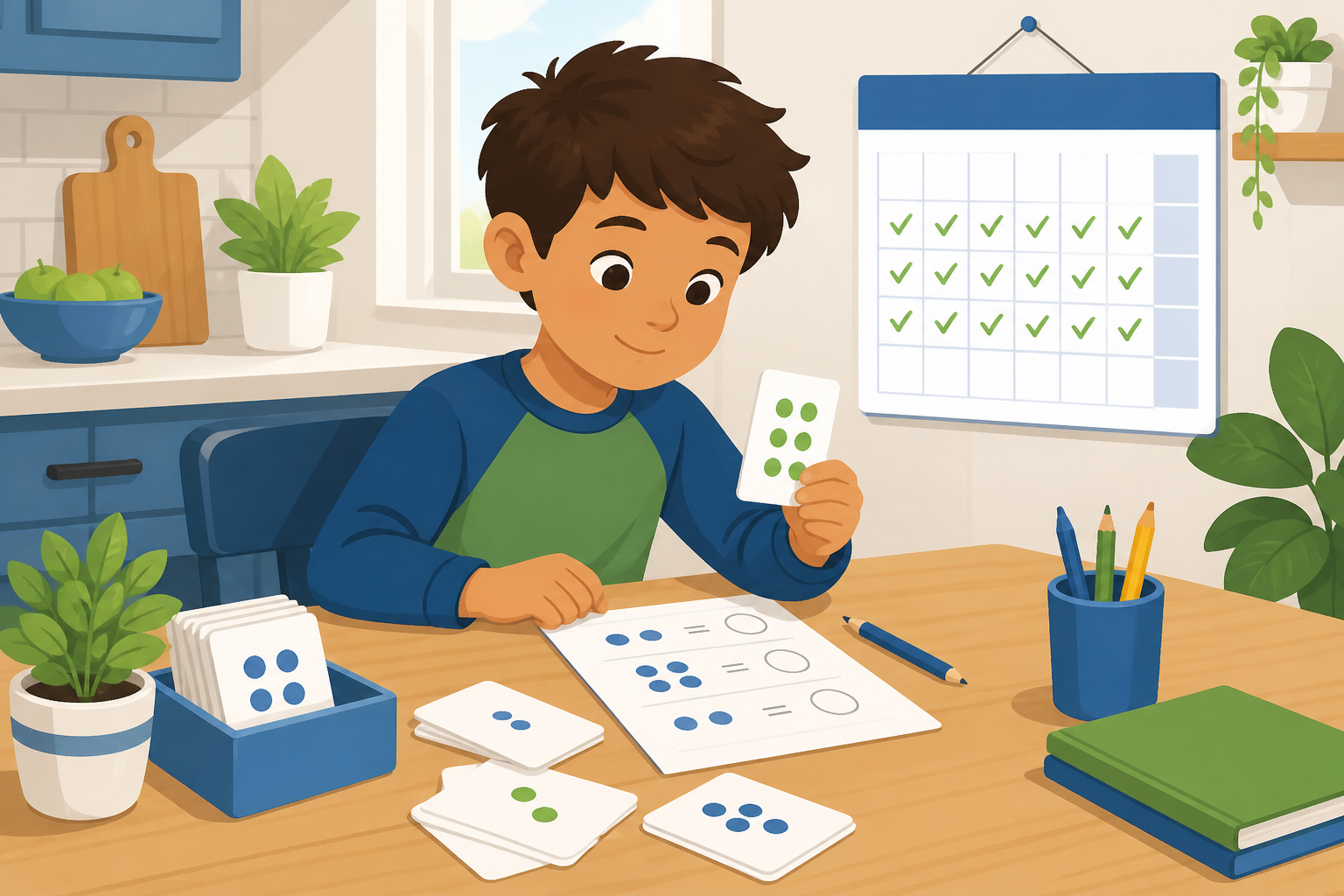
The benefits of daily math fact practice show up everywhere in elementary math—from faster homework to calmer test days to confidence with word problems. When addition, subtraction, multiplication, and division facts become automatic, students free mental space for the thinking that actually matters. This guide explains why short daily sessions work, six research-backed benefits, a ten-minute routine, and free tools for home and classroom.
Fact practice is not about speed contests or endless drill packets. It is about consistent, low-stakes retrieval so numbers feel familiar. Five minutes today and five minutes tomorrow beat an hour of cramming next Sunday—and the science of spaced learning backs that up.
What Is Math Fact Fluency?
Math fact fluency means recalling basic addition, subtraction, multiplication, and division combinations accurately and efficiently. Fluent students know 6 + 7 = 13 without counting on fingers. They know 8 × 4 = 32 without drawing four groups of eight every time.
Fluency is not the same as blind memorization. Students should understand facts through models first—arrays, number lines, ten frames—then practice until recall is automatic. Our multiplication teaching guide and times tables timeline explain that sequence for third grade and up.
The National Council of Teachers of Mathematics emphasizes procedural fluency as one of five strands of mathematical proficiency— alongside understanding, reasoning, and problem solving. Daily practice supports that strand without replacing the others.
What Are Six Benefits of Daily Math Fact Practice?
Short daily sessions produce compounding gains. Here is what teachers and parents typically notice within a few weeks of consistent practice.
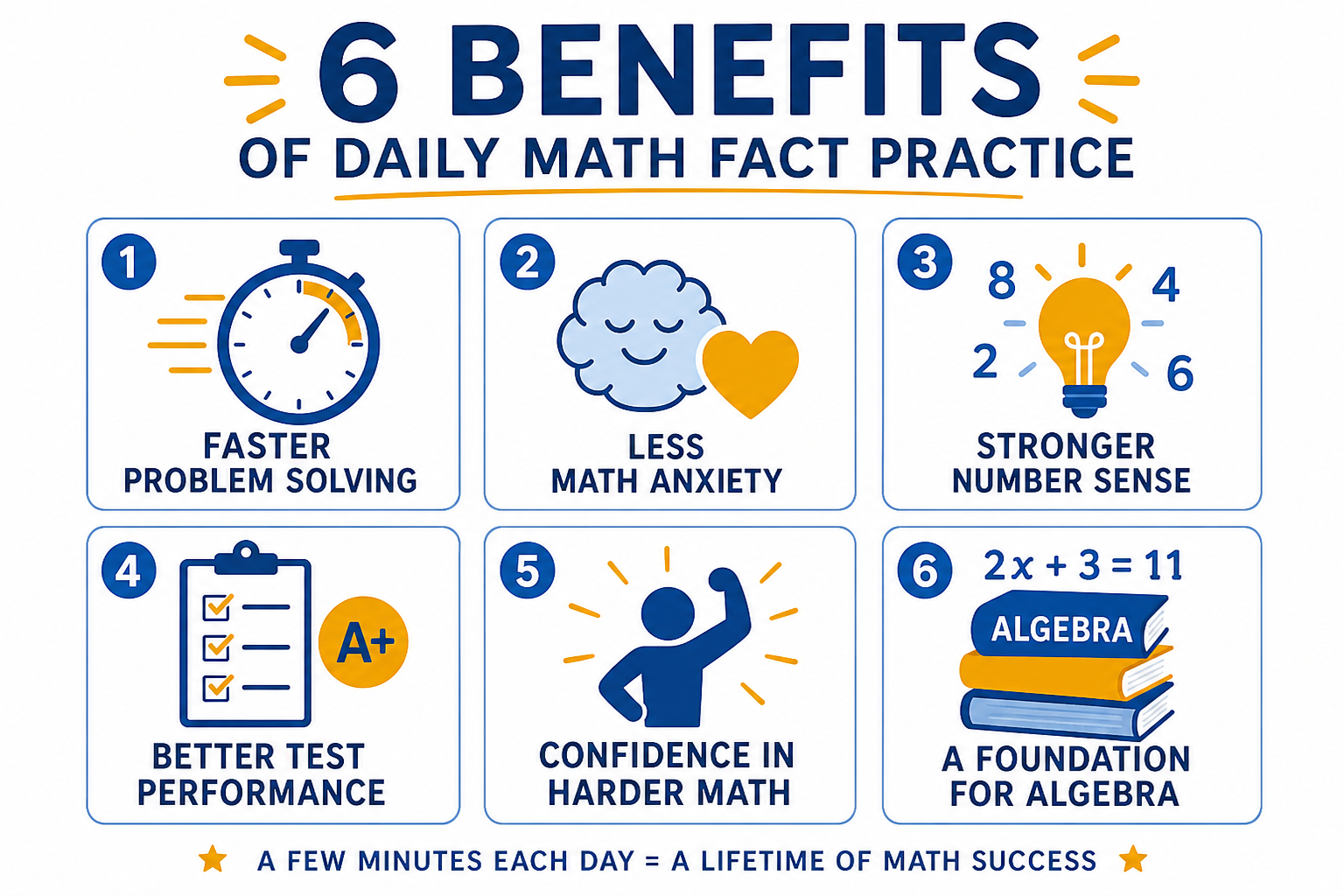
1. Frees working memory for harder math
When 7 × 8 is automatic, students can focus on regrouping, word problem steps, or fraction models. Facts held in memory do not compete with new learning.
2. Builds speed without skipping understanding
Daily practice follows conceptual lessons—it does not replace them. Fluency comes after students understand what multiplication means, not before.
3. Reduces math anxiety over time
Familiar facts lower panic on timed assignments. Short daily success builds a track record of I-can-do-this moments.
4. Strengthens number sense
Repeated exposure to fact families reveals patterns: doubles, tens, commutative property. Students see structure instead of random digits.
5. Supports test and homework performance
Assessments and homework move faster when basic facts are solid. Less frustration at the kitchen table means more willingness to try.
6. Creates foundation for middle school math
Fractions, ratios, and algebra assume operational fluency. Gaps in elementary facts compound painfully in later grades.
Benefit six connects to long-term success. Students who struggle in fourth grade multi-digit work often have fact gaps from third grade. Our fourth grade math guide lists fact maintenance as a year-long priority, not a one-unit topic.
What Does a 10-Minute Daily Fact Practice Routine Look Like?
Use this template at home or as morning work. Adjust timing for younger students (five minutes may be enough in first grade).
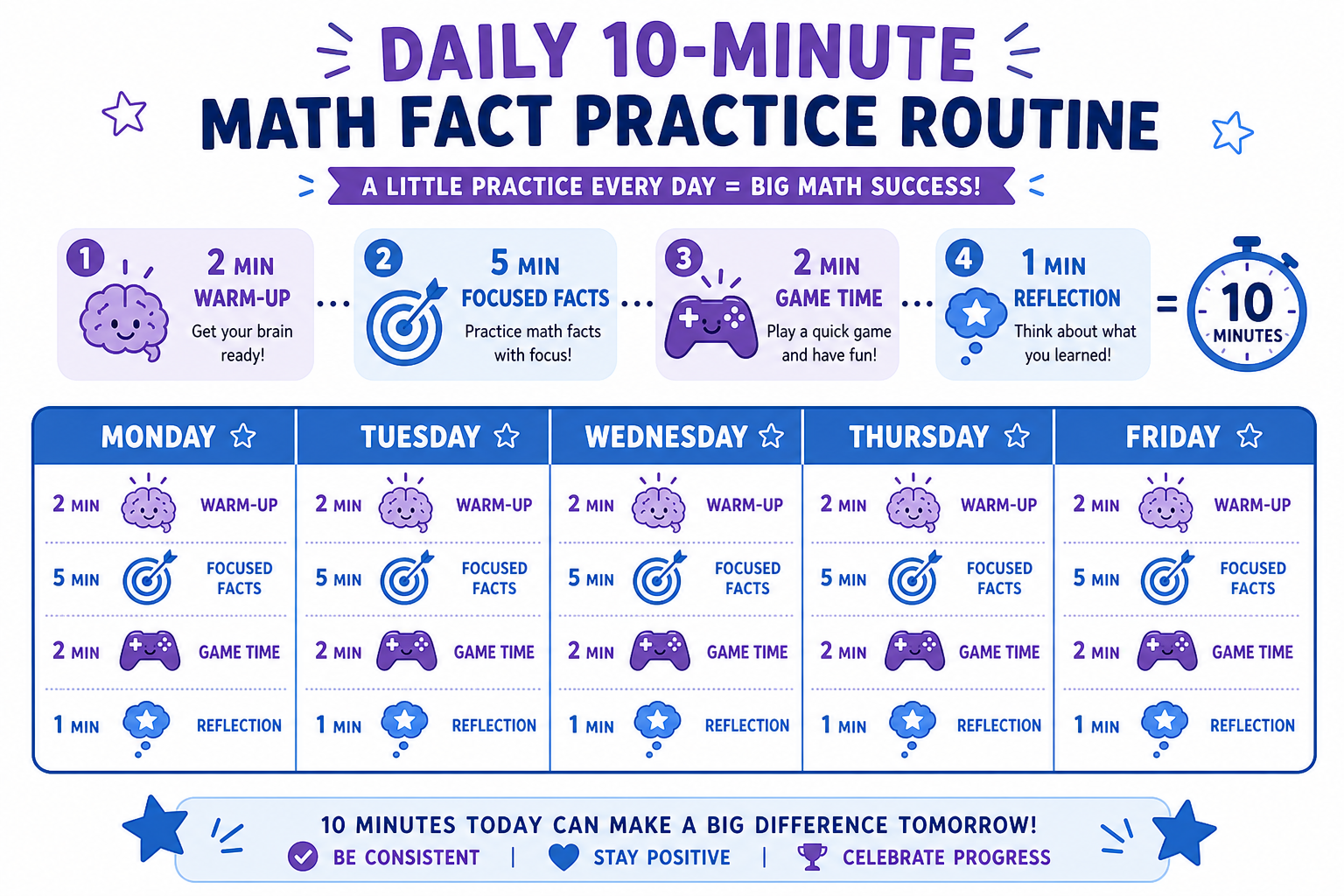
- 2 minutes — Warm-up: Oral review of yesterday's fact family (e.g., count by 6s, call out 6 × 1 through 6 × 10).
- 5 minutes — Focused practice: One worksheet page, flash card stack, or quiz on the current family plus three mixed review facts.
- 2 minutes — Game: Dice war, fact bingo, or a round from our math games guide.
- 1 minute — Reflection: Student names one fact they know cold today and one still learning. Private sticker or checkmark on a chart.
Fit this into a broader morning routine—see morning work with worksheets. Spacing reviews across the week follows principles from our spaced repetition article.
Print today's fact practice in one click
Fresh worksheets and flash cards—free, no signup required.
Which Facts Should Each Grade Practice Daily?
Match daily practice to developmental expectations. Do not drill multiplication in first grade or skip addition facts in third grade because they feel basic.
Grades 1–2
Target facts: Addition and subtraction within 10, then within 20
Daily focus: 5 min oral drills; dot patterns; doubles and near-doubles
Grade 3
Target facts: Multiplication and division through 10 × 10
Daily focus: One fact family per week; mixed spiral on Fridays
Grade 4
Target facts: Review all operations; maintain multiplication fluency
Daily focus: Mixed fact sheets; connect to multi-digit multiplication
Grade 5+
Target facts: Spiral review; address any persistent gaps
Daily focus: Short warm-ups before complex units; do not drop facts entirely
Kindergarten students build prerequisites through counting and subitizing—our number sense guide covers that foundation before formal fact drills begin.
What Best Practices Make Daily Fact Practice Effective?
Avoid the traps that turn practice into dread. These rules keep sessions productive and positive.
- Keep sessions to 5–10 minutes
- Practice one new fact family at a time, mix old facts daily
- Use spaced repetition—review yesterday's facts today
- Mix formats: flash cards, worksheets, games, oral call-and-response
- Track private progress—avoid public speed rankings in early grades
- End on a success, even if that means fewer problems
Struggling students need leveled practice, not more pressure. See building math confidence and differentiated worksheets for support-tier fact pages with fewer problems and reference charts allowed.
What Free Tools Support Daily Math Fact Practice?
- Math worksheet generator — custom addition, subtraction, multiplication, division sets
- Multiplication flash cards — printable for home or classroom stations
- Multiplication chart 1–100 — reference chart while learning, fade as fluency grows
- Grade 3 multiplication worksheets — structured fact practice pages
- Quiz generator — Friday mixed-fact checks
Keep practice fun with ideas from making math practice fun at home. Summer breaks still need light fact touchpoints—see our summer math review plan.
Key Takeaways
- Daily 5–10 minute fact practice builds fluency better than long cram sessions.
- Fluency frees working memory for word problems, fractions, and multi-digit work.
- Understand facts with models first; then practice for automatic recall.
- Use a simple routine: warm-up, focused practice, game, reflection.
- Mix worksheets, flash cards, games, and spaced review for best results.
Conclusion
The benefits of daily math fact practice compound quietly. Students who show up for ten minutes a day arrive at harder units with facts already in place—less stress, more stamina, more willingness to try. Start tomorrow with one fact family and a five-minute timer. Consistency beats intensity every time.
Start daily fact practice with free printables
Worksheets, flash cards, and quizzes. No signup required.
Free Math Worksheet GeneratorRelated Articles
- When Should Kids Learn Their Times Tables? — grade timeline for fact fluency
- The Science of Spaced Repetition — why daily beats cramming
- Morning Work Routine with Worksheets — slot facts into the school day
Frequently Asked Questions
Daily math fact practice builds automatic recall so students spend mental energy on problem-solving instead of counting on fingers. Short consistent sessions strengthen addition, subtraction, multiplication, and division fluency, reduce math anxiety, and support success with fractions, word problems, and multi-digit operations later.