
Helping struggling math students build confidence is as important as teaching the skills themselves. A child who believes they cannot do math will avoid practice, freeze on tests, and stop asking questions—even when they are close to understanding. This guide offers seven research-backed strategies, growth-minded language swaps, and practical ways to match practice to ability so students experience success regularly, not just on rare good days.
Confidence does not come from empty praise. It grows when students repeatedly solve problems at the right level, see their own progress, and hear adults value effort and strategy. Skill and belief reinforce each other: small wins lead to more practice, which leads to more wins.
Why Does Math Confidence Matter for Struggling Students?
Math confidence affects participation, persistence, and willingness to take on harder tasks. Students who expect to fail often stop trying before their brain engages. Research on math anxiety shows that worry consumes working memory—the same memory needed to solve problems—so anxiety and low performance feed each other.
The American Psychological Association notes that math anxiety can begin in elementary school and persist for years. Addressing belief and emotion alongside skill is not soft—it is how you unlock learning for students who have been stuck in a failure loop.
Confident students ask questions, attempt word problems, and recover from mistakes. Struggling students need more of those experiences, not fewer, but the experiences must be designed for success at their current level.
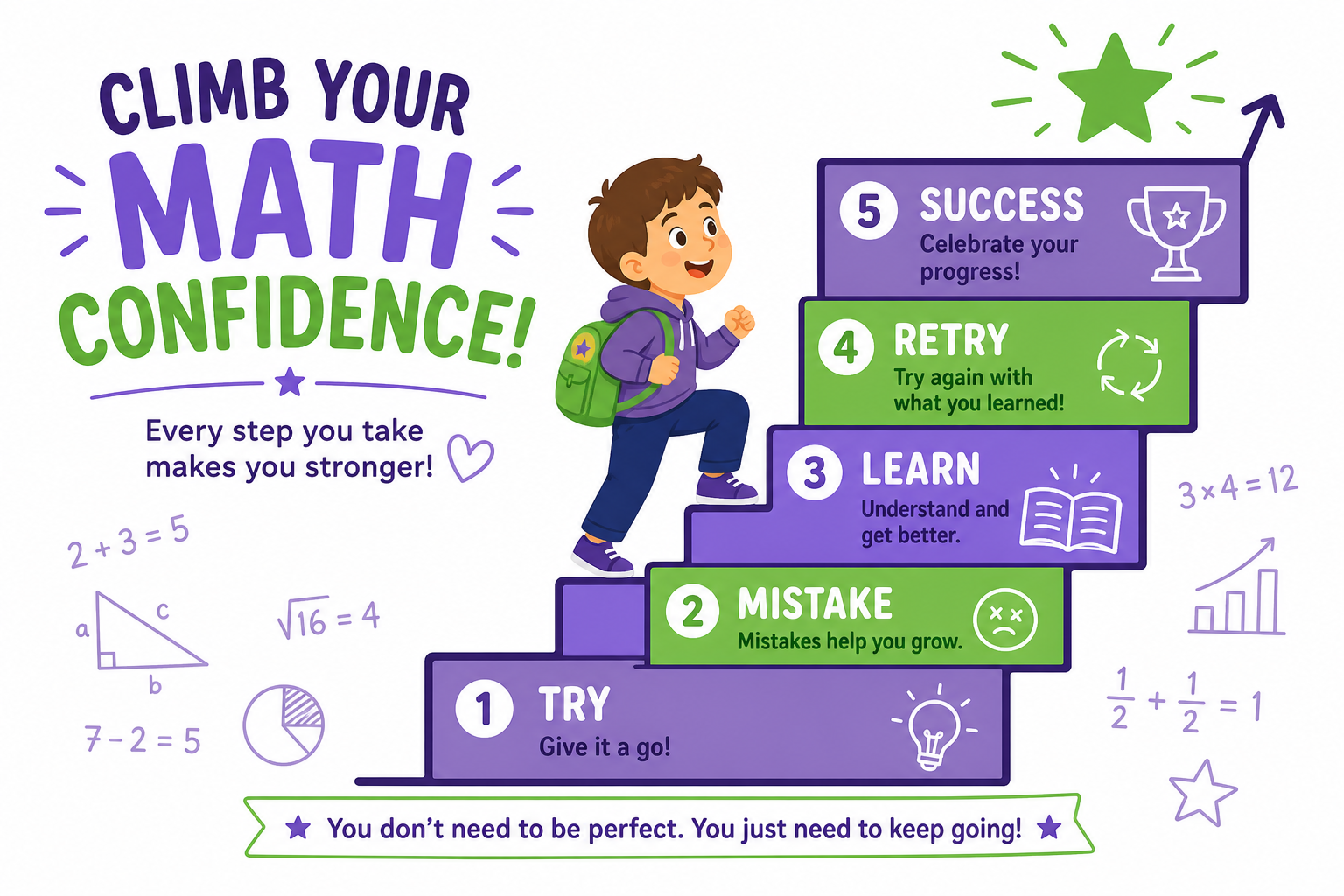
What Are Seven Strategies to Build Math Confidence?
Use these strategies together. One encouraging comment without leveled practice will not change a pattern built over months. Consistency over weeks matters most.
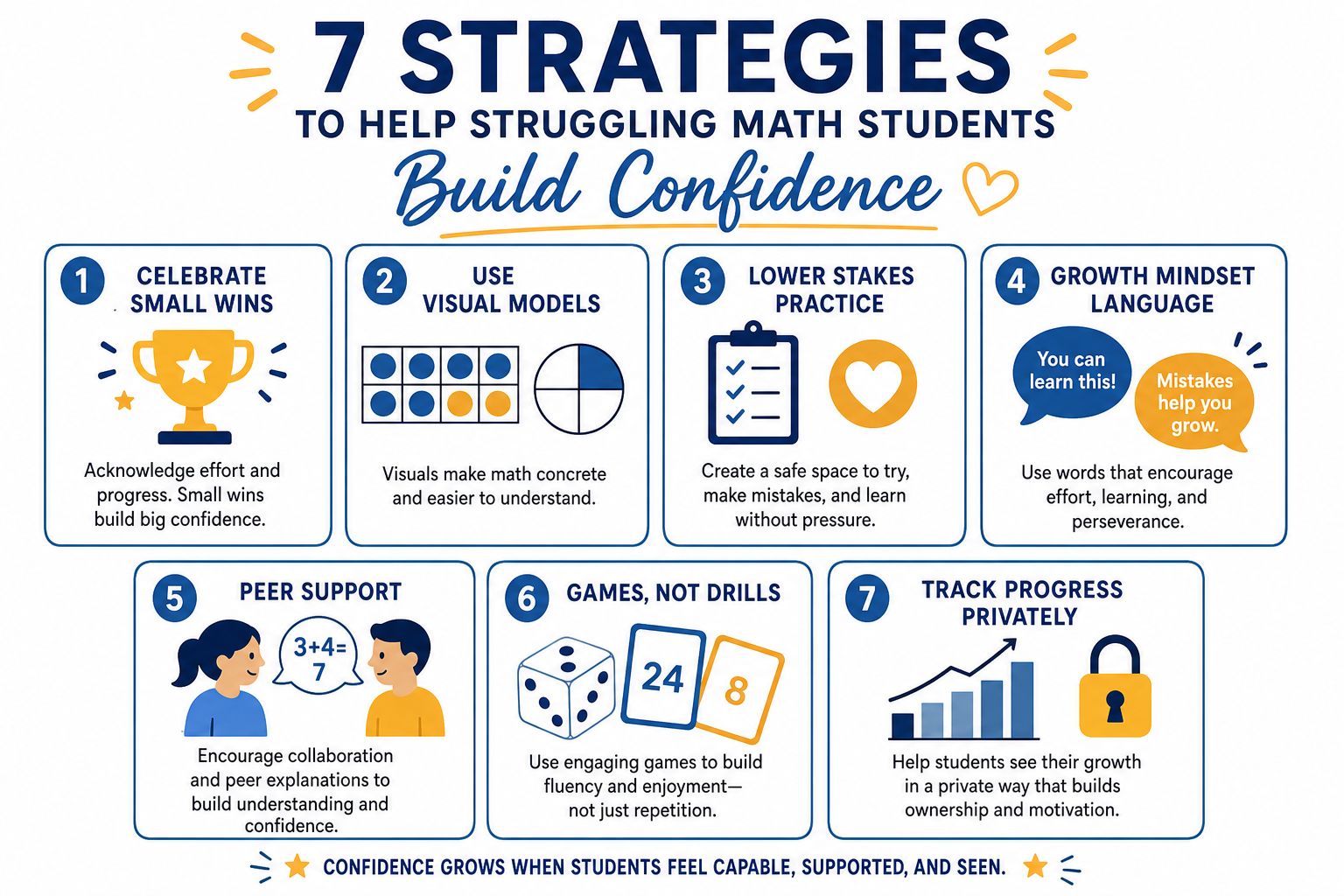
1. Start with wins they can see
Begin every session with one or two problems well within reach. Success primes the brain for harder work. A student who starts with failure often shuts down before the lesson begins.
2. Use visual models every time
Counters, ten frames, drawings, and base-ten blocks turn abstract symbols into something tangible. Struggling students often lack mental images—not effort.
3. Lower the stakes on practice
Call it practice, not a test. Allow erasures, partner talk, and reference charts during learning. Save timed conditions for when skills are already solid.
4. Track growth privately
Use folders or stickers for personal progress—not wall charts that rank students. Compare today's work to last month's, not to a neighbor's paper.
5. Teach and praise strategies
Say I like how you drew a picture instead of only good job when the answer is right. Naming strategies builds agency: the child learns what to repeat.
6. Mix games with structured practice
Games reduce fear and build fluency without the pressure of a graded page. Rotate game days with short worksheets so math feels varied, not punishing.
7. Space review instead of cramming
Brief revisit sessions across weeks build durable skill and confidence. Cramming before a test reinforces panic. Spaced practice feels manageable.
Strategy two connects to concrete teaching tools. Our base-ten blocks guide and fraction visual models article show how manipulatives support students who struggle with symbols alone.
What Language Should Adults Use With Struggling Math Students?
Words shape whether a child sees math as fixed ability or learnable skill. The YouCubed project at Stanford emphasizes that everyone can learn math to high levels with the right messages and teaching. Swap phrases that shut kids down for language that invites effort.
| Avoid | Say instead |
|---|---|
| This is easy—you should know this. | This is new. Let's break it into steps. |
| I was never good at math either. | Math takes practice for everyone. |
| Wrong. Try again. | Your strategy made sense here. Let's fix this part. |
| You're so smart! | You worked hard on that problem. |
| Hurry up—we're running out of time. | Take your time on the ones that matter. |
Parents supporting homework should read our math homework help guide for a five-step process that keeps adults from taking over the work.
How Do You Match Practice to a Struggling Student's Level?
Confidence collapses when every page feels too hard. Differentiation is a confidence strategy, not only an academic one. Give struggling students fewer problems, smaller numbers, and visual supports on the same objective as the class.
- Generate support-tier sheets with the math worksheet generator
- Post a place value chart or multiplication reference during practice—not only on test day
- Use low-stakes practice quizzes without grades until scores improve
- Follow the three-tier model in our differentiation guide
Spaced review prevents the panic of cramming. Our spaced repetition article explains how short sessions across weeks build skill without burnout.
Create confidence-building practice at the right level
Custom number ranges and problem counts—free, no signup.
What Works at School and at Home?
Teachers and parents play different roles, but both should send the same message: math is learnable, mistakes are part of learning, and this child is making progress.
In the classroom
Differentiate worksheets by level, use private error correction, assign roles in group work so every student contributes, and pair struggling learners with patient partners—not only high achievers who finish fast.
At home
Keep homework sessions short, sit beside not over the child, use the same models the school uses, and end on a success even if that means fewer problems. See our homework help guide for step-by-step support.
With tutors or specialists
Diagnose specific gaps before reteaching whole units. Build a success log the student can see. Coordinate with the classroom teacher on vocabulary and methods.
At home, keep practice playful with ideas from making math practice fun. In class, balance worksheets with purpose using effective worksheet practices—busy work erodes confidence faster than no worksheet at all.
When Should You Seek Extra Support?
Confidence strategies help most struggling learners, but some students need additional intervention. Consider extra support when:
- Progress stalls for two or more months despite leveled practice
- Extreme anxiety appears (tears, refusal, physical symptoms before math)
- Gaps are far below grade level across multiple strands
- Learning differences are suspected or already identified
Talk to the classroom teacher, school specialist, or pediatrician. Early support prevents years of accumulated fear. Test seasons add pressure—our test prep guide includes anxiety-reduction tips that apply year-round.
Key Takeaways
- Confidence grows from repeated success at the right level—not from more hard pages.
- Use visual models, low-stakes practice, and private progress tracking.
- Swap fixed-mindset language for effort and strategy praise.
- Differentiate worksheets and mix games with structured practice.
- Seek specialist help when anxiety or gaps persist despite consistent support.
Conclusion
Helping struggling math students build confidence is slow, deliberate work—and it changes trajectories. When children experience I solved that after a string of reachable problems, they start showing up differently: more questions, more attempts, more belief. Pair skill support with emotional safety, and math becomes something they are learning—not something they are failing at.
Choose one strategy for this week: start homework with two easy wins, or print a support-tier worksheet instead of the full-class page. Small shifts in experience build the confidence that long lectures about trying harder never will.
Print leveled math practice for your student
Free generator with custom ranges. Build success one page at a time.
Free Math Worksheet GeneratorRelated Articles
- How to Help Your Child with Math Homework — supportive parent strategies
- Differentiate Math with Custom Worksheets — right-level practice for every student
- Building Number Sense in Kindergarten — fill early gaps that affect later confidence
Frequently Asked Questions
Start with problems they can solve, celebrate effort and small wins, use visual models before symbols, and replace public comparisons with private progress tracking. Short daily practice at the right level beats long sessions on work that feels too hard. Praise strategies and persistence, not just correct answers.