
Summer math review helps students keep skills sharp over break without turning vacation into summer school. Research on learning loss shows that short, consistent practice prevents the slide in facts and procedures that makes September feel like starting over. The goal is maintenance, not marathon study sessions.
This guide gives parents and teachers a realistic plan: how much practice to aim for, what to review by grade, a sample weekly schedule, and free worksheets that make prep easy. Ten minutes a day can protect months of classroom growth.
Why Does Summer Math Review Matter?
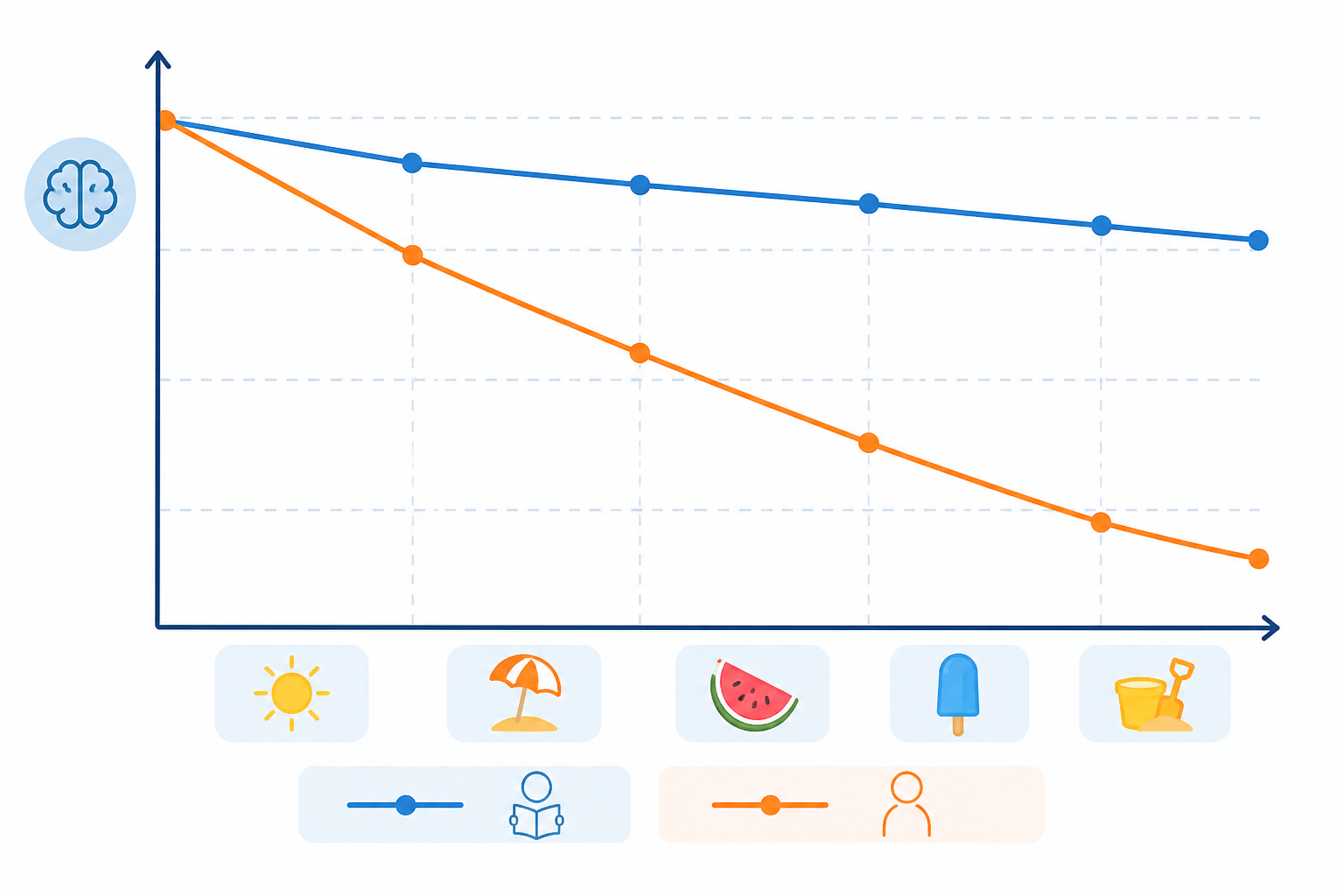
Summer math review matters because students forget procedural skills and math facts when they go weeks without practice. Teachers often spend the first month of fall reteaching last year's content. Families who build light practice into summer give children a smoother return to school and more confidence on the first assessments.
You do not need a full curriculum. Maintenance is enough. The Khan Academy and classroom teachers alike recommend spaced, low-stress review over cramming in August. Small habits in June and July prevent panic in late summer.
How Much Math Should Kids Do Over Summer?
Most elementary students should do ten to fifteen minutes of math four to five days per week over summer. That totals less than two hours a week, which fits between camps, travel, and downtime. Increase time only if your child asks for more or a specific program requires it.
- Younger students (K–2): 10 minutes, focus on facts and number sense
- Upper elementary (3–5): 15 minutes, mix facts with word problems
- Struggling learners: Same time, narrower skill focus, more games
- Advanced learners: Optional challenge problems, not next year's full unit
What Skills Should Each Grade Review Over Summer?
Review the grade your child just finished, not the one they are entering. Teachers will teach new content in fall. Summer is for keeping last year's skills warm.
Kindergarten → 1st
Review: Counting, number writing, addition and subtraction within 10
Tools: Kindergarten math worksheets, number tracing, simple games
1st → 2nd
Review: Facts within 20, place value to tens, word problems
Tools: Addition practice, place value charts, short daily sheets
2nd → 3rd
Review: Two-digit addition and subtraction, place value to hundreds, skip counting
Tools: Regrouping worksheets, 2nd grade review pages
3rd → 4th
Review: Multiplication and division facts, multi-digit addition, fractions intro
Tools: Multiplication charts, grade 3 worksheets, flash cards
4th → 5th
Review: Multi-digit multiplication, fractions, decimals basics
Tools: Fraction worksheets, 4th grade math pages, word problems
Second graders heading to third grade should especially protect multiplication foundations. Our times tables guide and 2nd grade math parent guide pair well with summer review plans.
What Does a Weekly Summer Math Plan Look Like?
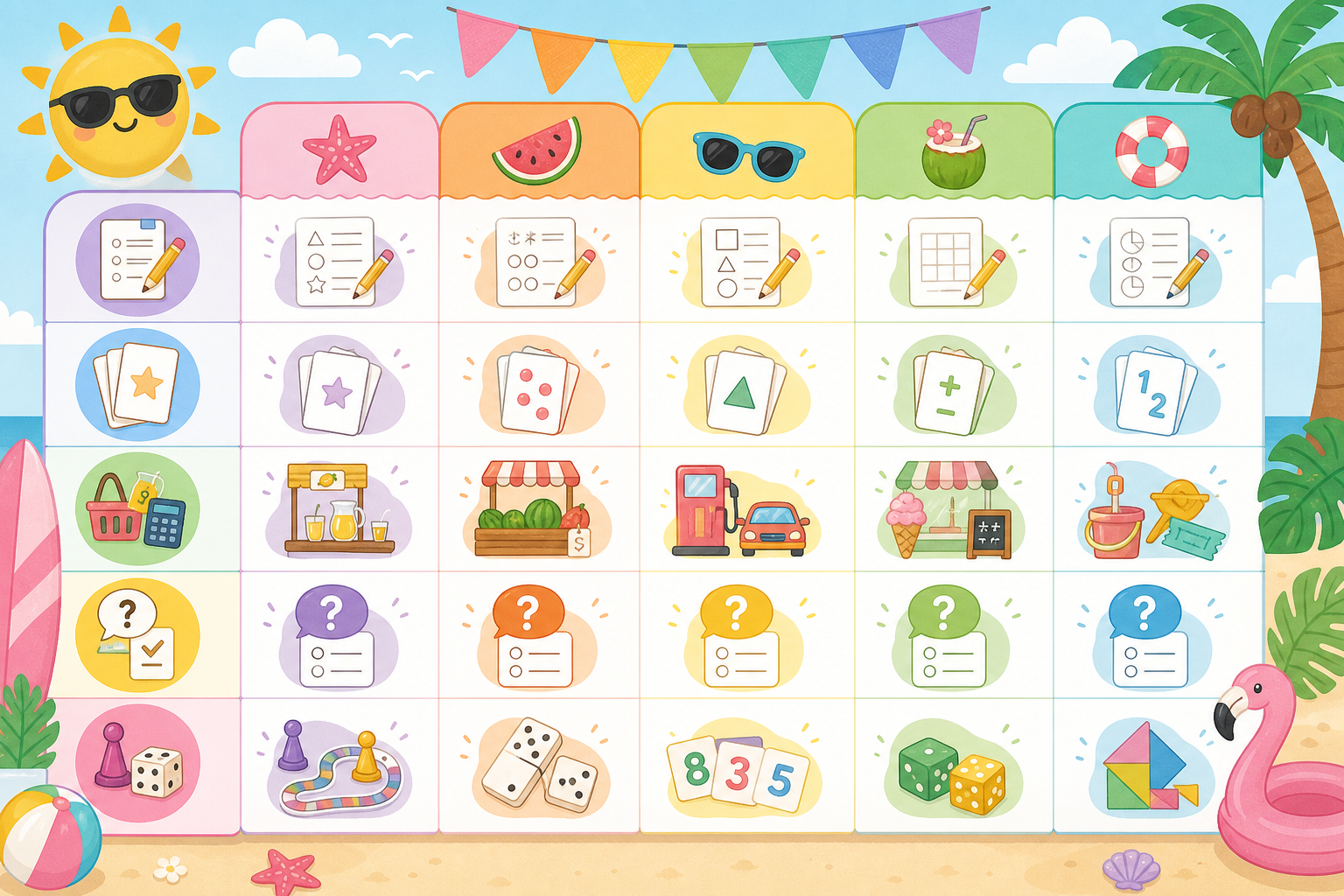
Use this sample week as a template. Swap days when you travel or skip a session without guilt. Pick up again the next day.
| Day | Activity | Time |
|---|---|---|
| Monday | One worksheet on last year's core skill | 10–15 min |
| Tuesday | Flash cards or fact drill game | 10 min |
| Wednesday | Real-life math (cooking, shopping, travel) | 15 min |
| Thursday | Online quiz or printable mixed review | 10–15 min |
| Friday | Math game day (dice, cards, board game) | 15–20 min |
Print this week's summer math review
Free grade-level worksheets and custom problem sets.
How Do You Make Summer Math Fun?
Summer math sticks when it feels like part of vacation, not a chore. Mix paper practice with movement, games, and real-world tasks so children stay willing to show up for the next session.
- Beach or park math: Count steps, estimate distances, compare temperatures
- Kitchen math: Measure ingredients, double recipes, set timers
- Road trip math: License plate games, mileage totals, snack budgets
- Game night: Use ideas from our 10 fun math games post
- Reward charts: Stickers for completed weeks, not perfect scores
More playful strategies live in 5 ways to make math practice fun at home. Homeschool families can fold summer review into a broader plan with free homeschool printables.
What Free Resources Help Summer Math Review?
You do not need an expensive workbook bundle. These free tools cover most summer review needs for K-6.
- Kindergarten through 6th grade math worksheets by grade level
- Multiplication flash cards for fact fluency
- Printable multiplication chart for reference during practice
- Math worksheet generator for custom summer problem sets
- Quiz generator for quick Friday check-ins
The National Council of Teachers of Mathematics supports balancing fluency practice with reasoning. Summer worksheets handle fluency; games and real-life tasks handle reasoning and motivation.
Key Takeaways
- Ten to fifteen minutes, four to five days a week, is enough for most students.
- Review last year's skills; let teachers introduce new content in fall.
- Rotate worksheets, games, and real-life math to prevent burnout.
- Use free printables and generators to target weak skills without extra cost.
- Keep the tone positive; consistency matters more than perfect accuracy.
Conclusion
Summer math review does not have to dominate break. A light weekly plan keeps skills sharp, reduces fall reteaching, and builds confidence when school starts again. Pick one grade-level focus, print a few pages, and start with ten minutes tomorrow.
Your future September self will thank you for the small effort you make in July.
Start summer math review today
Free worksheets, flash cards, and quizzes for every grade.
Create Free Summer Math WorksheetsRelated Articles
- 5 Ways to Make Math Practice Fun at Home — keep summer sessions engaging
- 10 Fun Math Games for Kids — Friday game day ideas
- How to Help Your Child with Math Homework — coaching tips for practice time
Frequently Asked Questions
Keep math skills sharp over summer with short daily practice of ten to fifteen minutes, mixed review worksheets, real-life math like cooking and shopping, and fun games. Focus on skills your child learned last year rather than previewing next year's curriculum. Consistency beats long cram sessions right before school starts.