Worksheets play a supporting role in project-based learning: they organize planning, capture data, check prerequisite skills, guide reflection, and score outcomes. They should not replace the project itself. When every worksheet connects to the driving question and final product, paper practice strengthens PBL instead of undermining it.
Many teachers assume PBL and worksheets cannot coexist. That is only true when worksheets are random drill pages dropped into a unit that is supposed to be hands-on. Used with purpose at the right phase, printables keep teams organized, document learning, and fill skill gaps so students can build, measure, and present with confidence.
What Is Project-Based Learning?
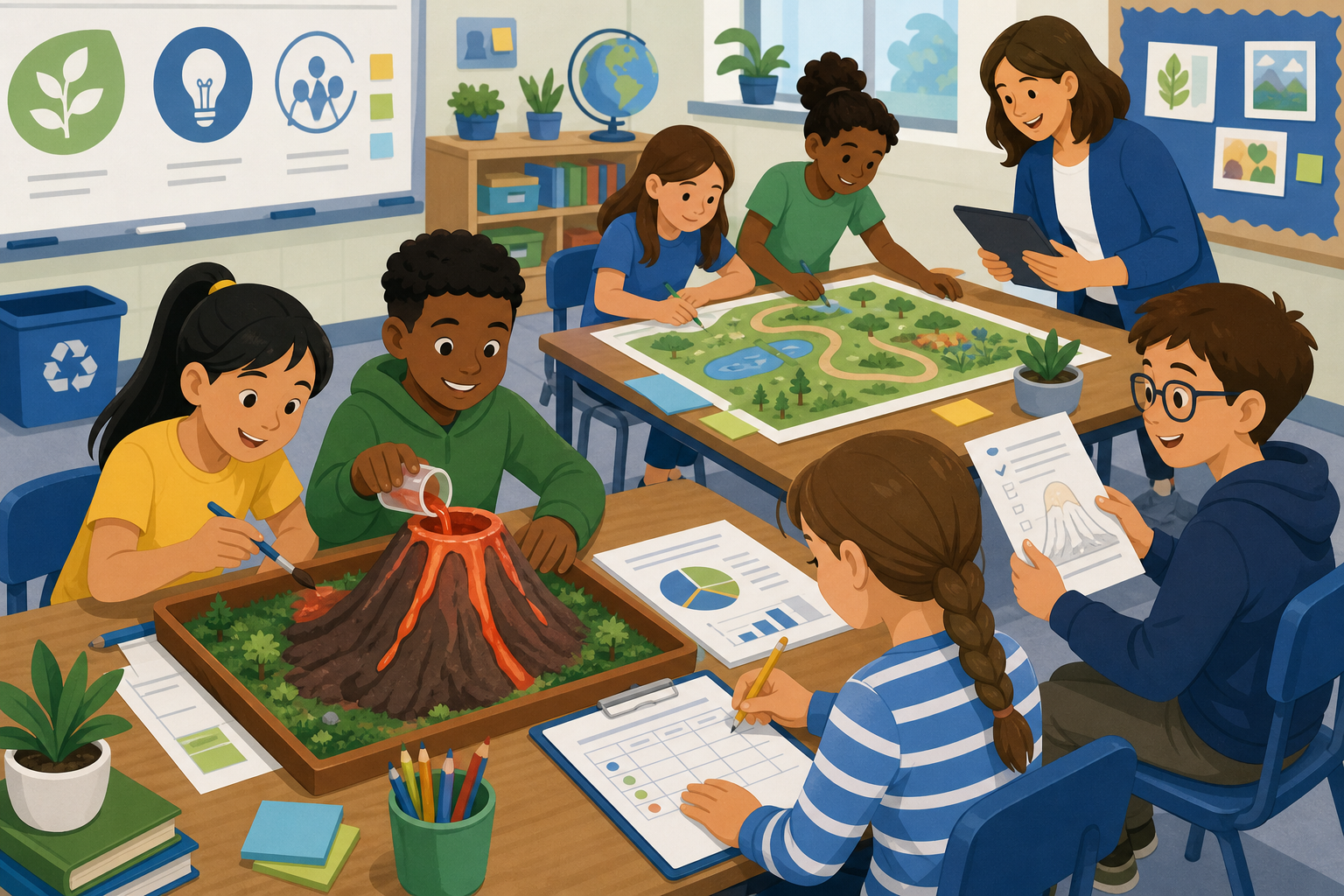
Project-based learning (PBL) centers on a driving question and a real product or presentation. Students investigate over days or weeks, collaborate, revise, and share results with an audience. Math, reading, and writing happen inside the project—not as separate tracks that ignore what students are building.
The PBLWorks framework emphasizes sustained inquiry, authenticity, student voice, and reflection. Worksheets fit that model when they scaffold those elements. They break the model when they become the default activity while a poster board gathers dust. For general worksheet habits, start with our effective classroom worksheet guide.
What Five Roles Do Worksheets Play in PBL?
Think of worksheets as project tools, not seat-filler. Each role below answers a specific PBL need.
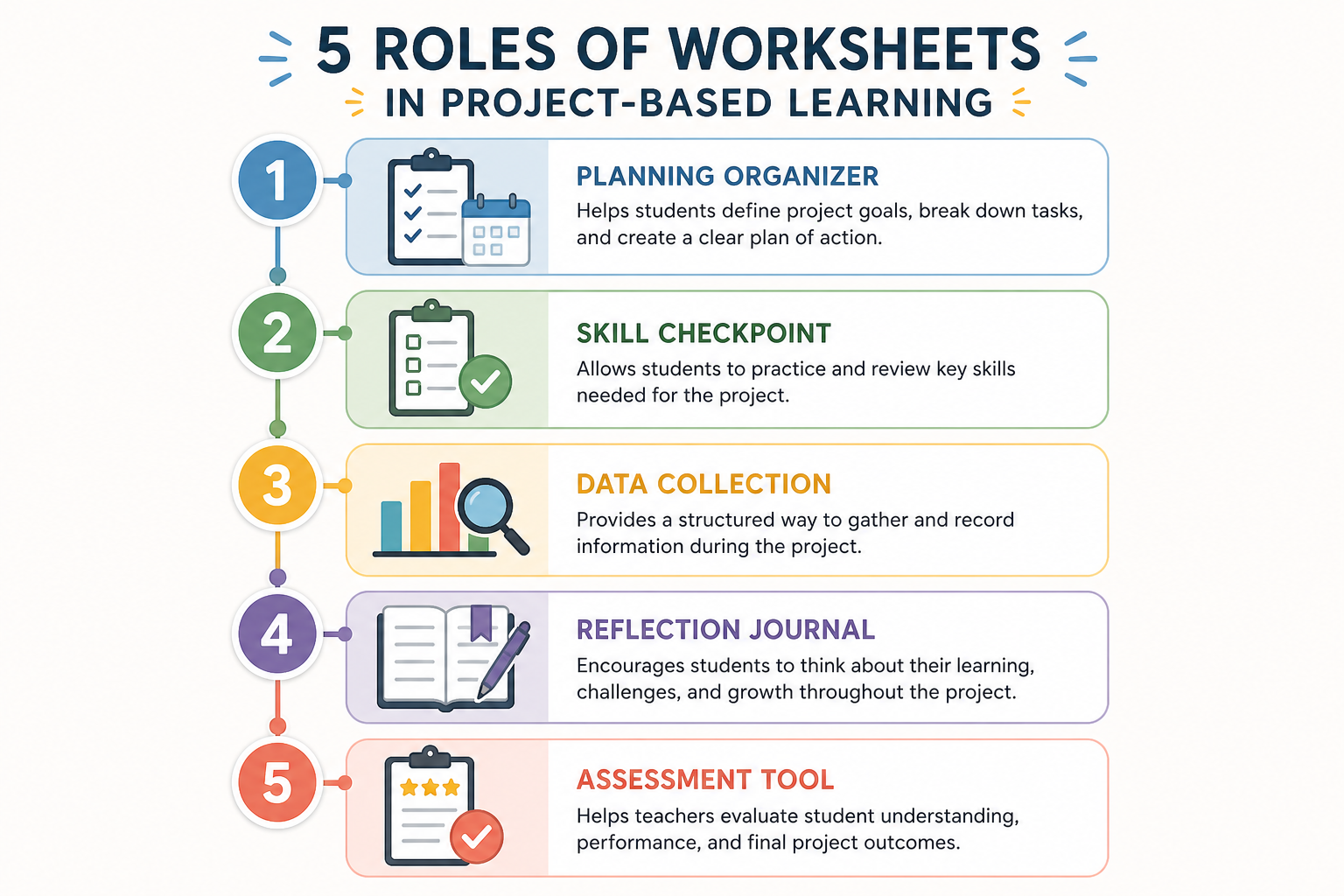
KWL charts, driving-question planners, and team role sheets launch the project. Students map what they know, what they need, and who does what before building starts.
Short practice pages confirm prerequisite skills—fractions before a recipe project, measurement before a garden map. Teach the skill, check it, then return to the build.
Tally tables, observation logs, and experiment recording sheets capture evidence students use in their final product. The worksheet becomes part of the project artifact.
Exit tickets and weekly reflection prompts ask what worked, what failed, and what to change. Reflection turns experience into learning.
Rubrics, self-checklists, and peer feedback forms score process and product against clear criteria shared at project launch.
Hands-on project days still matter. Our hands-on geometry activities guide shows how concrete building complements paper organizers in math-heavy units.
Print skill-check pages for your PBL unit
Generate short practice on the exact prerequisite skill students need before they build—measurement, fractions, graphing, and more.
Free Math Worksheet GeneratorWhich Worksheets Fit Each Project Phase?
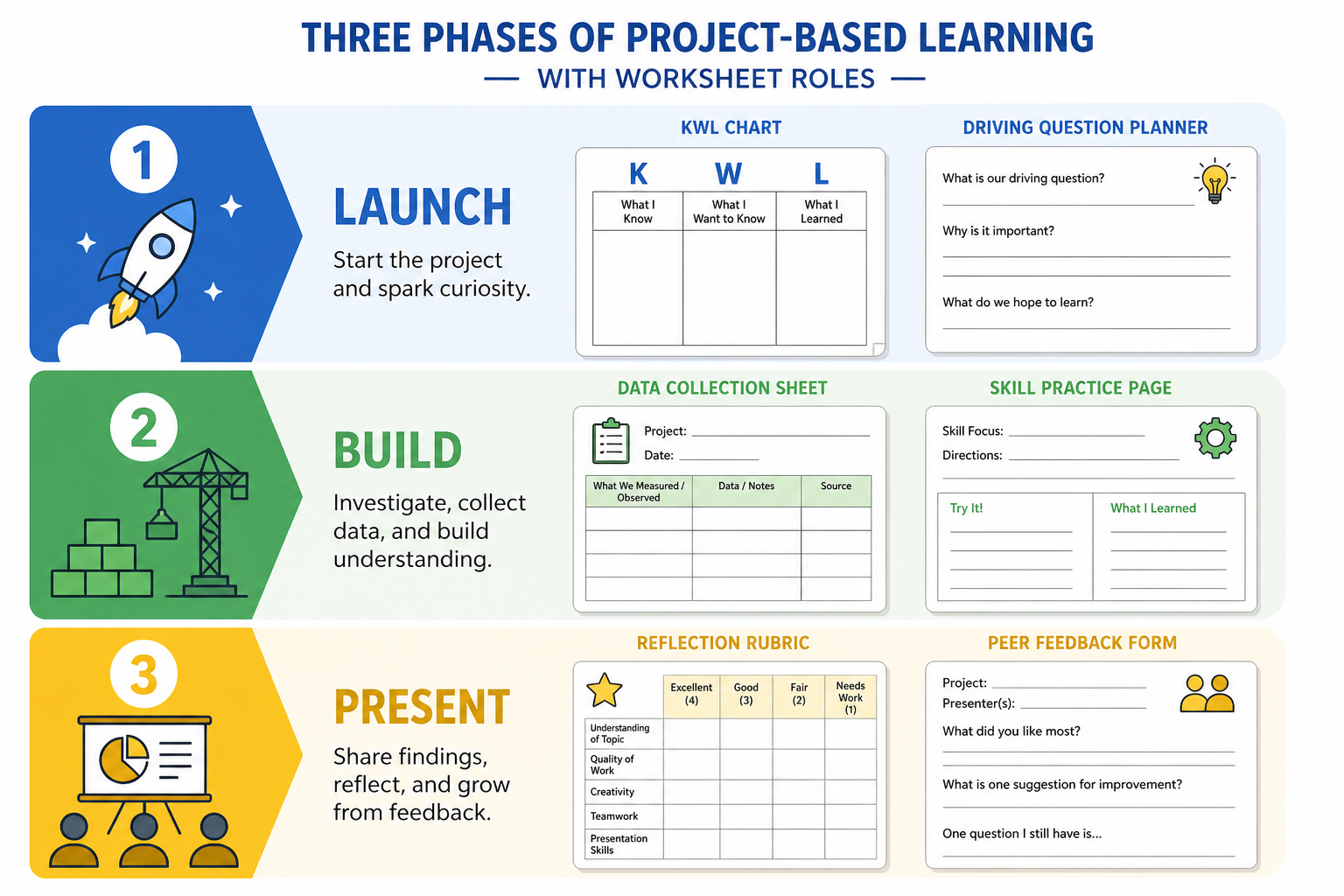
Match the paper to the phase. Launch sheets set direction. Build sheets capture work. Present sheets close the loop.
| Phase | Worksheets that fit | What to avoid |
|---|---|---|
| Launch (Days 1–3) | Driving question anchor chart notes, KWL, project calendar, team contract | Unrelated drill packets that disconnect from the project topic |
| Build (Days 4–12) | Research notes, measurement logs, draft outlines, skill-check pages as needed | Full workbook pages assigned daily instead of project work time |
| Present (Days 13–15) | Presentation checklist, reflection journal, rubric scoring, audience feedback form | New skill introduction that should have happened before the build |
During the build phase, reserve worksheets for documentation and targeted skill gaps. If students need extra fraction practice before scaling a recipe project, assign five problems—not twenty. Then return to the kitchen lab or model build the same day.
When Should You Skip Worksheets?
PBL fails the smell test when worksheets dominate project weeks. Skip printables when:
- Students are actively building, experimenting, or rehearsing presentations
- The page practices a skill unrelated to the driving question
- You assign a workbook chapter because you are unsure what else to do
- Group collaboration time gets replaced by silent individual drill
- Reflection never happens because every exit is another problem set
The Edutopia PBL resource hub stresses inquiry and public products. If your weekly plan has more worksheet titles than project milestones, rebalance toward building days.
Balance matters for every approach—not only PBL. Compare with our Montessori vs. traditional worksheet guide when you want a hybrid model that keeps exploration central.
What Does a Sample PBL Unit Look Like?
A two-week elementary unit on reducing lunch waste shows how worksheets slot into real project flow. Notice two worksheet-light days reserved for building and presenting.
Measurement skills for the trash-weighing day can come from your unit mini-lessons and place value and number worksheets for graphing prep. End the unit with a short quiz generator check on graph-reading skills if standards require it—after the presentation, not instead of it.
How Do You Differentiate Worksheets in PBL?
Every student works on the same project topic, but not every student needs the same paper support. Differentiation keeps PBL inclusive without lowering the driving question.
- Tiered planners: Version A has sentence starters; Version B is open-ended for confident writers.
- Targeted skill pages: Print five custom problems from the custom worksheet differentiation guide for students who need prerequisite practice.
- Flexible data tables: Fewer columns or pre-filled labels for students who struggle with organization.
- Role-based tasks: One student records data; another builds the model; worksheets match each role.
Special education students can succeed in PBL with the right scaffolds. See worksheets for special education students for accommodation ideas that transfer directly to project teams.
Key Takeaways
- Worksheets support PBL as planners, data logs, skill checks, reflections, and rubrics.
- Match worksheet type to launch, build, or present phase.
- Protect hands-on and collaboration days from unrelated drill.
- Connect every page to the driving question and final product.
- Differentiate scaffolds while keeping one shared project for the whole class.
Conclusion
The role of worksheets in project-based learning is supportive, not central. Use them to launch inquiry, document evidence, fill skill gaps, and capture reflection. When students spend most of their time building, measuring, debating, and presenting, worksheets earn their place at the table.
Plan your next PBL unit on one page: list the driving question, three worksheet touchpoints, and two build days with zero packets. That sketch is often the difference between a project unit and a worksheet unit with a poster at the end.
Create skill-check pages for your next PBL unit
Custom math worksheets by grade and topic—print only what your project needs.
Free Math Worksheet GeneratorRelated Articles
- How to Use Worksheets Effectively in the Classroom — foundational worksheet habits
- How to Differentiate Math Instruction with Custom Worksheets — tiered practice inside PBL teams
- Teaching Geometry with Hands-On Activities — pair building days with organizers
Frequently Asked Questions
Yes, when they support the project rather than replace it. Worksheets work well for planning organizers, data collection, skill checkpoints before building, reflection journals, and short assessments. They fail in PBL when they become the entire lesson—endless drill pages with no connection to the driving question or final product.