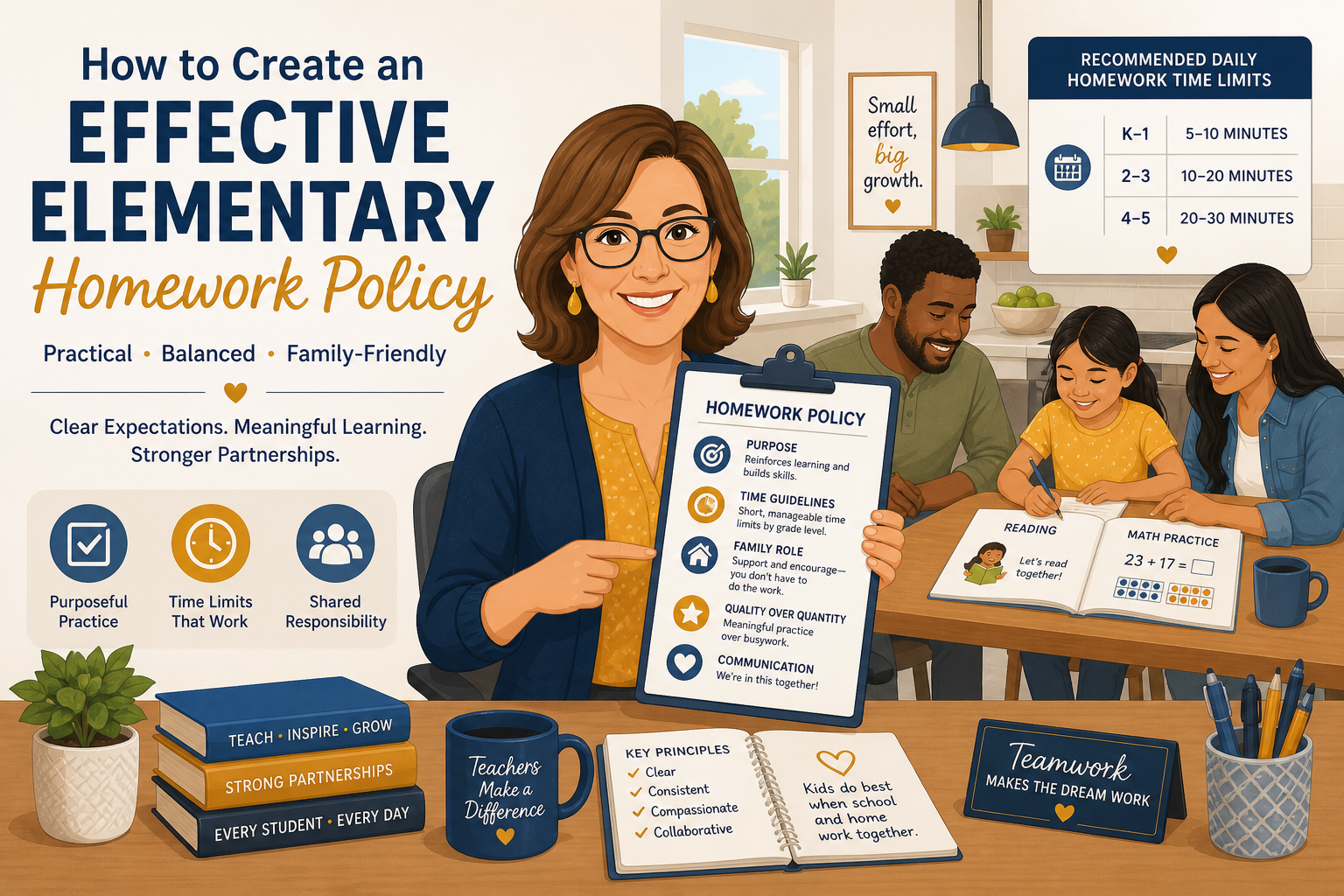
Creating an effective homework policy starts with clear purpose, realistic time limits, and plain-language expectations for families. Elementary homework should reinforce what students already learned—not introduce new material or punish behavior. A written policy reduces confusion, supports equity, and helps parents coach without doing the work. This guide covers six policy components, grade-level time guidelines, purposeful assignment types, parent communication, and a sample weekly structure.
Teachers who publish a one-page policy at the start of the year field fewer angry emails in October. Consistency across a grade level matters even more than perfection in any single classroom.
Why Does a Homework Policy Matter?
Without a policy, families guess what teachers expect. Some parents over-help; others cannot assist because they work late or lack materials. Students in the same grade receive wildly different loads depending on which teacher they have.
Research on elementary homework shows small benefits when assignments are short, focused, and tied to instruction. Benefits drop when homework is long, unclear, or graded harshly. The U.S. Department of Education encourages family engagement that supports learning at home without replacing classroom teaching. A written policy turns that idea into daily practice.
Homework policy also connects to parent trust. When you explain why students bring home five math problems instead of fifty, families are more likely to follow your coaching advice from posts like how to help with math homework.
What Six Components Should Every Policy Include?
Use this checklist when drafting your back-to-school handout. Grade teams can share one template and adjust subject-specific details.
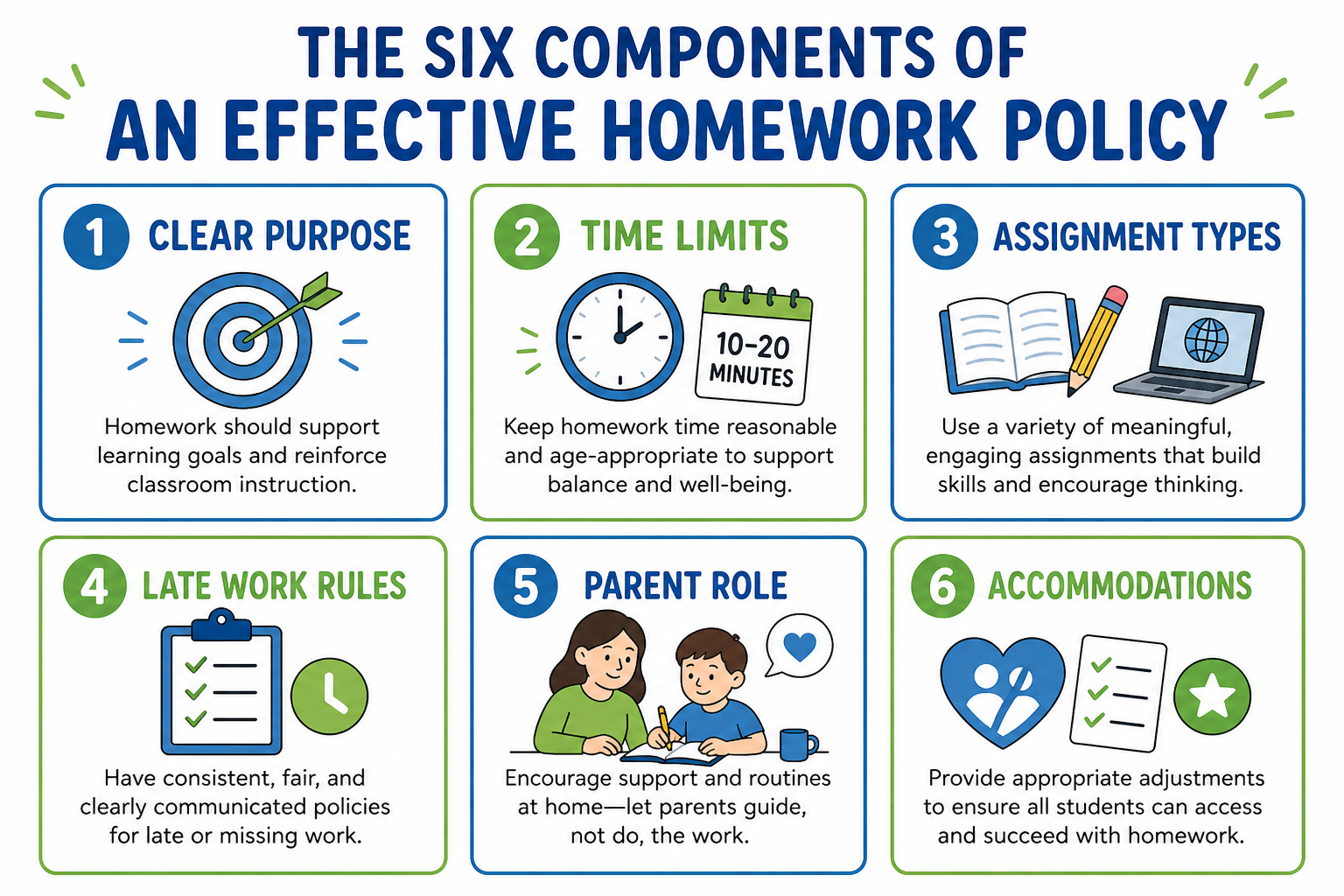
1. Clear purpose
State why you assign homework: practice, preview, or extension—not busy work or punishment. Parents support policies they understand.
2. Time limits by grade
Publish maximum minutes per night. Teachers coordinate across subjects in upper elementary so math, reading, and spelling do not stack to two hours.
3. Assignment types
List what counts: worksheets, reading logs, online practice, projects with multi-night timelines. Ban unspecified "finish whatever you did not finish in class" without guidance.
4. Late and missing work
Define consequences that teach responsibility without shame. Allow reasonable make-up windows; note how absences are handled.
5. Parent and caregiver role
Parents provide time, space, and encouragement—not correct answers. Link to coaching resources for homework help without doing the work.
6. Equity and accommodations
Acknowledge unequal home resources. Offer school-based homework club, reduced loads for documented needs, and alternatives to internet-dependent tasks.
How Much Homework by Grade Level?
The "10-minute rule" is a practical starting point: multiply grade level by ten for a nightly maximum across subjects. Adjust down for campuses that ban homework in kindergarten or cap total minutes schoolwide.
| Grade | Max minutes/night | Typical focus |
|---|---|---|
| K | 0–10 | Reading together, optional tracing or counting games |
| 1 | 10 | Short reading plus 5 math or spelling problems |
| 2 | 20 | Reading log, one worksheet or fluency page |
| 3 | 30 | Reading, math practice, occasional project prep |
| 4–5 | 40–50 | Reading, math, studying; coordinate across teachers |
If reading counts toward the total, say so explicitly. Many families treat reading as separate from "homework," which leads to accidental overload when math and spelling stack on top.
What Makes Homework Purposeful?
Every assignment should answer: "What will students know or do better after this?" Rotate formats so homework does not mean the same worksheet every night.
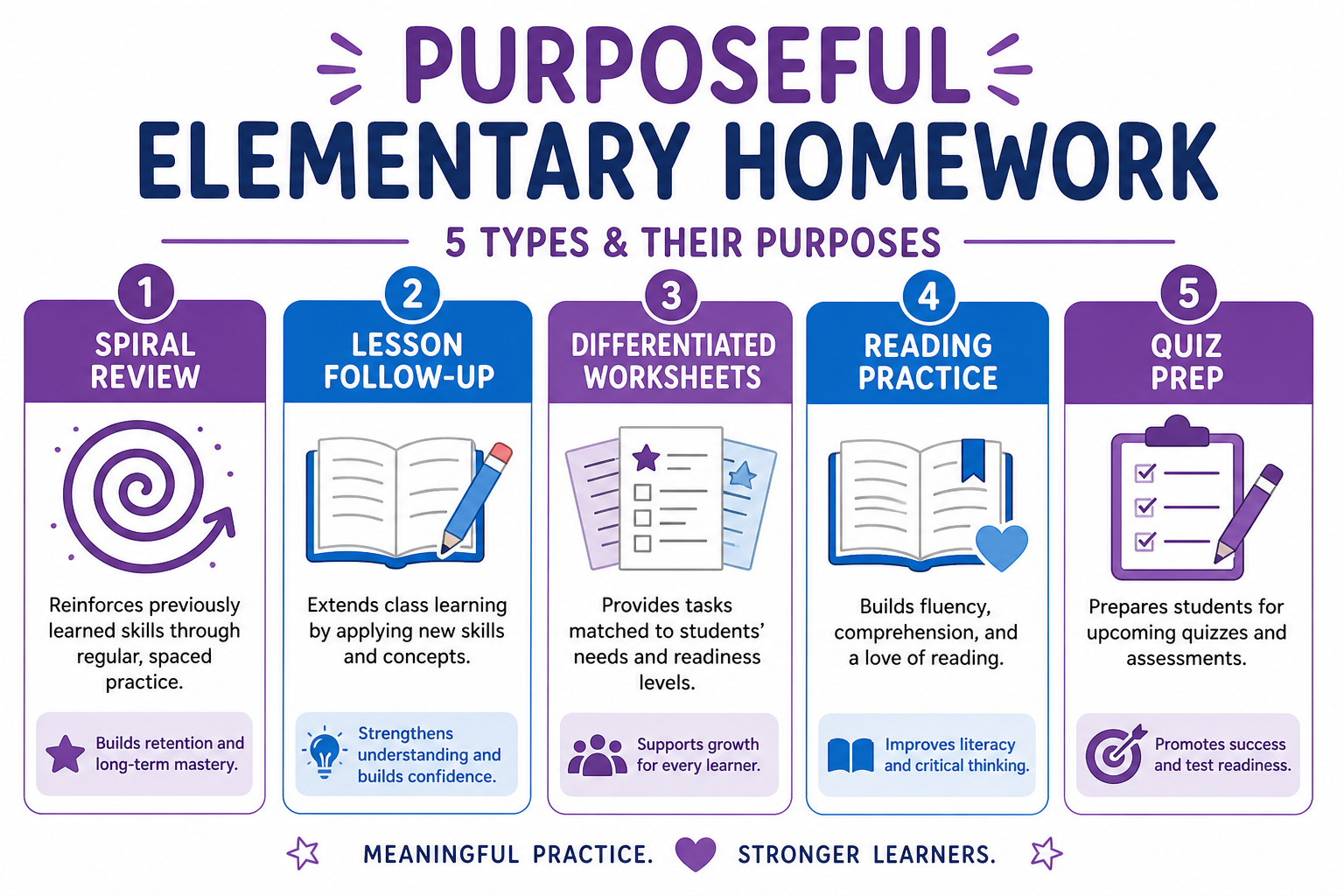
Differentiated tier
Support, on-level, or challenge sheet by student need
See our differentiation guide.
Reading practice
20 minutes with a log—builds literacy across subjects
Assign leveled homework in minutes
Generate custom math worksheets and quizzes aligned to your lesson—print or share digitally.
How Do You Partner with Parents?
Parents are coaches, not co-teachers. Your policy should list three parent jobs and three things to avoid.
Parents should: provide a quiet space, set a consistent time, and ask the child to explain one problem aloud.
Parents should not: complete assignments, correct every error before turn-in, or compare siblings' homework loads.
Share the policy at back-to-school night, post it on your learning platform, and link to free practice resources for families who want extra support. The National Education Association recommends ongoing family communication as a pillar of student success.
When homework sparks tears nightly, invite parents to message you early. Adjust load for students who need confidence-building support—a shorter assignment beats a battle at the kitchen table.
What Should Policies Avoid?
- Homework as punishment or unfinished classwork without instructions
- New content never taught in class—homework should reinforce, not introduce
- Long packets on weekends without advance notice
- Heavy gradebook weight that penalizes lack of home support
- Assignments requiring expensive materials or constant parent supervision
- Identical homework for all students when gaps vary widely
Coordinate with colleagues. If every teacher assigns maximum minutes on the same night, your thoughtful policy fails at the grade level. Grade-team calendars prevent homework pile-ups before long weekends.
What Does a Sample Weekly Structure Look Like?
This third-grade example stays near the 30-minute guideline including reading. Adapt numbers for your grade and subject.
| Day | Assignment | Est. time |
|---|---|---|
| Monday | Reading 20 min + 5 spiral math problems | ~25 min |
| Tuesday | Reading 20 min + spelling practice | ~25 min |
| Wednesday | Reading 20 min + lesson follow-up worksheet | ~30 min |
| Thursday | Reading 20 min + math game or flash cards | ~25 min |
| Friday | Reading only; optional family math challenge | ~20 min |
Post the week's plan every Monday so families can plan around sports and childcare. Use your printables organization system to prep homework copies during planning period instead of scrambling at dismissal.
Key Takeaways
- Publish a written policy with purpose, time limits, and parent role.
- Use the 10-minute-per-grade guideline as a starting cap.
- Assign short, varied, lesson-aligned practice—not punishment packets.
- Coordinate across teachers to prevent overload.
- Communicate weekly and adjust for equity and student need.
Conclusion
Creating an effective homework policy is an act of respect—for student time, family life, and your own planning. When expectations are clear, homework supports learning instead of straining relationships. Draft your one-pager before the first day, align with your grade team, and revisit the policy at winter conferences if families report consistent stress.
Block 30 minutes this week to write your six-component policy and share a sample week. Families will thank you for the clarity long before the first report card.
Ready-made practice for purposeful homework
Free math and tracing generators—customize by grade, operation, and problem count.
Free Math Worksheet GeneratorRelated Articles
- How to Help Your Child with Math Homework — parent coaching without doing the work
- How to Use Worksheets Effectively in the Classroom — five rules for purposeful paper practice
- Morning Work Routine with Worksheets — structure in-class practice before homework
Frequently Asked Questions
A common guideline is roughly 10 minutes per grade level per night: 10 minutes in first grade, 20 in second, up to 40–50 minutes by fourth or fifth grade. Quality matters more than quantity. Short, purposeful practice tied to lessons beats long packets that exhaust families and do not improve learning.